
A 1000W-class portable power station is the sweet spot for many people. It is big enough to run a fridge, a laptop, a TV or a small appliance during an outage, and still small enough to carry to the campsite. Here are four of the best 1000W portable power stations, plus a simple guide to what “1000W” really means and what these units can run.
Quick Picks
| Best For | Power Station | Link |
|---|---|---|
| Best Overall | EcoFlow DELTA 2 (1024Wh, 1800W) | Check price on Amazon |
| Best Fast Charging | Anker SOLIX C1000 Gen 2 (1024Wh, 2000W) | Check price on Amazon |
| Best for Camping | Jackery Explorer 1000 v2 (1070Wh, 1500W) | Check price on Amazon |
| Best Peak Power | BLUETTI AC180 (1152Wh, 1800W) | Check price on Amazon |
What Does “1000W” Mean?
When people search for a 1000W power station, they usually mean one of two things, and they are not the same:
- Output in watts (W): How much power the unit can deliver at one moment. A unit with 1000W or more of output can run a device that draws up to that much, such as a microwave or a coffee maker.
- Capacity in watt-hours (Wh): How much energy the battery holds. A 1000Wh battery can supply 1000W for about an hour, or 100W for about ten hours, before accounting for losses.
All four picks below have about 1000Wh of capacity and 1500 to 2000W of output, so they cover both meanings. That means they can power a 1000W appliance, but only for a short time, and they can run lower-power devices for hours.
What can a 1000W power station run?
Check your device’s label for watts and compare it with the unit’s rated output. Examples of typical running power:
| Device | Typical running power | OK on a 1000W-class unit? |
|---|---|---|
| Phone, laptop, router | 5 to 90W | Yes, for many hours |
| TV | 50 to 100W | Yes |
| Compressor fridge (average draw) | 40 to 100W | Yes, but check start-up surge |
| CPAP (no heated humidifier) | 30 to 60W | Yes, for a full night |
| Microwave | 700 to 1200W | Usually yes, for short use |
| Coffee maker | 600 to 1200W | Usually yes, for short use |
| Power tools | 500 to 1500W | Often yes, check surge |
| Hair dryer | 1000 to 1800W | Only if the unit’s output is high enough |
| Electric kettle | 1000 to 1500W | Only for short use |
| Space heater | 1500W | Not recommended, it drains the battery fast |
Rough runtime
Use this formula: hours = capacity (Wh) x 0.85 / device watts. The 0.85 allows for energy lost in the inverter. For a 1024Wh unit:
| Load | Estimated runtime |
|---|---|
| 60W (laptop, lights and fan) | About 14 hours |
| 100W (fridge, TV and devices) | About 9 hours |
| 300W (several devices at once) | About 3 hours |
| 1000W (microwave or coffee maker) | About 50 minutes |
The Jackery Explorer 1000 v2 and BLUETTI AC180 have slightly more capacity, so they will last a little longer. These are estimates, not guarantees.
How to Choose a 1000W Power Station
1. Check the continuous output and the surge rating. Choose a unit whose output comfortably exceeds your biggest device. Motors and compressors briefly draw more power when they start.
2. Look at charging speed. Fast charging means you can top up quickly before a storm or between camping stops.
3. Look for LiFePO4 batteries. They are known for long cycle life, which is useful for a unit you will use often.
4. Mind the weight. These units weigh about 24 to 35 pounds. That is portable for car camping, but not for carrying far.
5. Check the ports. More AC outlets, USB-C and 12V ports let you power more devices at once.
6. Consider UPS mode. Some units switch to battery quickly when the power drops, which can help keep sensitive electronics running.
7. Plan for solar. Check the maximum solar input if you want to recharge off-grid.
1. Best Overall: EcoFlow DELTA 2 (1024Wh, 1800W)
The DELTA 2 is a well-rounded 1000W-class power station. It has a 1024Wh LiFePO4 battery, an 1800W AC output, 13 outlets in total and a rated cycle life of more than 3,000 cycles. It weighs about 27 pounds and can be expanded with extra batteries up to 3kWh.
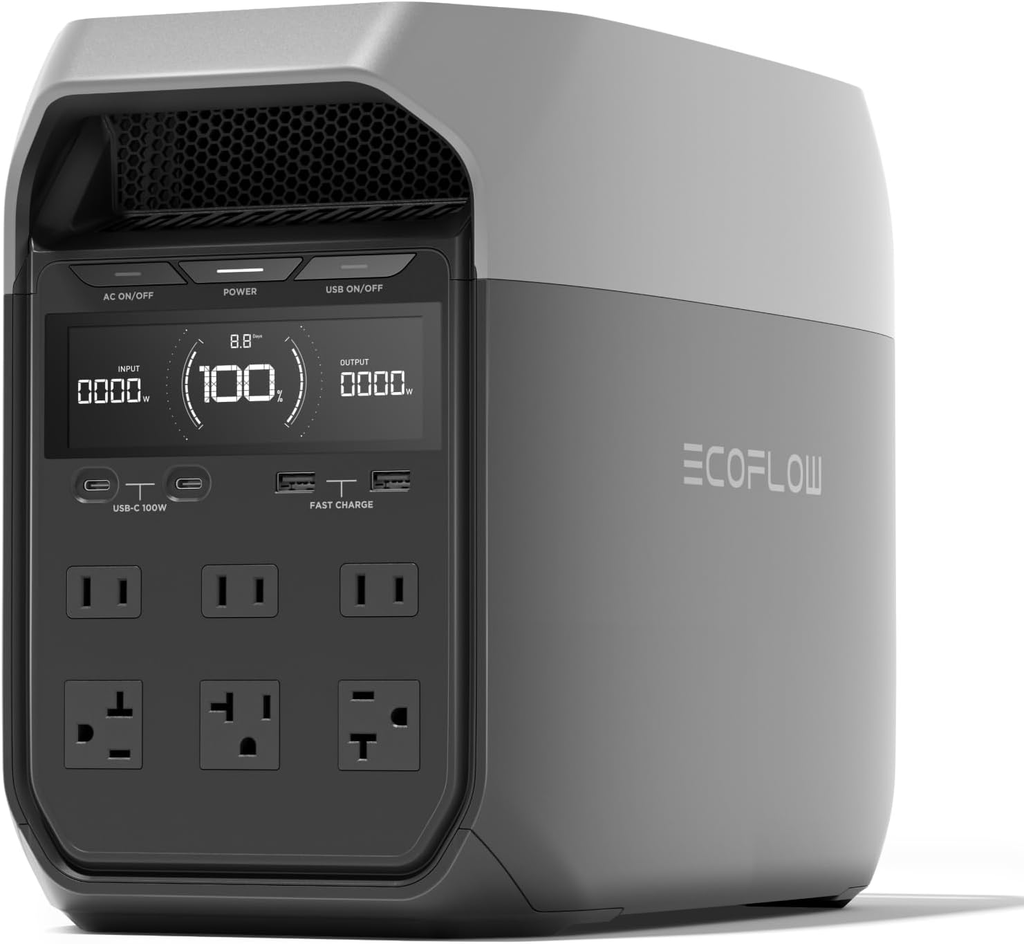
Why it works: It balances output, capacity and expandability, so it suits home backup, camping and RV trips.
Pros:
- 1800W output handles most small appliances
- Expandable capacity for the future
- Many outlets and fast charging
Cons:
- Heavy to carry far
- Not enough for a rooftop air conditioner or large heaters
Best for: Most people who want one mid-size power station for several uses.
Check current price and reviews on Amazon
2. Best Fast Charging: Anker SOLIX C1000 Gen 2 (1024Wh, 2000W)
The Anker SOLIX C1000 Gen 2 stands out for charging speed and output. It has a 1024Wh LiFePO4 battery, a 2000W continuous output with a 3000W peak, and the listing says it recharges fully in about 49 minutes. It has 10 ports, including five AC outlets, a 10 ms UPS mode and a 5-year warranty, and weighs about 25 pounds.
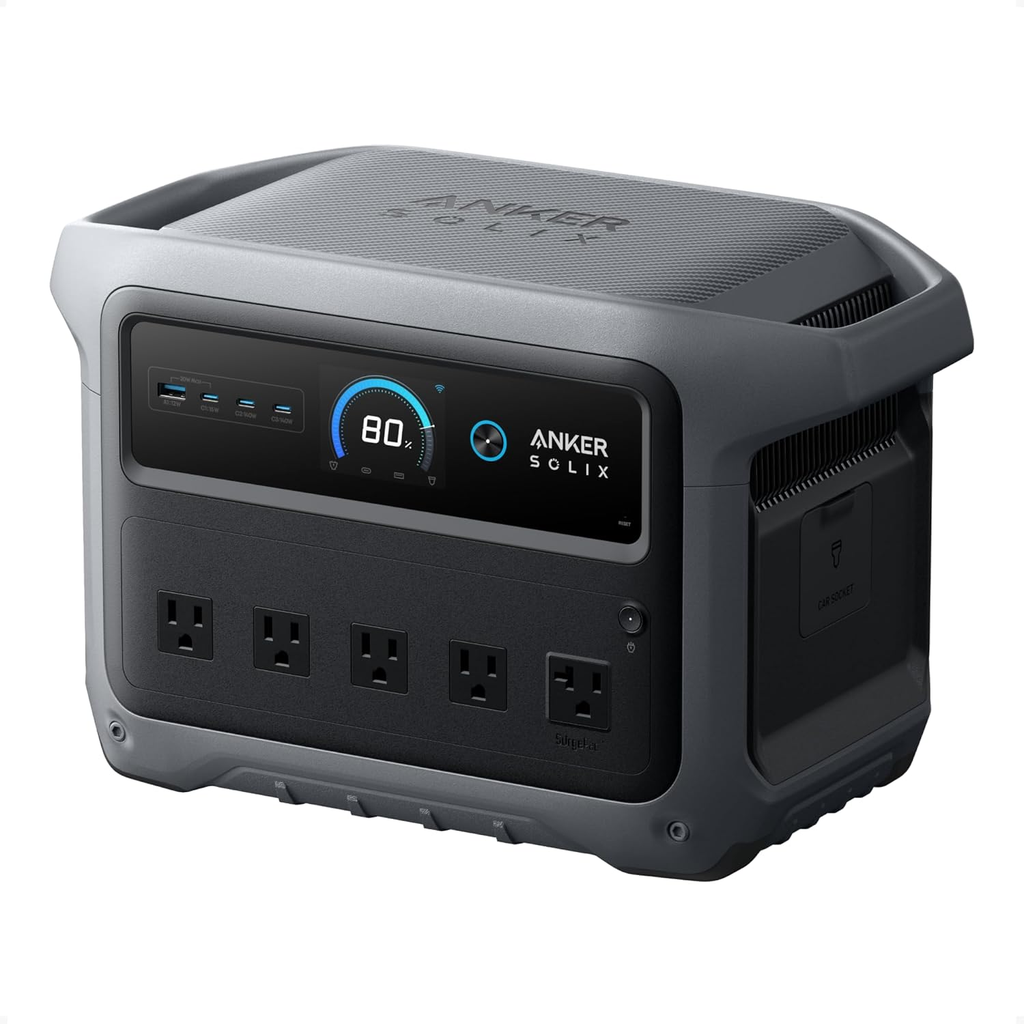
Why it works: The high output and fast recharging make it handy when you need power back up and running quickly.
Pros:
- 2000W output with 3000W peak
- Very fast recharging
- Many ports and a long warranty
Cons:
- Around 25 pounds, so not ultralight
- Fast charging needs a strong wall outlet
Best for: Home backup, remote work and anyone who wants quick turnaround.
Check current price and reviews on Amazon
3. Best for Camping: Jackery Explorer 1000 v2 (1070Wh, 1500W)
The Explorer 1000 v2 is a compact, easy-to-use option from a well-known camping brand. It has a 1070Wh LiFePO4 battery and a 1500W AC output with a 100W USB-C port. It weighs about 23.8 pounds, charges in about an hour with emergency charging, and the listing says it keeps over 70 percent of its capacity after 4,000 cycles.
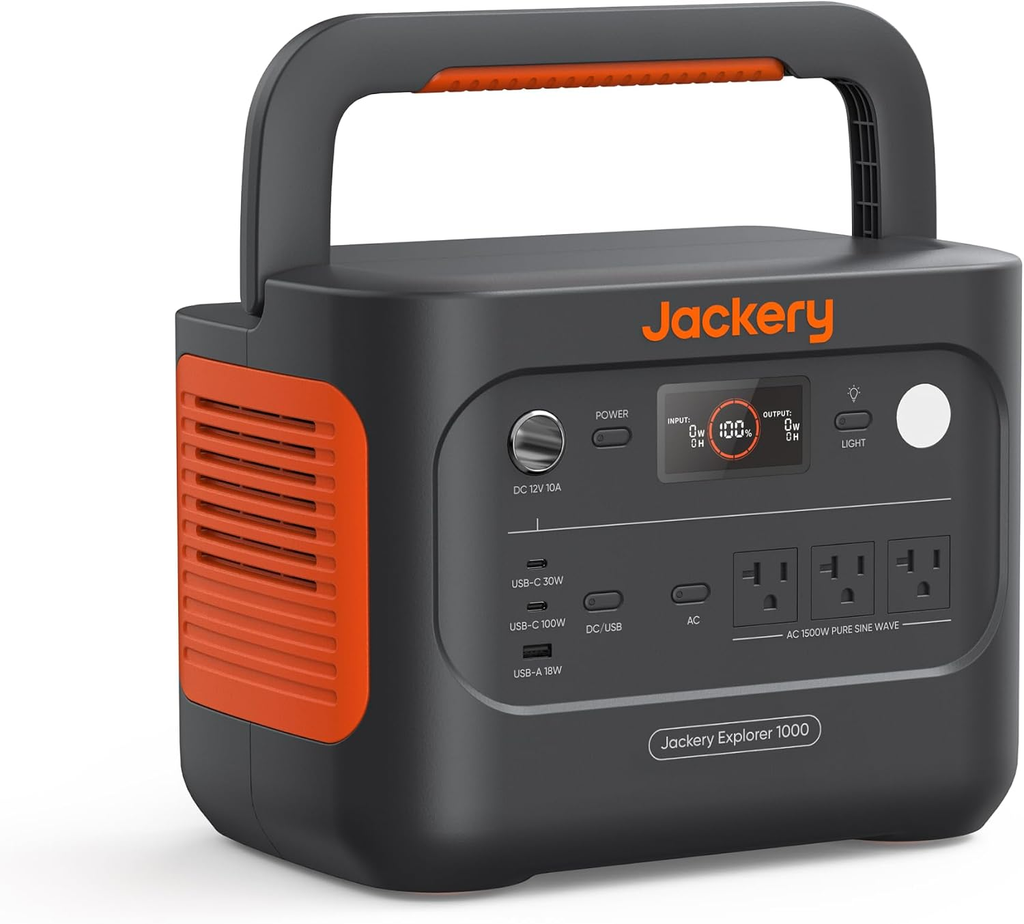
Why it works: It is one of the lighter units in this class and has a simple interface, which suits car camping and road trips.
Pros:
- Lightest unit in this guide at about 23.8 pounds
- 1070Wh of capacity
- Fast charging and long battery life
Cons:
- 1500W output is lower than some rivals
- Fewer outlets than larger units
Best for: Camping, road trips and weekend backup power.
Check current price and reviews on Amazon
4. Best Peak Power: BLUETTI AC180 (1152Wh, 1800W)
The AC180 has the most capacity in this guide. It has a 1152Wh LiFePO4 battery, an 1800W inverter with a 2700W peak and four AC outlets. It charges from 0 to 80 percent in about 45 minutes and weighs about 35 pounds.
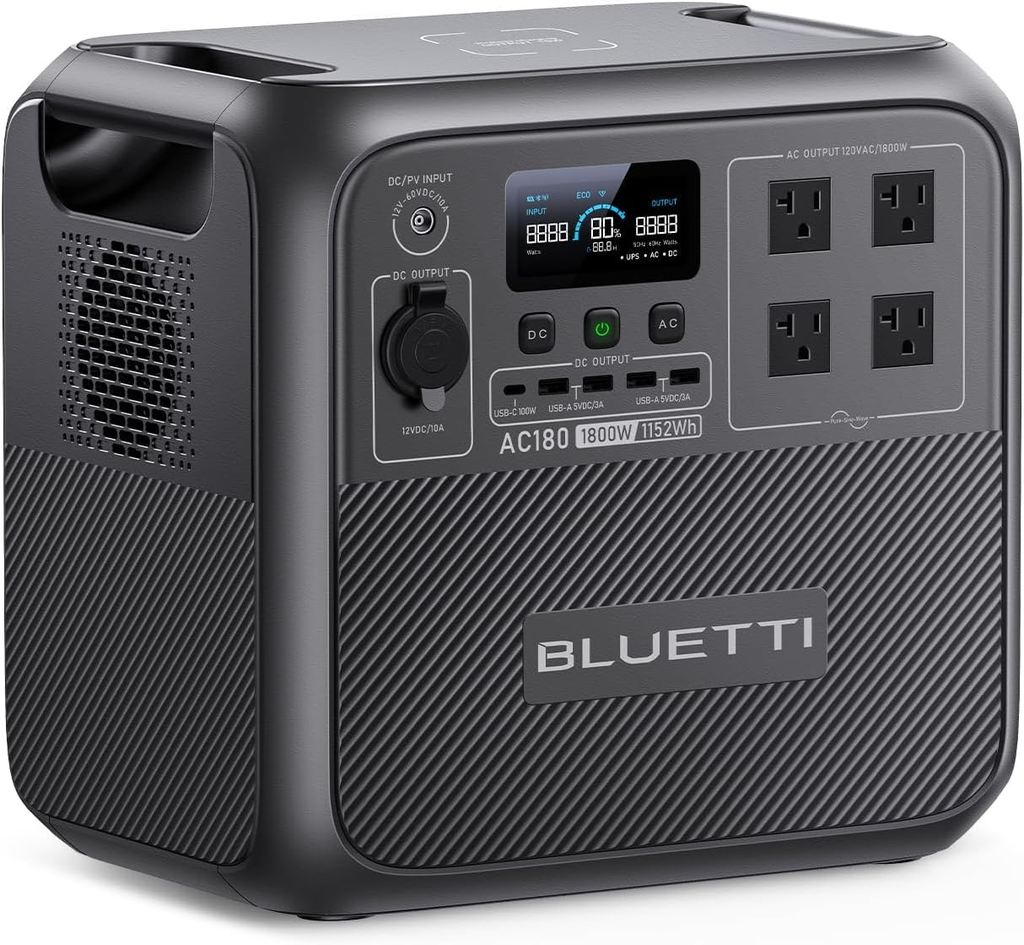
Why it works: The 2700W peak makes it more capable with motors and tools that need a burst of power to start.
Pros:
- Highest capacity of the four at 1152Wh
- 2700W peak output
- Fast charging
Cons:
- Heaviest unit in this guide at about 35 pounds
- Larger than the others
Best for: Power tools, workshops and RVs.
Check current price and reviews on Amazon
Tips for Using a 1000W Power Station
- Add up your devices’ running watts before you plug them in, and stay below the unit’s rated output.
- Run heating appliances only for short bursts, since they drain the battery quickly.
- Use USB-C and DC ports where you can, because they waste less energy than the AC inverter.
- Charge the unit fully before a storm or trip, and top it up every few months.
- Keep it dry, ventilated and out of direct sun, and never cover the vents while it is running.
- Pair it with a solar panel to extend your runtime off the grid.
Frequently Asked Questions
What can a 1000W portable power station run? It can run most small appliances and electronics, such as a laptop, TV, fridge, CPAP, coffee maker, microwave and many power tools. Check each device’s wattage and start-up surge before you plug it in.
How long will a 1000Wh power station last? It depends on the load. As a rough guide, divide the watt-hours (multiplied by about 0.85) by the device’s watts. A 100W load runs for about nine hours, while a 1000W load lasts closer to 50 minutes.
Can a 1000W power station run a refrigerator? Yes, for several hours in most cases. Check the fridge’s start-up surge and average draw first.
Can it run a space heater or air conditioner? Space heaters typically draw 1500W and will drain the battery quickly. Air conditioners need a lot of power and a large surge, so they usually need a bigger system.
Is a power station better than a gas generator? Power stations are quiet and produce no fumes, so they are suitable for use near your tent or in a garage with ventilation. Generators run for longer but are noisy and must be used outdoors.
Can I charge a 1000W power station with solar panels? Yes. Most models accept solar panels up to a maximum input wattage. Check the limit before you buy panels.
Final Thoughts
The best 1000W portable power station is the one that matches your needs for output, weight and charging speed. For most people, the EcoFlow DELTA 2 is a safe all-rounder. If you want the fastest recharge, the Anker SOLIX C1000 Gen 2 is hard to beat, while the Jackery Explorer 1000 v2 is the lightest choice for camping and the BLUETTI AC180 offers the most capacity and peak power.
Stay powered! If this guide helped, bookmark it and share it with a friend who is shopping for backup power.
Disclosure: As an Amazon Associate I earn from qualifying purchases. If you buy through links on this page, I may earn a small commission at no extra cost to you.