
EcoFlow and Jackery are two of the best-known names in portable power stations. Both make LiFePO4 units for camping, RV trips and home backup, so the choice often comes down to size, output, weight and how much room you want to grow. Here is a head-to-head comparison in three size classes, with a simple guide to help you decide.
Quick Verdict
| Size Class | EcoFlow | Jackery | Link |
|---|---|---|---|
| Small (about 250 to 300Wh) | RIVER 3 | Explorer 300 Plus | EcoFlow / Jackery |
| Mid-size (about 1000Wh) | DELTA 2 | Explorer 1000 v2 | EcoFlow / Jackery |
| Large (about 2000Wh) | DELTA 2 with Extra Battery | Explorer 2000 v2 | EcoFlow / Jackery |
The short answer: Choose EcoFlow if you want more output for the size, room to expand and lots of ports. Choose Jackery if you want a simpler, lighter unit with a camping-focused design. The details below show where each one wins.
EcoFlow vs Jackery at a Glance
| EcoFlow | Jackery | |
|---|---|---|
| Strengths | High output for the size, expandable DELTA line, many outlets, fast charging | Simple to use, lighter in the mid-size class, long rated battery life |
| Battery type | LiFePO4 in the models below | LiFePO4 in the models below |
| Expandability | DELTA 2 can add extra batteries up to 3kWh | The Explorer 2000 v2 does not support parallel connection of two units, according to its Amazon listing |
| Best for | Home backup, RVs, people who want to grow a system | Camping, road trips and simple backup |
Small: EcoFlow RIVER 3 vs Jackery Explorer 300 Plus
In the small class, both units cover phones, lights, cameras and a laptop for a weekend trip.
| EcoFlow RIVER 3 | Jackery Explorer 300 Plus | |
|---|---|---|
| Capacity | 245Wh | 288Wh |
| AC output | 300W, X-Boost up to 600W | 300W |
| Battery | LiFePO4 | LiFePO4 |
| Weight | About 7.8 pounds | About 8.3 pounds (3.75 kg) |
| Extras | About 1 hour fast charge, under 30 dB, rated for about 3,000 cycles to 80% | Simple, compact design |
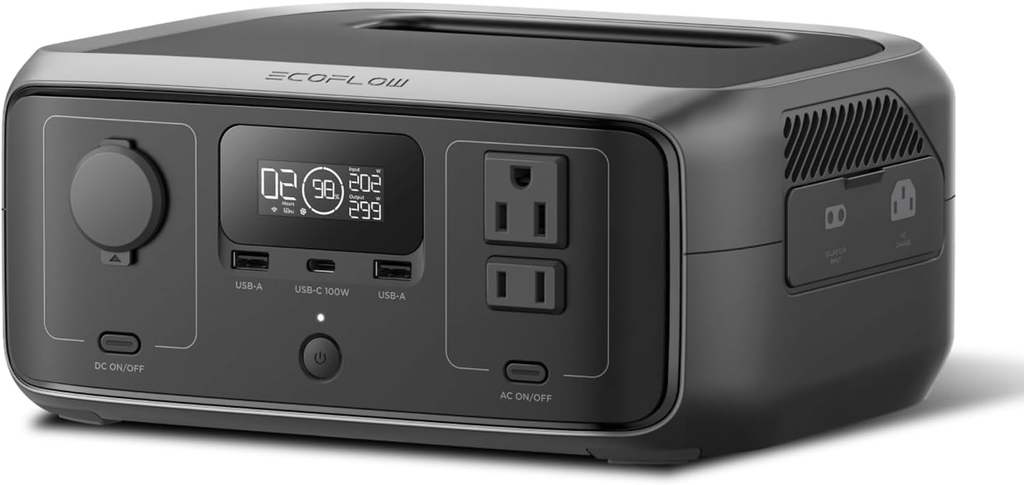
EcoFlow RIVER 3 pros:
- Lighter at about 7.8 pounds
- X-Boost lets it run some devices rated up to 600W at reduced power
- Fast charging and quiet operation
EcoFlow RIVER 3 cons:
- Slightly smaller battery
Jackery Explorer 300 Plus pros:
- More capacity at 288Wh
- Compact and easy to use
Jackery Explorer 300 Plus cons:
- No boost mode listed for higher-wattage devices
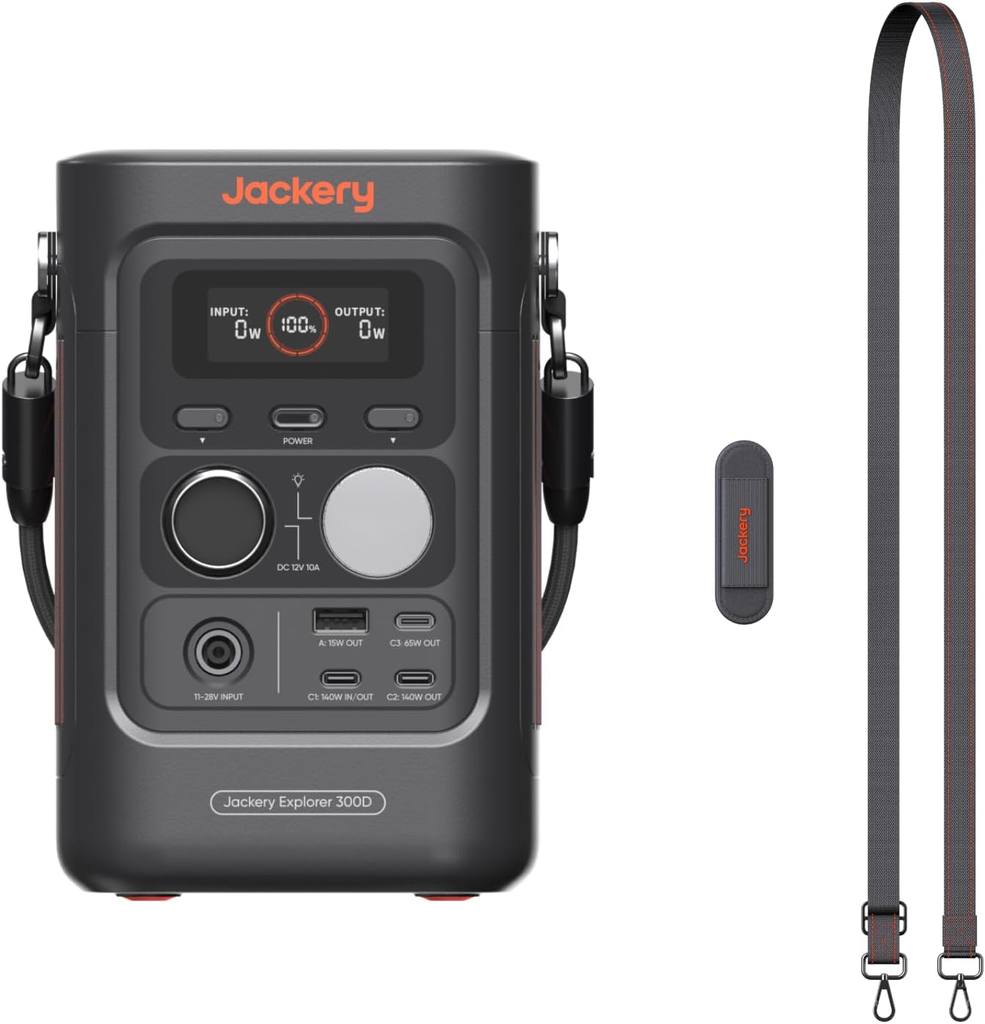
Verdict: It is close. The RIVER 3 is lighter and has a 600W boost, while the Explorer 300 Plus gives you a bit more runtime. Pick the RIVER 3 for weight and flexibility and the Explorer 300 Plus for the extra capacity.
Check the EcoFlow RIVER 3 on Amazon
Check the Jackery Explorer 300 Plus on Amazon
Mid-Size: EcoFlow DELTA 2 vs Jackery Explorer 1000 v2
This is the most popular matchup. Both give you about 1000Wh, enough for a fridge, devices and small appliances for several hours.
| EcoFlow DELTA 2 | Jackery Explorer 1000 v2 | |
|---|---|---|
| Capacity | 1024Wh | 1070Wh |
| AC output | 1800W | 1500W |
| Battery | LiFePO4, rated for more than 3,000 cycles | LiFePO4, rated to keep over 70% capacity after 4,000 cycles |
| Weight | About 27 pounds | About 23.8 pounds |
| Ports | 13 outlets in total | 100W USB-C plus AC ports |
| Expandable | Yes, up to 3kWh with extra batteries | Not listed as expandable |
| Charging | Fast charging | About 1 hour with emergency charging |
EcoFlow DELTA 2 pros:
- Higher output at 1800W
- Expandable to 3kWh with extra batteries
- Many outlets
EcoFlow DELTA 2 cons:
- Heavier at about 27 pounds
Jackery Explorer 1000 v2 pros:
- Lighter at about 23.8 pounds
- Slightly more capacity at 1070Wh
- Long rated battery life
Jackery Explorer 1000 v2 cons:
- 1500W output is lower
- No expansion battery listed
Verdict: The DELTA 2 wins on output and growth potential, while the Explorer 1000 v2 wins on weight and capacity. If you may want to expand, or you need to power 1500W to 1800W appliances, choose the DELTA 2. If you want the lightest option for camping and road trips, choose the Explorer 1000 v2.
Check the EcoFlow DELTA 2 on Amazon
Check the Jackery Explorer 1000 v2 on Amazon
Large: EcoFlow DELTA 2 with Extra Battery vs Jackery Explorer 2000 v2
At about 2000Wh, you can keep a fridge, Wi-Fi and devices running through an overnight outage.
| EcoFlow DELTA 2 with Extra Battery | Jackery Explorer 2000 v2 | |
|---|---|---|
| Capacity | 2048Wh (1024Wh + 1024Wh) | 2042Wh |
| AC output | 1800W | 2200W across 3 AC ports |
| Battery | LiFePO4 | LiFePO4, listed as lasting up to 10 years |
| UPS | Check the listing | 20 ms UPS switchover |
| Weight | About 54 pounds in total, in two units | Single unit |
| Expandable | Yes | Parallel connection of two units is not supported |
EcoFlow DELTA 2 with Extra Battery pros:
- Modular, so you can start with one unit and add more
- Many outlets
EcoFlow DELTA 2 with Extra Battery cons:
- Two heavy units to move
- Lower 1800W output
Jackery Explorer 2000 v2 pros:
- Single unit with 2200W output
- 20 ms UPS switchover for sensitive electronics
- Simple to set up
Jackery Explorer 2000 v2 cons:
- Only three AC ports
- Cannot be paralleled with a second unit
Verdict: The Explorer 2000 v2 is simpler and has higher output in a single package. The DELTA 2 with an extra battery is better if you value expandability and many outlets. If you want a plug-and-play unit for outages, pick the Jackery. If you want to build a system over time, pick EcoFlow.
Check the EcoFlow DELTA 2 with Extra Battery on Amazon
Check the Jackery Explorer 2000 v2 on Amazon
Which Brand Should You Choose?
Choose EcoFlow if:
- You want higher output for the size, such as 1800W in the DELTA 2
- You want to expand capacity over time
- You need lots of ports and fast charging
- You are building a home backup or RV system
Choose Jackery if:
- You want a lighter unit in the mid-size class
- You prefer a simple, single-unit setup
- You are mainly camping or taking road trips
- You value a long rated battery life and UPS switchover in the large class
What matters more than the brand:
- Capacity (Wh) decides how long you can run your devices.
- Output (W) decides what you can plug in.
- Weight decides how easy it is to carry.
- Recharging options such as solar, car and fast wall charging decide how easy it is to top up.
- Warranty and support vary by model, so check the listing before you buy.
How to Compare Any Two Power Stations
1. Match capacity to your use. Add up your devices’ watts and hours to find the watt-hours you need. A rough runtime formula is: hours = capacity (Wh) x 0.85 / device watts.
2. Check the output and surge. Make sure the unit can power your biggest device and handle start-up spikes from motors and compressors.
3. Compare battery chemistry. LiFePO4 is known for long cycle life and good safety, and both brands use it in the models above.
4. Look at weight and size. A unit you cannot carry will not make it to the campsite.
5. Consider recharging. Solar input limits and charging speeds differ between models, so check the specifications.
6. Read recent reviews. Look at how each unit performs in real use, especially its fan noise, app and customer support.
Frequently Asked Questions
Is EcoFlow or Jackery better? Neither is better in every case. EcoFlow tends to offer more output and expandability in the models above, while Jackery offers simple, lighter units. The best choice depends on your size class and how you will use the unit.
Which brand is better for camping? Both work well. Jackery’s lighter mid-size unit suits car camping, while the EcoFlow RIVER 3 is a very light option for small trips.
Which brand is better for home backup? EcoFlow’s expandable DELTA line is a good fit if you want to grow capacity, while Jackery’s Explorer 2000 v2 offers a single high-output unit with UPS switchover. Both can run a fridge and essentials.
Are both brands LiFePO4? The models in this guide all use LiFePO4 batteries, which are known for long cycle life.
Can I use solar panels with both? Both brands support solar charging with compatible panels. Check the maximum solar input and connector type for your specific model.
Do power stations from both brands come with a warranty? Yes, but terms vary by model. Check the warranty details on the product page before buying.
Final Thoughts
EcoFlow and Jackery both make excellent portable power stations, so the right choice depends on what you need. For the most output and room to grow, EcoFlow is hard to beat. For simplicity and lighter weight in the mid-size class, Jackery is a strong contender. Use the size class that matches your needs, compare the numbers, and you can’t go far wrong with either brand.
Stay powered! If this guide helped, bookmark it and share it with a friend who is comparing power stations.
Disclosure: As an Amazon Associate I earn from qualifying purchases. If you buy through links on this page, I may earn a small commission at no extra cost to you.