
Storms, grid failures and planned shutoffs can leave you without power for hours or days. A portable power station is a quiet, fume-free way to keep the essentials running: the fridge, Wi-Fi, phones, lights and a laptop. Here are five of the best portable power stations for home backup plus a guide to sizing one for your home.
Quick Picks
| Best For | Power Station | Link |
|---|---|---|
| Best Overall | Jackery Explorer 2000 v2 (2042Wh, 2200W) | Check price on Amazon |
| Best Expandable | EcoFlow DELTA 2 with Extra Battery (2048Wh) | Check price on Amazon |
| Best for Whole-Home Essentials | EcoFlow DELTA Pro 3 (4096Wh, 4000W) | Check price on Amazon |
| Best Value | EcoFlow DELTA 2 (2048Wh, 2400W) | Check price on Amazon |
| Best Fast Recharging | Anker SOLIX C1000 Gen 2 (1024Wh, 2000W) | Check price on Amazon |
What Can a Power Station Run During an Outage?
Start by listing what you really need during an outage. Then check each device’s running watts and, for anything with a motor or compressor, its start-up surge. Examples of typical running power:
| Device | Typical running power |
|---|---|
| Wi-Fi router and modem | 10 to 30W |
| Phones and laptops | 5 to 90W |
| LED lights | 10 to 20W |
| TV | 50 to 100W |
| Refrigerator (average draw) | 40 to 100W, with a larger start-up surge |
| Chest freezer (average draw) | 40 to 100W, with a larger start-up surge |
| Gas furnace blower fan | 300 to 800W |
| Sump pump | 500 to 1000W, with a larger start-up surge |
| Microwave | 700 to 1200W |
Most portable power stations cannot run central air conditioning, electric ovens or stoves, electric dryers, electric water heaters or space heaters. Those appliances use thousands of watts. Think of a power station as backup for essentials, not a replacement for the whole house.
How long will it run?
Use this formula: hours = capacity (Wh) x 0.85 / average watts. The 0.85 allows for energy lost in the inverter. Here are estimates for two example loads: about 200W average for the essentials (fridge, router, phones, a laptop and a few lights) and about 500W average if you add a TV, a furnace fan and other devices:
| Power Station | About 200W average | About 500W average |
|---|---|---|
| EcoFlow DELTA 2 (1024Wh) | About 4 hours | About 1.7 hours |
| Anker SOLIX C1000 Gen 2 (1024Wh) | About 4 hours | About 1.7 hours |
| Jackery Explorer 2000 v2 (2042Wh) | About 8.7 hours | About 3.5 hours |
| DELTA 2 with Extra Battery (2048Wh) | About 8.7 hours | About 3.5 hours |
| EcoFlow DELTA Pro 3 (4096Wh) | About 17 hours | About 7 hours |
These are rough estimates, not guarantees. Real runtime depends on how often your fridge cycles, the temperature and the age of the battery. Solar panels can top the battery up during the day and stretch your runtime through a longer outage.
How to Choose a Power Station for Home Backup
1. Make a list of must-run devices. Add up the running watts and the hours you need them. Include the start-up surge of motors and compressors.
2. Choose enough capacity. For a few hours of essentials, 1000Wh may do. For overnight or multi-day outages, look at 2000Wh and up, or choose an expandable system.
3. Check the inverter output and surge rating. The continuous output must exceed the combined watts of everything you plug in, and the surge rating must cover start-up spikes.
4. Look for UPS mode. Some units switch to battery quickly when the power drops, which keeps routers and computers from rebooting. Check each model’s specifications.
5. Look for LiFePO4 batteries. They are known for long cycle life, so a unit you use only occasionally stays ready for years.
6. Plan how you will recharge. Fast wall charging helps between outages, and solar charging matters if an outage lasts for days.
7. Be realistic about weight. Larger units are heavy and are best kept in one spot, such as a closet or garage near the devices you will power.
1. Best Overall: Jackery Explorer 2000 v2 (2042Wh, 2200W)
The Explorer 2000 v2 hits a strong balance between capacity and portability for home backup. It has a 2042Wh LiFePO4 battery, a 2200W AC output across three AC ports, a 100W USB-C port and 20 ms UPS switchover. The listing says the battery is built to last up to 10 years.
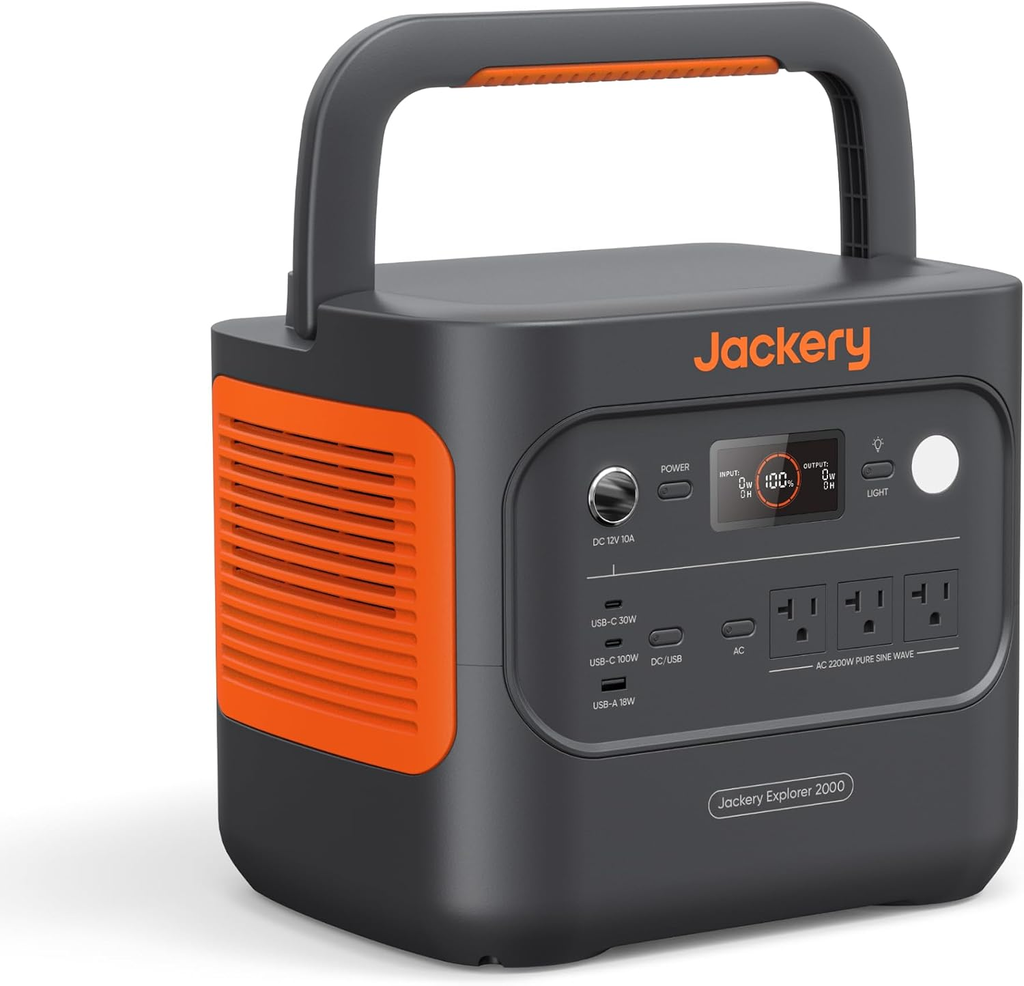
Why it works: The 2042Wh battery can keep a fridge, Wi-Fi and devices running through an overnight outage, and the UPS function helps protect sensitive electronics.
Pros:
- Large capacity with 2200W output
- 20 ms UPS switchover
- Long-lasting LiFePO4 battery
Cons:
- Only three AC ports
- Not enough for heavy appliances
Best for: Most households that want solid backup for the essentials.
Check current price and reviews on Amazon
2. Best Expandable: EcoFlow DELTA 2 with Extra Battery (2048Wh)
This bundle pairs the DELTA 2 with a smart extra battery, doubling the capacity from 1024Wh to 2048Wh. The listing describes an 1800W AC output and enough power for more than 90 percent of home appliances. It weighs about 54 pounds in total.
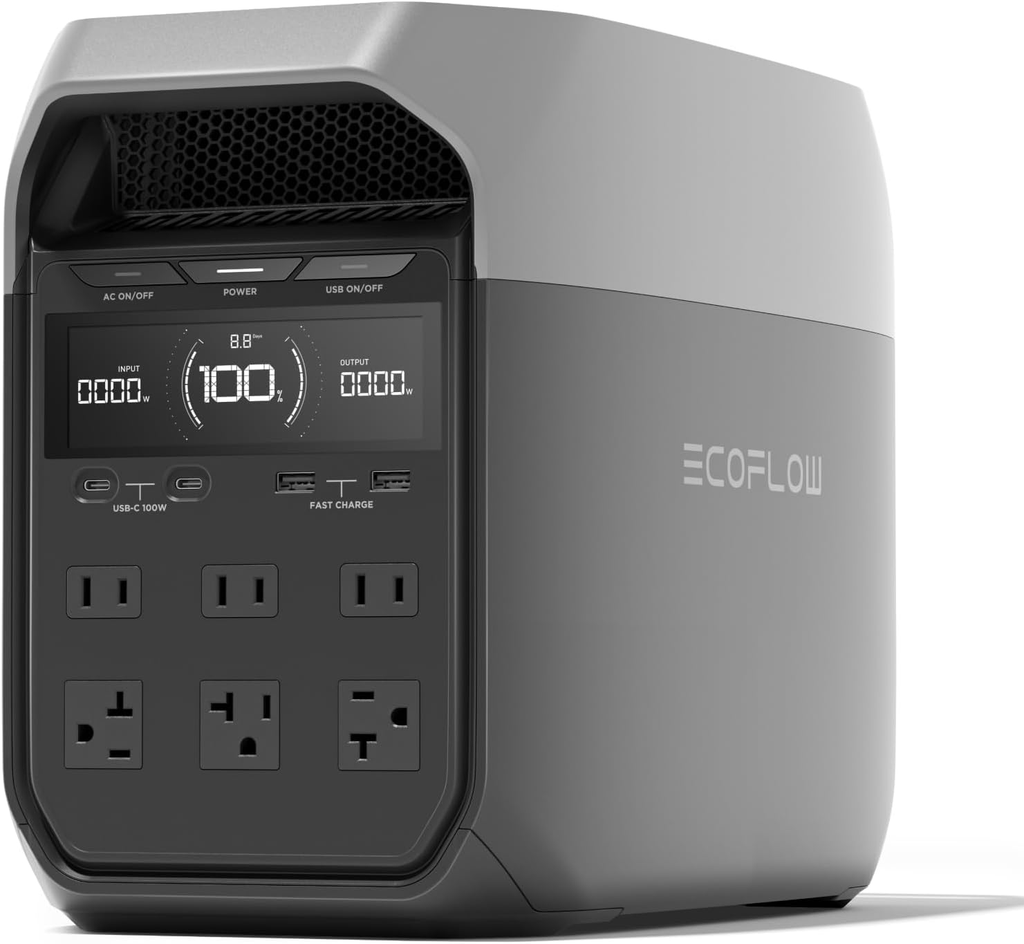
Why it works: It gives you 2000Wh of runtime today, and the DELTA 2 can be expanded further if your needs grow.
Pros:
- 2048Wh with an 1800W output
- Expandable, so you can build capacity over time
- Many outlets and solar charging support
Cons:
- Two heavy units to move
- Large investment compared with a single unit
Best for: Households that want to start with a solid base and grow.
Check current price and reviews on Amazon
3. Best for Whole-Home Essentials: EcoFlow DELTA Pro 3 (4096Wh, 4000W)
The DELTA Pro 3 is a big system built for serious backup. It has a 4096Wh LFP battery, a 4000W AC output with 120/240V support, and it can be expanded to 48kWh with extra batteries.
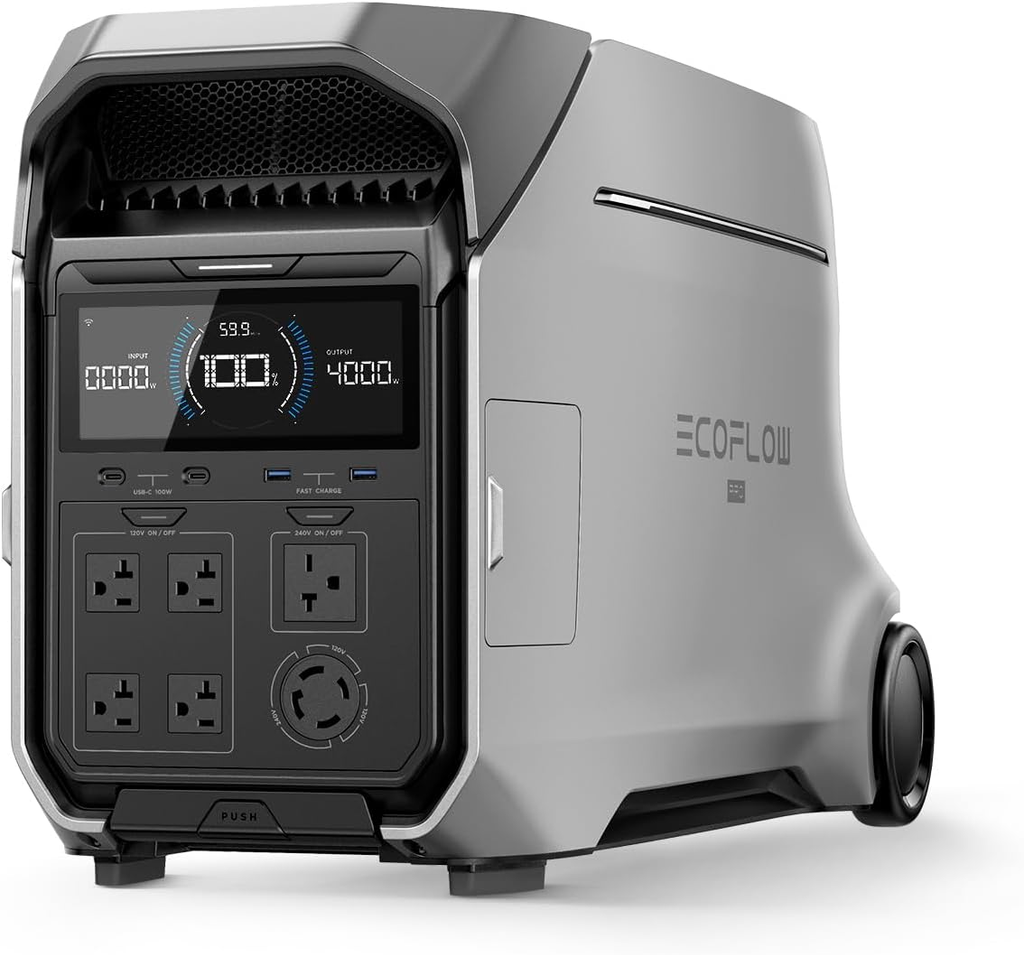
Why it works: The high output and large battery can handle more of the loads that smaller units cannot, such as bigger motors, and can run for much longer.
Pros:
- 4096Wh with 4000W output
- 120/240V output for larger loads
- Expandable to a very large system
Cons:
- Large, heavy and expensive
- Best placed in one spot, not carried often
Best for: Frequent or long outages and homes that need to power bigger appliances.
Check current price and reviews on Amazon
4. Best Value: EcoFlow DELTA 2 (2048Wh, 2400W)
The DELTA 2 is a popular entry point for home backup. It has a 2048Wh LiFePO4 battery, an 2400W AC output, 15 outlets in total and a rated cycle life of more than 3,000 cycles. It weighs about 50 pounds and can be expanded with extra batteries up to 3.4kWh.
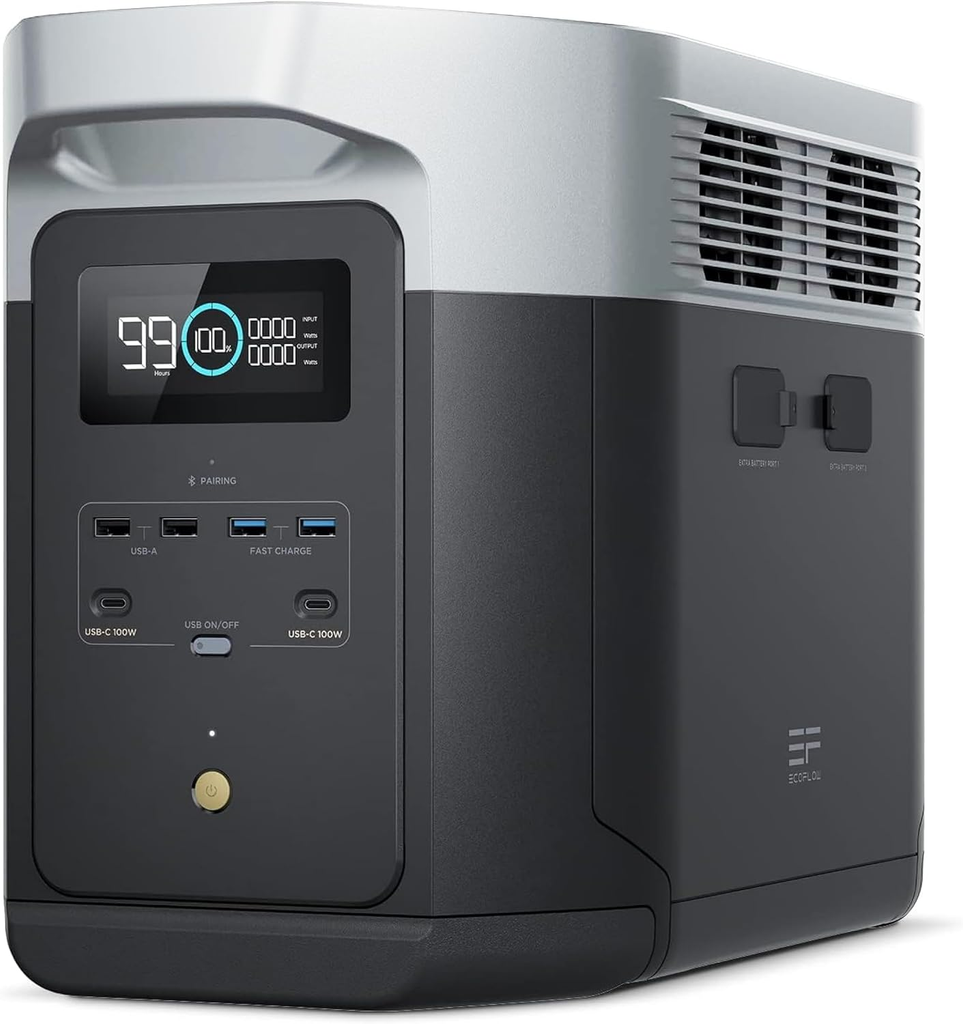
Why it works: It covers short outages for a fridge, Wi-Fi and devices, and it can be expanded later instead of replaced.
Pros:
- Strong 2400W output for its size
- Expandable
- Many outlets
Cons:
- A single unit lasts only a few hours with a fridge and other devices
- Not enough for heavy appliances
Best for: Short outages and first-time buyers.
Check current price and reviews on Amazon
5. Best Fast Recharging: Anker SOLIX C1000 Gen 2 (1024Wh, 2000W)
The C1000 Gen 2 has a 1024Wh LiFePO4 battery, a 2000W output with a 3000W peak and a listed full recharge in about 49 minutes. It has 10 ports, including five AC outlets, a 10 ms UPS mode and a 5-year warranty. It weighs about 25 pounds.
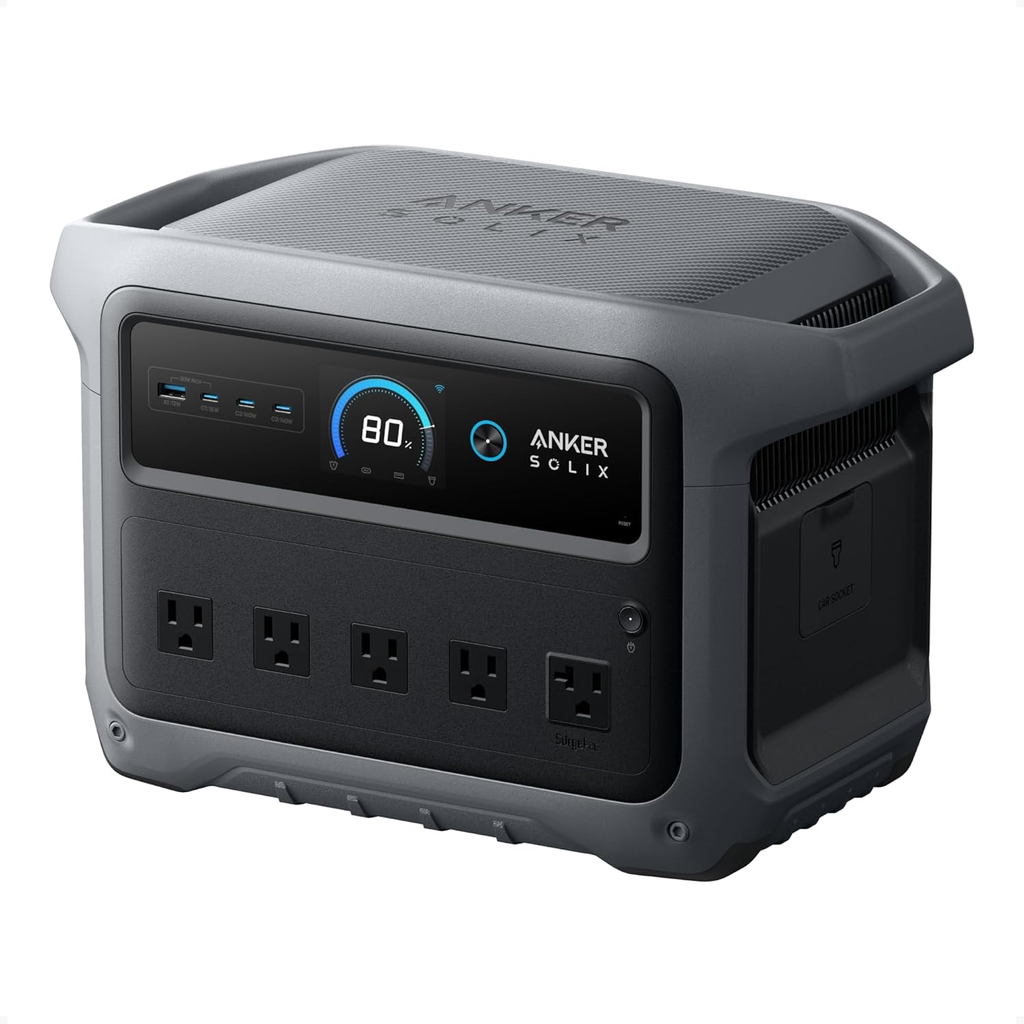
Why it works: Fast recharging means you can top up quickly when the power comes back, or between rolling outages.
Pros:
- Very fast recharging
- 2000W output with 3000W peak
- 10 ms UPS mode and a long warranty
Cons:
- A single 1024Wh unit lasts only a few hours with a fridge and other devices
- Fast charging needs a strong wall outlet
Best for: Short or repeated outages.
Check current price and reviews on Amazon
Safety Tips for Home Backup
- Plug devices directly into the power station or use properly rated extension cords. Never plug a power station into a wall outlet to power your house, because this can backfeed the grid and injure utility workers.
- If you want to power hardwired circuits, such as a furnace or well pump, ask a licensed electrician about a transfer switch or a home integration kit.
- Use the power station in a dry, ventilated spot, away from water and flammable materials. A power station produces no exhaust fumes, which makes it safer than a gas generator for indoor use, but it still needs airflow.
- Charge it fully before storm season, and top it up every few months.
- Keep a list of the devices you plan to run and their wattages near the unit.
- If someone in your home relies on medical equipment, do not depend on a power station alone. Ask your provider or equipment supplier about a backup plan.
Frequently Asked Questions
What size power station do I need for home backup? For a fridge, Wi-Fi and devices through a short outage, about 1000Wh is a good start. For overnight or multi-day outages, look at 2000Wh and up, or an expandable system.
Can a portable power station run a whole house? Most cannot. They are best for essentials such as the fridge, router, lights and devices. Running central air, electric ovens or dryers needs much larger systems and a professional installation.
Can a power station run a refrigerator? Yes. Check the fridge’s start-up surge and average draw, and choose a unit with enough output and capacity.
Is a power station better than a gas generator? Power stations are quiet and produce no fumes, so you can use them in a garage or indoors with ventilation. Gas generators run longer on a tank of fuel but are noisy and must be used outdoors, well away from windows.
Can I charge a power station with solar panels during an outage? Many models accept solar panels up to a maximum input wattage. This can extend your runtime during a long outage. Check the specifications of the unit you choose.
How long do power stations last? LiFePO4 units are typically rated for thousands of charge cycles, which can mean many years of use if you take care of the battery.
Final Thoughts
The best portable power station for home backup depends on how long your outages last and what you need to run. For most households, the Jackery Explorer 2000 v2 is a strong all-rounder. If you want to build capacity over time, the DELTA 2 with an extra battery is a good path, and the DELTA Pro 3 handles the biggest loads. For shorter outages, the DELTA 2 and the Anker SOLIX C1000 Gen 2 are solid, affordable options.
Stay prepared! If this guide helped, bookmark it and share it with a friend who wants backup power for their home.
Disclosure: As an Amazon Associate I earn from qualifying purchases. If you buy through links on this page, I may earn a small commission at no extra cost to you.