
A portable power station with a solar panel gives you power that does not depend on the grid. Pair a LiFePO4 battery with one or more panels and you can recharge during the day, run your devices at night and keep going through long outages or off-grid trips. Many brands sell these as ready-to-go bundles, often called solar generators. Here are five of the best portable power stations with solar panels, plus a simple guide to sizing panels and estimating how long they take to charge your battery.
Quick Picks
| Best For | Solar Generator Bundle | Link |
|---|---|---|
| Best Overall | EcoFlow DELTA 2 with 2x100W panels (1024Wh, 1800W) | Check price on Amazon |
| Best for Camping | Jackery Solar Generator 1000 v2 with 200W panel (1070Wh, 1500W) | Check price on Amazon |
| Best High-Output | BLUETTI AC180 with 200W panel (1152Wh, 1800W) | Check price on Amazon |
| Best Fast Solar Charging | Anker SOLIX C1000 Gen 2 with 400W panel (1024Wh, 2000W) | Check price on Amazon |
| Best for Home Backup | Jackery Explorer 2000 v2 with 2x200W panels (2042Wh, 2200W) | Check price on Amazon |
How Solar Charging Works
A solar panel feeds DC power into the power station through a solar input port. The power station’s built-in charge controller manages the incoming power and stores it in the battery. Once the battery is charged, you can run AC and DC devices from the power station day or night.
Three numbers matter most:
- Panel wattage (W): How much power the panels can produce in perfect conditions.
- Battery capacity (Wh): How much energy the power station stores.
- Maximum solar input (W): The most solar power the power station can accept. Panels above this limit will not charge it any faster.
How long will solar charging take?
Panels rarely deliver their full rated wattage. Clouds, heat, the angle of the sun and the time of day all reduce output. A reasonable rule of thumb is to expect about 70 percent of the rated watts in strong, direct sun:
Hours of strong sun = battery capacity (Wh) / (panel watts x 0.7)
Here are rough estimates for each bundle. These count hours of strong, direct sunlight, not clock hours:
| Bundle | Panel watts | Battery | About hours of strong sun for a full charge |
|---|---|---|---|
| EcoFlow DELTA 2 with 2x100W panels | 200W | 1024Wh | About 7 hours |
| Jackery Solar Generator 1000 v2 | 200W | 1070Wh | About 7.5 hours |
| BLUETTI AC180 with 200W panel | 200W | 1152Wh | About 8 hours |
| Anker SOLIX C1000 Gen 2 with 400W panel | 400W | 1024Wh | About 3.5 to 4 hours |
| Jackery Explorer 2000 v2 with 2x200W panels | 400W | 2042Wh | About 7 hours |
These are rough estimates, not guarantees. Cloudy days, winter sun and shade can double the time. If the power station’s maximum solar input is lower than the panel wattage, charging will be limited by the power station, so check each model’s specifications.
How to Choose a Power Station with Solar Panels
1. Match the battery to your needs. Add up the watts and hours of the devices you want to run. Around 1000Wh is enough for a fridge and devices for several hours, while 2000Wh or more suits longer outages.
2. Choose enough panel wattage. More panel watts means faster charging, up to the power station’s solar input limit. A 200W panel recharges a 1000Wh battery in about a day of good sun, while 400W can do it in a few hours.
3. Check the maximum solar input. Make sure the panels and the power station are compatible, including voltage, current and connector type.
4. Bundle or buy separately. A bundle includes matching panels and cables, which takes the guesswork out. Buying separately lets you pick the panel size and type you want, but you need to check compatibility.
5. Look for LiFePO4 batteries. They are known for long cycle life and good safety, which suits a unit you will charge and discharge often.
6. Think about portability. Foldable panels are easy to carry for camping, while rigid panels suit a fixed home setup.
7. Check the warranty and support. Panels and power stations are often covered separately, so look at both.
1. Best Overall: EcoFlow DELTA 2 with 2x100W Solar Panels
This bundle pairs the EcoFlow DELTA 2 with two 100W solar panels. The DELTA 2 has a 1024Wh LiFePO4 battery, an 1800W AC output and 13 outlets in total, and it is rated for more than 3,000 cycles. It weighs about 27 pounds and can be expanded with extra batteries up to 3kWh.
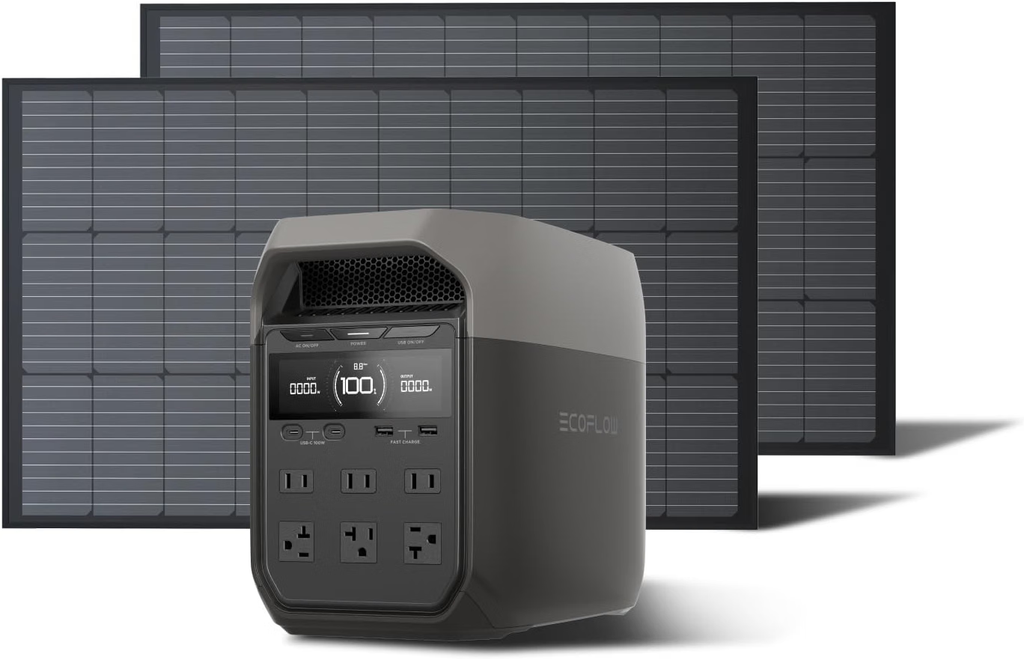
Why it works: It is a well-rounded mid-size power station with a ready-made pair of panels, so you can start charging from the sun right away.
Pros:
- Strong 1800W output and many outlets
- Expandable to 3kWh
- Two panels included in the bundle
Cons:
- 200W of panels charges more slowly than larger setups
- Heavy at about 27 pounds
Best for: Camping, RV trips and home backup with solar.
Check current price and reviews on Amazon
2. Best for Camping: Jackery Solar Generator 1000 v2 with 200W Panel
The Jackery Solar Generator 1000 v2 includes the Explorer 1000 v2 and a 200W solar panel. The power station has a 1070Wh LiFePO4 battery and a 1500W AC output with a 100W USB-C port. It weighs about 23.8 pounds, and the listing says it keeps over 70 percent of its capacity after 4,000 cycles.
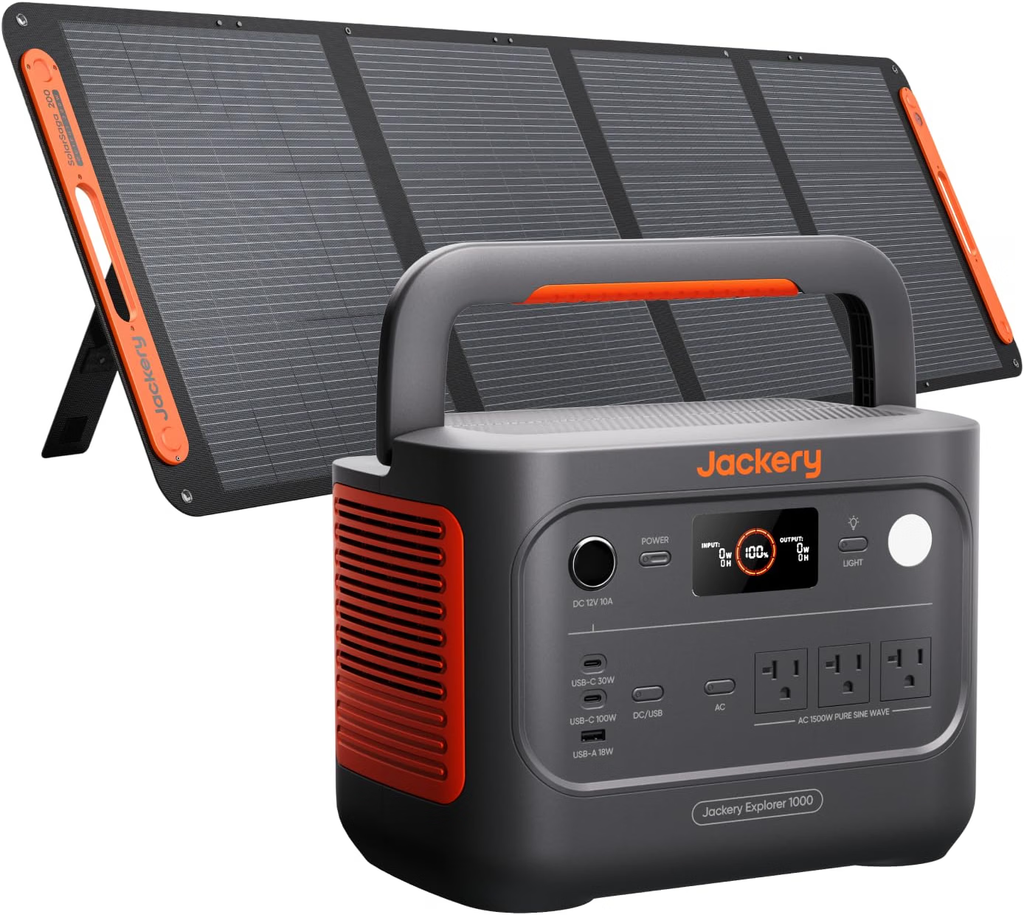
Why it works: It is one of the lighter 1000Wh units, with a simple design and a panel designed to match.
Pros:
- 1070Wh battery in a lighter body
- 200W panel included
- Long rated battery life
Cons:
- 1500W output is lower than some rivals
- One 200W panel means a full day of sun for a full charge
Best for: Car camping, road trips and weekend off-grid use.
Check current price and reviews on Amazon
3. Best High-Output: BLUETTI AC180 with 200W Solar Panel
The BLUETTI AC180 solar bundle adds a 200W panel to a 1152Wh LiFePO4 power station with an 1800W inverter, a 2700W peak and four AC outlets. It charges from 0 to 80 percent in about 45 minutes from the wall and weighs about 35 pounds.
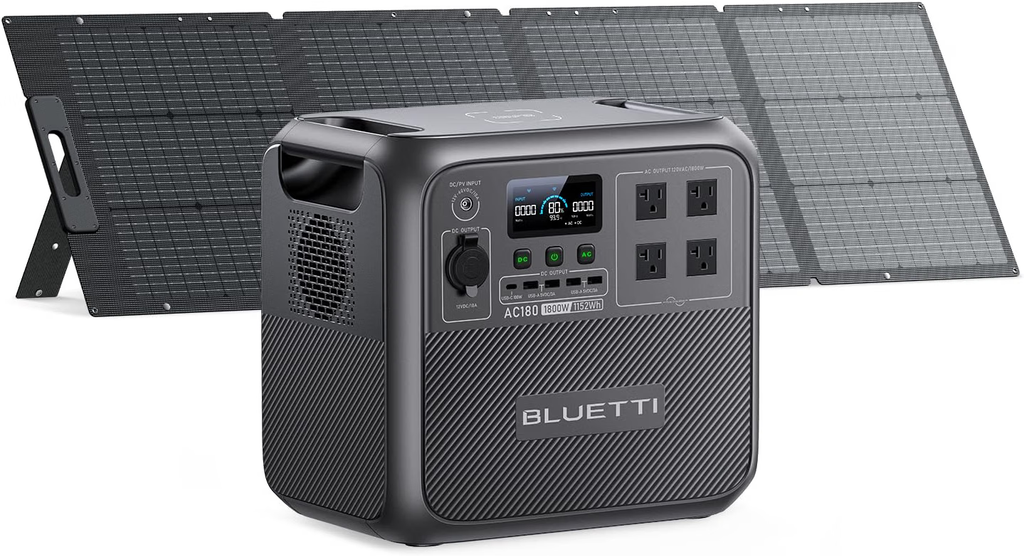
Why it works: The extra capacity and 2700W peak output make it good for tools, appliances and RVs, and the panel gives you off-grid charging.
Pros:
- 1152Wh capacity
- 2700W peak output
- Fast wall charging
Cons:
- Heaviest of the 1000Wh-class bundles at about 35 pounds
- One 200W panel is slow for a full charge
Best for: RVs, workshops and heavier loads.
Check current price and reviews on Amazon
4. Best Fast Solar Charging: Anker SOLIX C1000 Gen 2 with 400W Panel
This Anker bundle pairs the SOLIX C1000 Gen 2 with a 400W solar panel. The power station has a 1024Wh LiFePO4 battery, a 2000W continuous output with a 3000W peak, a listed full recharge in about 49 minutes from the wall, 10 ports including five AC outlets, and a 10 ms UPS mode. It weighs about 25 pounds.
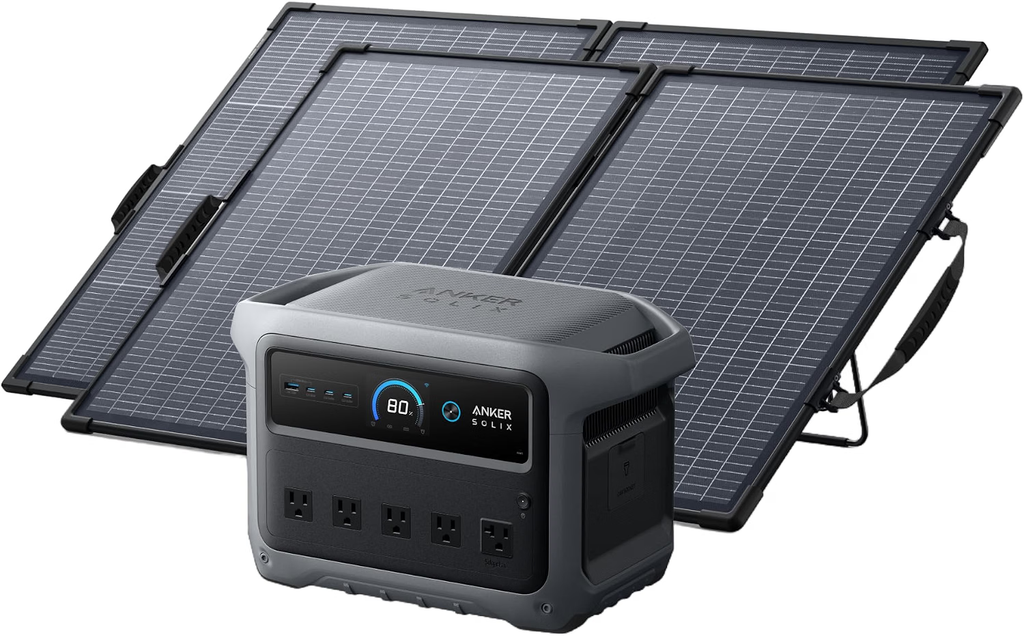
Why it works: With 400W of panels, you can expect to recharge in a few hours of strong sun, which is much faster than the 200W bundles.
Pros:
- 400W panel for faster solar charging
- 2000W output with 3000W peak
- UPS mode and a long warranty
Cons:
- A 400W panel is bigger to carry and set up
- Check the listing for the panel size and the maximum solar input of the power station
Best for: People who want quick solar recharging for camping or backup.
Check current price and reviews on Amazon
5. Best for Home Backup: Jackery Explorer 2000 v2 with 2x200W Panels
This bundle pairs the Explorer 2000 v2 with two 200W solar panels. The power station has a 2042Wh LiFePO4 battery, a 2200W AC output across three AC ports, a 100W USB-C port and a 20 ms UPS switchover. The listing says the battery is built to last up to 10 years.
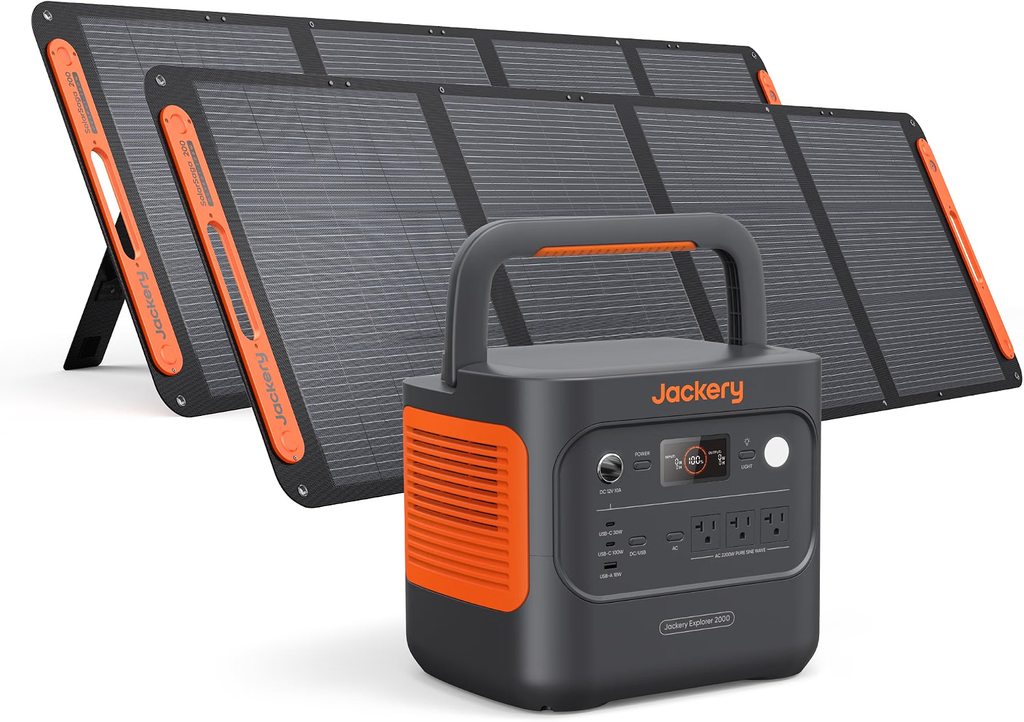
Why it works: The big battery can run a fridge and essentials through an overnight outage, and 400W of panels lets you recharge during the day.
Pros:
- 2042Wh battery with 2200W output
- 400W of panels included
- 20 ms UPS switchover
Cons:
- Large and heavy compared with the smaller bundles
- Only three AC ports
Best for: Home backup, long outages and heavier loads.
Check current price and reviews on Amazon
Solar Panel Setup Tips
- Place panels in direct sun, facing the sun and tilted toward it. Even a little shade on one panel can cut output a lot.
- Check the listing for the cable type and the panel’s voltage and current ratings. Make sure they match the power station’s solar input.
- Do not connect panels in a way that exceeds the power station’s maximum input voltage or current. Follow the manual.
- Keep panels clean and free of dust, leaves and snow.
- Move the panels through the day, or aim them at midday sun, to improve charging.
- Use the power station’s app or screen to check the incoming solar watts and adjust the position.
- Secure the panels so wind does not knock them over, and keep cables out of walkways.
- Charge the battery from the wall before a trip so the solar panels only have to top it up.
Frequently Asked Questions
How many solar panels do I need for a portable power station? It depends on the battery size and how fast you want to charge. As a rough guide, divide the battery’s Wh by 70 percent of the panel watts to estimate the hours of strong sun needed. A 200W panel will take about 7 to 8 hours of strong sun to fill a 1000Wh battery, while 400W takes about half that.
Can I use any solar panel with any power station? Not always. You need to match the connector, voltage and current limits. Check the power station’s specifications, or buy a bundle that includes compatible panels.
Is a solar generator the same as a portable power station? A solar generator is a portable power station sold with, or designed to work with, solar panels. The battery and inverter are the same technology.
Can a power station run while it is charging from solar? Many models can power devices while they charge, which is called pass-through charging. Check the specifications of your model, and expect slower charging while loads are running.
Does solar charging work on cloudy days? Yes, but at a much lower output. Plan for several times longer charging on overcast days.
Can I leave solar panels outside all the time? Some panels are designed for outdoor use, but many are made to be set up and taken down. Check the panel’s weather rating and the manufacturer’s instructions.
Final Thoughts
The best portable power station with a solar panel depends on how much battery you need and how fast you want to recharge. For most people, the EcoFlow DELTA 2 bundle is a flexible all-rounder. If you want a lighter camping setup, the Jackery Solar Generator 1000 v2 is easy to carry, while the Anker SOLIX C1000 Gen 2 bundle recharges fastest with its 400W panel. For home backup, the Jackery Explorer 2000 v2 with two panels has the capacity to ride out long outages.
Soak up the sun! If this guide helped, bookmark it and share it with a friend who wants off-grid power.
Disclosure: As an Amazon Associate I earn from qualifying purchases. If you buy through links on this page, I may earn a small commission at no extra cost to you.