
You do not need to spend a fortune to get reliable backup power. Today’s entry-level portable power stations use long-lasting LiFePO4 batteries and can keep your phone, laptop, lights and even a small fridge running during a camping trip or a power outage. The trick is choosing a unit that gives you real value and avoiding the cheap, no-name models that overstate their specs. Here are four of the best budget portable power stations, plus a simple way to compare value.
Quick Picks
| Best For | Power Station | Link |
|---|---|---|
| Best Budget Overall | EcoFlow RIVER 3 (245Wh, 300W) | Check price on Amazon |
| Best for Camping | Jackery Explorer 300 Plus (288Wh, 300W) | Check price on Amazon |
| Best Budget Output | BLUETTI EB3A (268Wh, 600W) | Check price on Amazon |
| Best Value Capacity | EcoFlow DELTA 2 (1024Wh, 1800W) | Check price on Amazon |
How to Judge a Budget Power Station: Price per Watt-Hour
The easiest way to compare value is to divide the price by the capacity in watt-hours (Wh):
Cost per Wh = price / capacity (Wh)
For example, if a unit with 1000Wh cost $300, it would work out to $0.30 per Wh. This is only an illustration, not a real product price. Check the current price on each product page and run the numbers yourself. Prices change often, and sales can shift the rankings.
The lowest price per Wh is not always the best deal. Look at these four things together:
- Capacity (Wh): How long you can run your devices.
- Output (W): What you can plug in.
- Battery chemistry and cycle life: LiFePO4 usually lasts for thousands of charge cycles, which can lower your cost over time.
- Warranty and brand support: A longer warranty and a reliable brand matter more than a few dollars saved.
What Can a Budget Power Station Run?
Budget units are usually small, 250 to 300Wh, so they suit light loads. Typical running power:
| Device | Typical running power |
|---|---|
| Phone charging | 5 to 20W |
| LED lights | 10 to 20W |
| Wi-Fi router | 10 to 30W |
| Laptop | 50 to 90W |
| Fan | 20 to 60W |
| TV | 50 to 100W |
| Mini fridge (average draw) | 40 to 100W |
| Blender or kettle | 300 to 1500W (too much for 300W units) |
Rough runtime
Use this formula: hours = capacity (Wh) x 0.85 / device watts. The 0.85 allows for energy lost in the inverter. Here are estimates for a 50W load (a laptop and lights) and a 100W load (a laptop, lights and a router):
| Power Station | At 50W | At 100W |
|---|---|---|
| EcoFlow RIVER 3 (245Wh) | About 4 hours | About 2 hours |
| BLUETTI EB3A (268Wh) | About 4.5 hours | About 2.3 hours |
| Jackery Explorer 300 Plus (288Wh) | About 5 hours | About 2.4 hours |
| EcoFlow DELTA 2 (1024Wh) | About 17 hours | About 8.7 hours |
These are estimates, not guarantees. Real runtime depends on the temperature, the age of the battery and how efficiently your devices run.
How to Avoid Cheap Power Station Traps
1. Be wary of unbelievable specs. If a no-name unit claims a huge capacity and output for a tiny price, the specs may be inflated. Stick with established brands that publish clear numbers.
2. Check the battery type. LiFePO4 is known for long cycle life and good safety. Cheaper models with other lithium chemistries may wear out sooner.
3. Look for a pure sine wave inverter. It is safer for laptops, CPAP machines and other sensitive electronics than a modified sine wave.
4. Read the warranty. A longer warranty from a known brand is a good sign.
5. Check reviews for recent complaints. Look for reports about fan noise, charging problems or customer support.
6. Time your purchase. Prices on power stations often drop during big sales events, such as Black Friday and Cyber Monday in late November.
1. Best Budget Overall: EcoFlow RIVER 3 (245Wh, 300W)
The RIVER 3 is a small, light and affordable entry point into LiFePO4 power. It has a 245Wh battery and a 300W AC output with X-Boost up to 600W. It weighs about 7.8 pounds, charges in about an hour, runs at under 30 dB and is rated for about 3,000 cycles to 80 percent capacity.
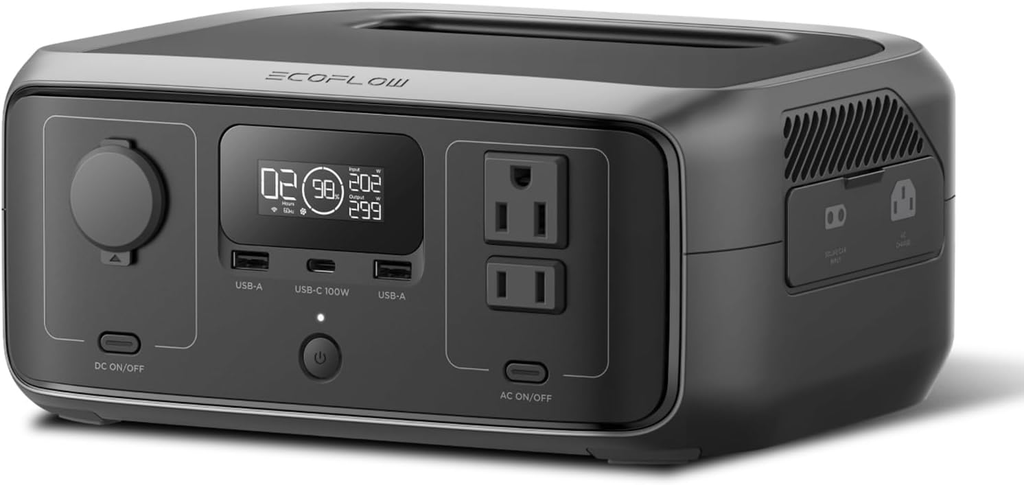
Why it works: It covers phones, laptops, lights and a router for a camping trip or a short outage, in a body that is easy to carry.
Pros:
- Light and compact at about 7.8 pounds
- Quiet and fast charging
- Long-lasting LiFePO4 battery
Cons:
- Small battery, so limited runtime
- Cannot run blenders or heavy appliances
Best for: First-time buyers and anyone who needs light, affordable backup.
Check current price and reviews on Amazon
2. Best for Camping: Jackery Explorer 300 Plus (288Wh, 300W)
The Explorer 300 Plus is a compact, light option from a well-known camping brand. It has a 288Wh LiFePO4 battery and a 300W AC outlet, and weighs about 3.75 kg, or roughly 8.3 pounds.
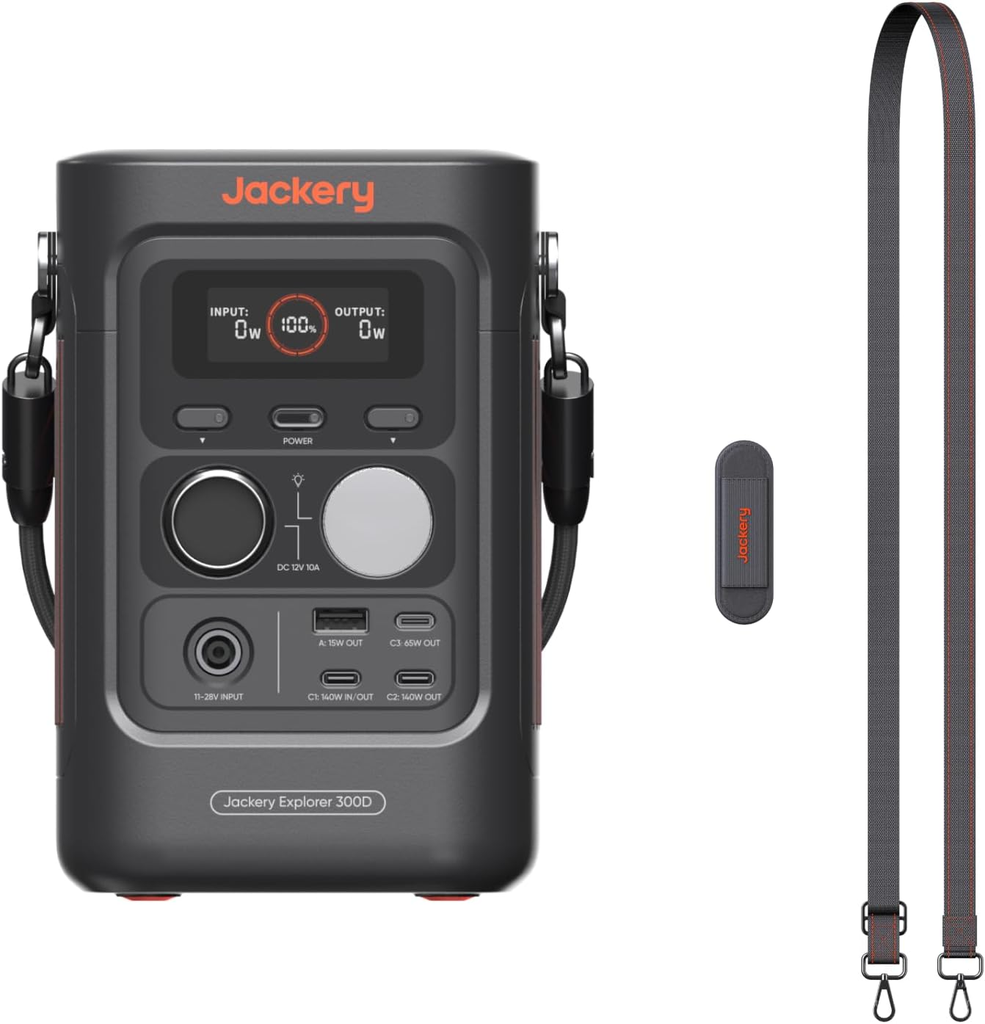
Why it works: The slightly larger battery and simple design suit tent campers who want a bit more runtime than the smallest units.
Pros:
- More capacity than most small units
- LiFePO4 battery
- Simple to use and easy to pack
Cons:
- Limited capacity for a fridge or longer trips
- 300W output limits what you can plug in
Best for: Tent camping and weekend trips.
Check current price and reviews on Amazon
3. Best Budget Output: BLUETTI EB3A (268Wh, 600W)
The EB3A packs more output into a small body. It has a 268Wh LiFePO4 battery and two AC outlets rated at 600W with a 1200W surge. It recharges from 0 to 80 percent in about 30 minutes, is rated for more than 2,500 cycles to 80 percent capacity and weighs about 10 pounds. Bluetti’s own site lists this model as discontinued, so check that the Amazon listing is available and the price is reasonable.
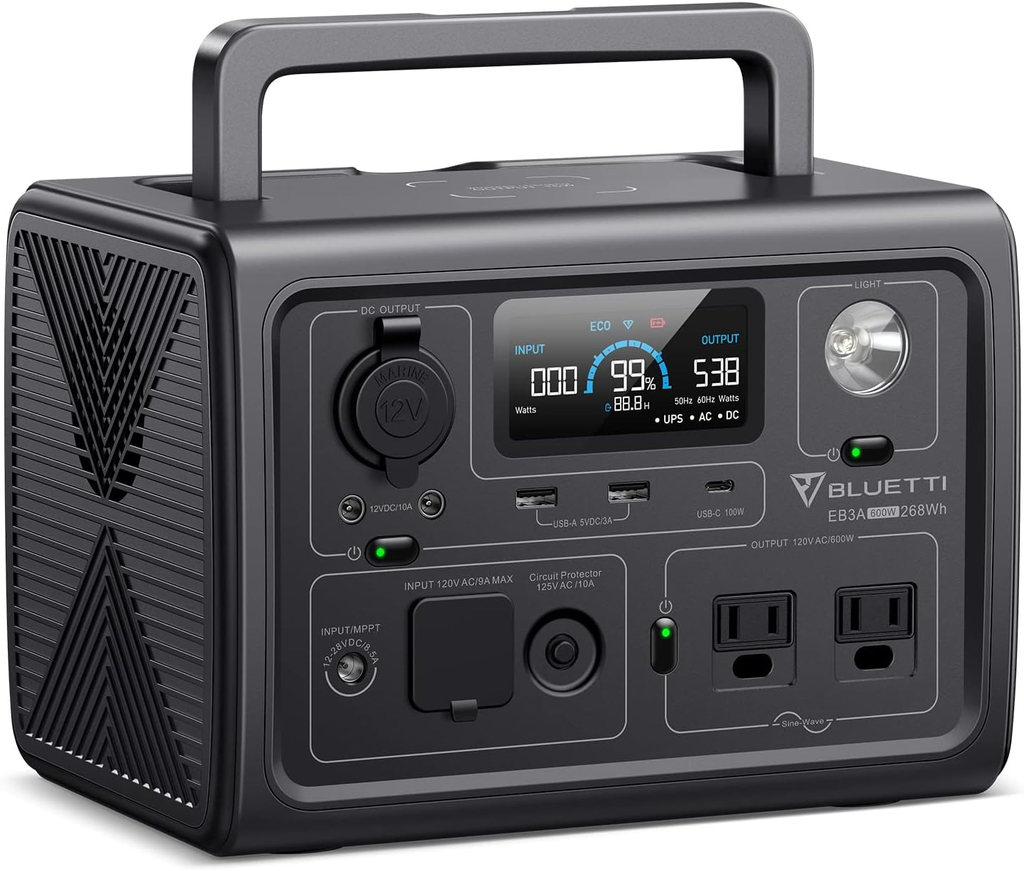
Why it works: The 600W output can run small appliances that a 300W unit cannot, such as a small blender or a mini fridge with a high start-up surge.
Pros:
- 600W output with 1200W surge
- Very fast charging to 80 percent
- Long-lasting LiFePO4 battery
Cons:
- Heavier than the RIVER 3 at about 10 pounds
- Availability may vary
Best for: Budget buyers who want more output than a typical small unit.
Check current price and reviews on Amazon
4. Best Value Capacity: EcoFlow DELTA 2 (1024Wh, 1800W)
If you can stretch your budget, a 1000Wh unit gives you far more capacity per dollar than a small one when it is on sale. The DELTA 2 has a 1024Wh LiFePO4 battery, an 1800W AC output, 13 outlets in total and a rated cycle life of more than 3,000 cycles. It weighs about 27 pounds and can be expanded with extra batteries up to 3kWh.
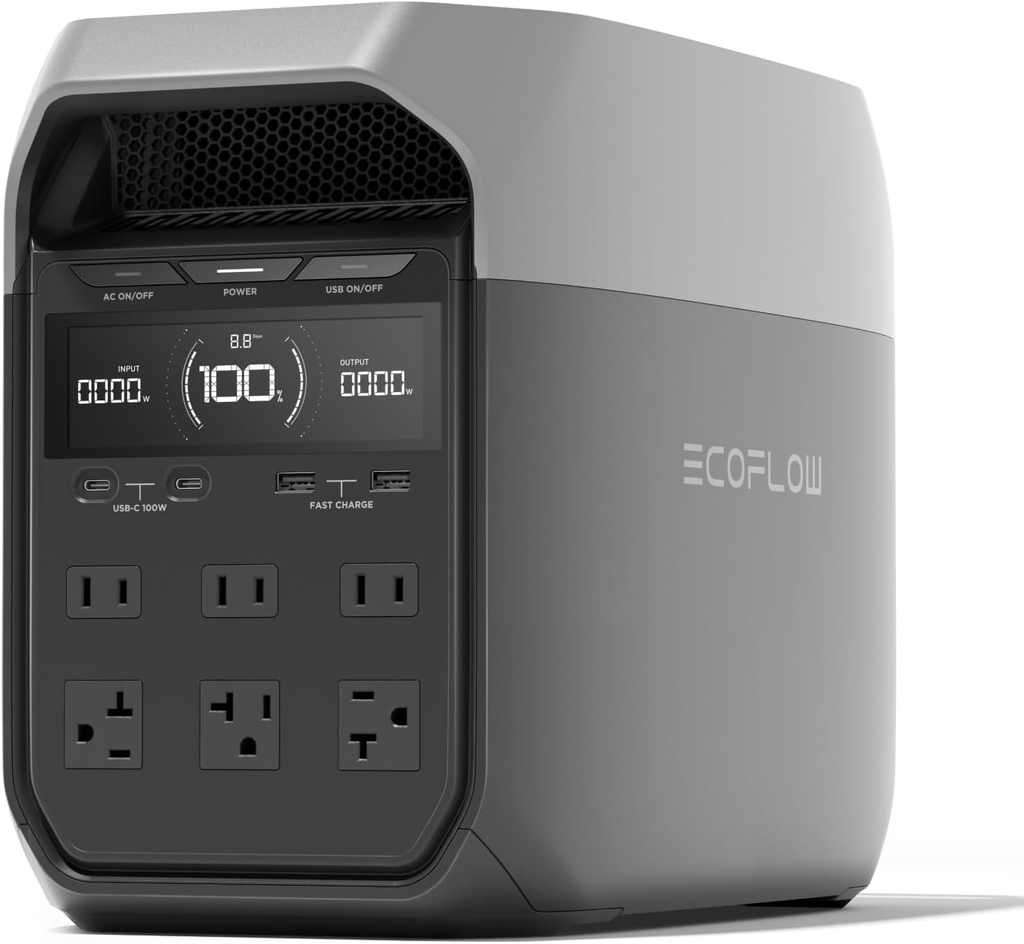
Why it works: It can run a fridge, a TV and small appliances for hours, which makes it useful for both camping and home backup. Check the current price and compare the cost per Wh with the smaller units.
Pros:
- 1024Wh with 1800W output
- Many outlets
- Expandable later
Cons:
- Heavier than the small units
- Costs more up front
Best for: Buyers who want one unit for camping, travel and home backup.
Check current price and reviews on Amazon
Tips to Get the Most from a Budget Power Station
- Use USB-C and DC ports when you can, since they waste less energy than the AC inverter.
- Turn off devices you are not using, and avoid heating appliances.
- Charge it fully before a trip or storm, and top it up every few months.
- Keep it dry, ventilated and out of direct sun.
- Add a foldable solar panel later if you want to recharge off the grid. Check the maximum solar input of your unit first.
- Watch for sales on Black Friday and Cyber Monday, and compare the cost per Wh before you buy.
Frequently Asked Questions
What is the best budget portable power station? For most people, a small LiFePO4 unit from a known brand, such as the EcoFlow RIVER 3 or the Jackery Explorer 300 Plus, offers the best mix of price, weight and reliability. If you want more capacity, check the price of a 1000Wh unit such as the EcoFlow DELTA 2.
What size power station do I need on a budget? For phones, lights, a laptop and a router, 250 to 300Wh is enough. For a fridge, TV or longer outages, look at 700 to 1000Wh when the price is right.
Are cheap power stations safe? Units from established brands with clear specifications, a battery management system and a warranty are a safer bet. Be careful with no-name units that make unbelievable claims.
Is LiFePO4 worth it on a budget? Usually yes. LiFePO4 batteries are known for long cycle life, which can lower your cost over the life of the unit.
Can a budget power station run a fridge? Small units can run a mini fridge for a few hours. For a full-size fridge you need a larger battery and an inverter with enough surge capacity.
How can I find the best price? Compare the cost per watt-hour and watch for sales events such as Black Friday and Cyber Monday. Check the product page for the current price and any coupons.
Final Thoughts
The best budget portable power station is the one that gives you the capacity and output you really need at a fair price. For most beginners, the EcoFlow RIVER 3 or the Jackery Explorer 300 Plus are light, reliable starting points. If you need more output, the BLUETTI EB3A has it, and if you can stretch your budget, the EcoFlow DELTA 2 gives you a lot more capacity.
Save smart! If this guide helped, bookmark it and share it with a friend who is shopping for backup power.
Disclosure: As an Amazon Associate I earn from qualifying purchases. If you buy through links on this page, I may earn a small commission at no extra cost to you.