When the power goes out, the refrigerator is the first appliance you worry about. A portable power station can keep your fridge cold through an outage, power a camping or RV fridge, or serve as backup power in a garage or basement. Here are four of the best portable power stations for a refrigerator, plus a simple guide to working out how much power and runtime you need.
Quick Picks
| Best For | Power Station | Link |
|---|---|---|
| Best Overall | EcoFlow DELTA 2 (1024Wh, 1800W) | Check price on Amazon |
| Best for Long Outages | EcoFlow DELTA 2 with Extra Battery (2048Wh) | Check price on Amazon |
| Best Alternative | BLUETTI AC180 (1152Wh, 1800W) | Check price on Amazon |
| Best Compact | EcoFlow RIVER 2 Pro (768Wh, 800W) | Check price on Amazon |
How Much Power Does a Refrigerator Need?
Refrigerators use less power than you might expect, but they need a strong start. A compressor draws its highest power for a moment when it kicks on, often several times its normal running wattage. That is why the power station’s surge rating matters as much as its battery size.
Two numbers decide whether a power station will work with your fridge:
- Starting (surge) watts: The power station’s inverter must handle the fridge’s brief start-up spike. Check the label on the back or inside the fridge, or the manual, for the amps and wattage.
- Running watts and daily energy use: A full-size fridge runs its compressor only part of the time, so average power over a day is much lower than the running watts. Many full-size fridges use somewhere around 1 to 2 kWh per day, and smaller or camping fridges use much less. Check the yellow EnergyGuide label or the manual.
How long will a power station run a fridge?
Use this simple formula:
Runtime in hours = battery capacity (Wh) x 0.85 / average fridge power draw (W)
The 0.85 allows for energy lost in the inverter. Here are rough estimates using two example average draws:
| Power Station | About 60W average (small or efficient fridge) | About 100W average (older or full-size fridge) |
|---|---|---|
| EcoFlow RIVER 2 Pro (768Wh) | About 11 hours | About 6 to 7 hours |
| EcoFlow DELTA 2 (1024Wh) | About 14 hours | About 9 hours |
| BLUETTI AC180 (1152Wh) | About 16 hours | About 10 hours |
| DELTA 2 with Extra Battery (2048Wh) | About 29 hours | About 17 hours |
These are estimates, not guarantees. Real runtime depends on your fridge, the room temperature, how often the door is opened and the age of the battery. To stretch runtime, solar panels or a second charging source can top the battery up during a longer outage.
How to Choose a Power Station for a Refrigerator
1. Check the inverter output and surge rating. Choose a power station whose continuous output and surge rating comfortably exceed your fridge’s starting watts. Larger fridges and freezers need bigger inverters.
2. Pick enough battery capacity. For a few hours of backup for a small fridge, 700Wh may do. For a full-size fridge through a longer outage, look at 1000Wh and up, or expandable systems.
3. Look for LiFePO4 batteries. LiFePO4 (lithium iron phosphate) cells are known for long cycle life, so a power station you only use occasionally will stay ready for years.
4. Choose UPS or fast switchover if you can. Some models switch to battery quickly when the power drops, which helps keep sensitive electronics running. Check each model’s specifications if this matters to you.
5. Consider recharging options. Fast wall charging helps between outages, and solar charging is valuable if an outage lasts for days.
6. Mind the weight. A 1000Wh unit weighs around 25 to 35 pounds, and expanded systems weigh more. Plan where it will live and how you will move it.
1. Best Overall: EcoFlow DELTA 2 (1024Wh, 1800W)
The DELTA 2 is a strong all-rounder for refrigerator backup. It has a 1024Wh LiFePO4 battery, an 1800W AC output, 13 outlets in total and a rated cycle life of more than 3,000 cycles. It weighs about 27 pounds and can be expanded with extra batteries up to 3kWh.
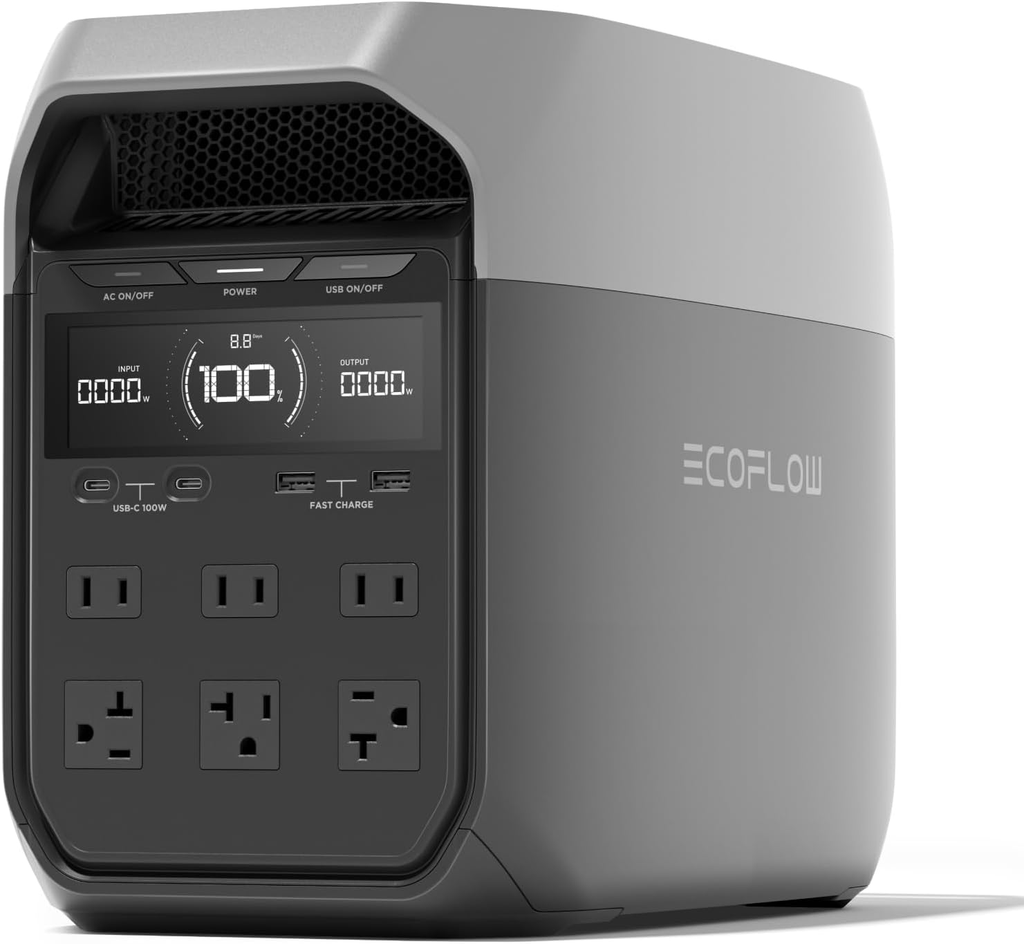
Why it works: The 1800W output can handle the start-up spike of many refrigerators, and the 1024Wh battery gives a useful buffer for most short outages.
Pros:
- Strong 1800W output
- Expandable capacity for the future
- Long-lasting LiFePO4 battery
Cons:
- Heavy to carry far
- A single unit may not last through a long outage with a large fridge
Best for: Most households that want reliable backup for a fridge and a few small devices.
Check current price and reviews on Amazon
2. Best for Long Outages: EcoFlow DELTA 2 with Extra Battery (2048Wh)
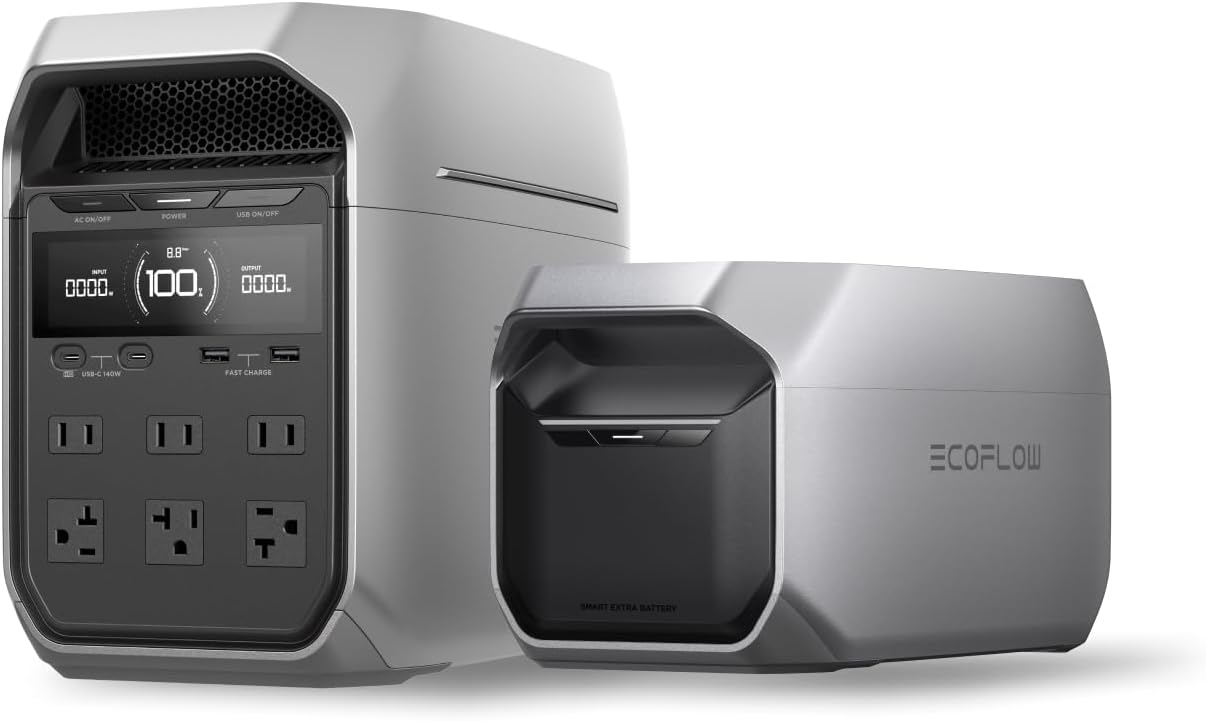
If you want to keep a fridge running through a longer outage, this bundle pairs the DELTA 2 with a smart extra battery, doubling capacity from 1024Wh to 2048Wh. The listing describes it as having an 1800W AC output with enough power for more than 90 percent of home appliances. It weighs about 54 pounds in total.
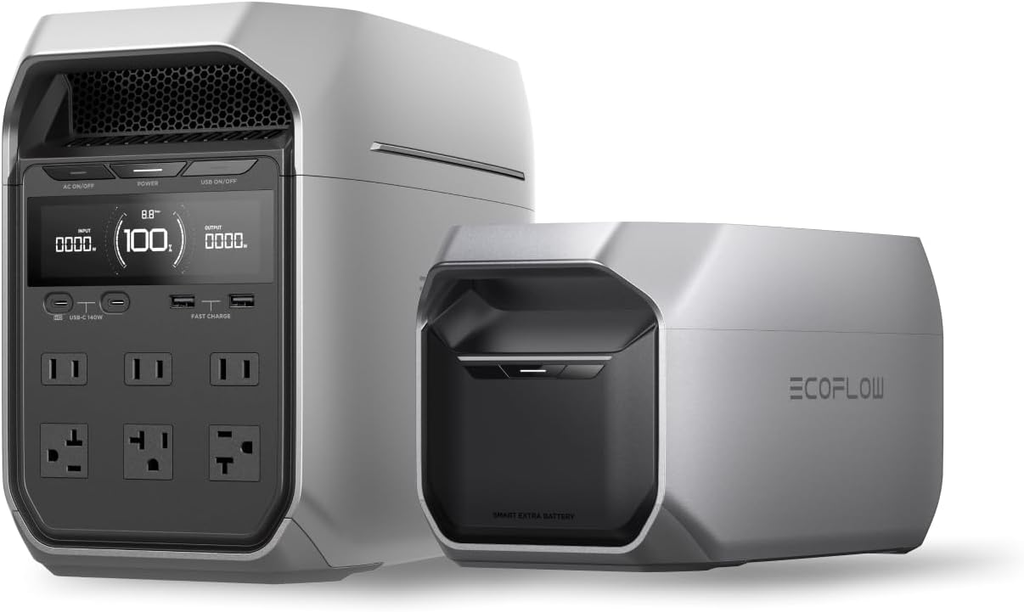
Why it works: Double the capacity means roughly double the runtime for the same fridge, which makes overnight and next-day outages much less stressful.
Pros:
- 2048Wh capacity for longer runtime
- Same 1800W output and many outlets
- Can be paired with solar charging
Cons:
- Heavy at about 54 pounds in total
- Higher cost than a single unit
Best for: Full-size fridges, freezers and homes in areas with frequent or long outages.
Check current price and reviews on Amazon
3. Best Alternative: BLUETTI AC180 (1152Wh, 1800W)
The BLUETTI AC180 is a strong rival to the DELTA 2. It has a 1152Wh LiFePO4 battery, an 1800W inverter (2700W peak), four AC outlets and charges from 0 to 80 percent in about 45 minutes. It weighs about 35 pounds.
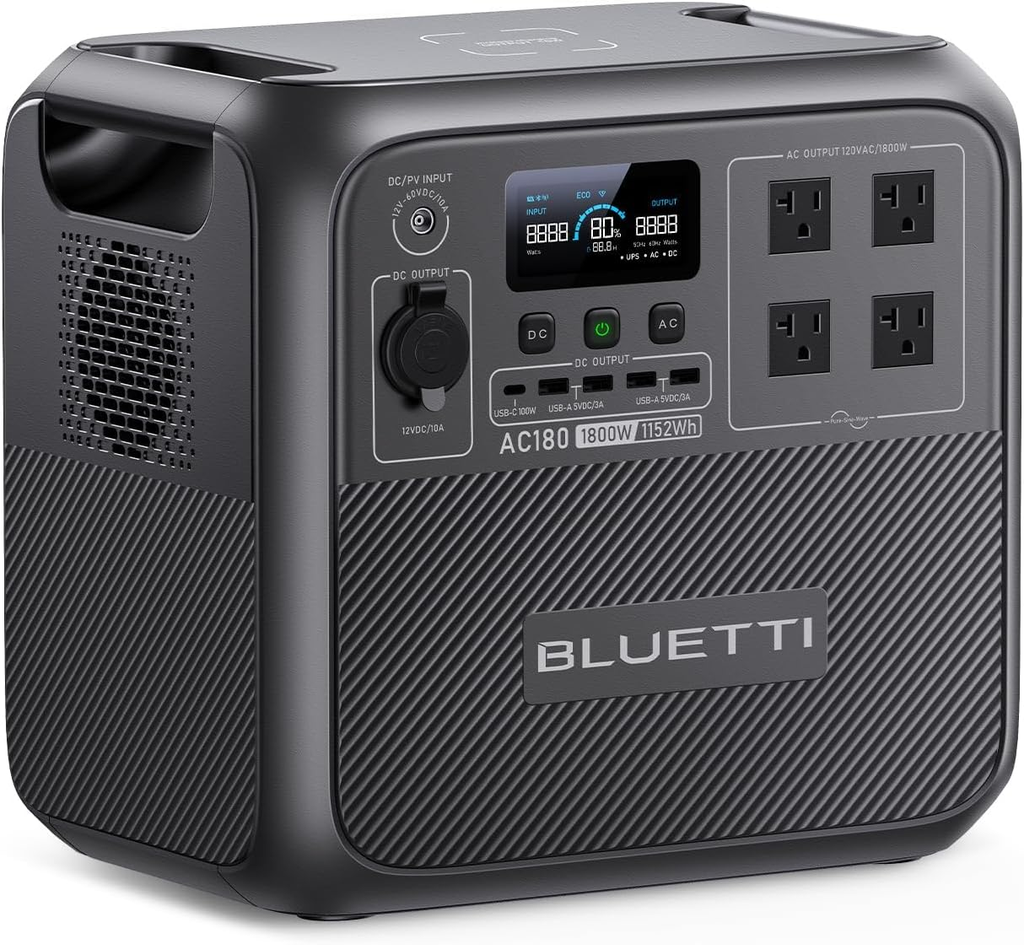
Why it works: A little more capacity than the DELTA 2 and an inverter that can handle a refrigerator’s surge make it a practical choice for kitchen backup.
Pros:
- 1152Wh capacity and 2700W peak output
- Fast charging
- Several AC outlets
Cons:
- Heavier than a 1000Wh unit
- Not as easy to expand as some rivals
Best for: Home backup, RV fridges and workshops.
Check current price and reviews on Amazon
4. Best Compact: EcoFlow RIVER 2 Pro (768Wh, 800W)
For a mini fridge, a camping fridge or a small efficient refrigerator, the RIVER 2 Pro is a lighter option. It has a 768Wh LiFePO4 battery and an 800W AC inverter with a 1600W surge. It weighs about 17 pounds and fast charges in about 70 minutes.
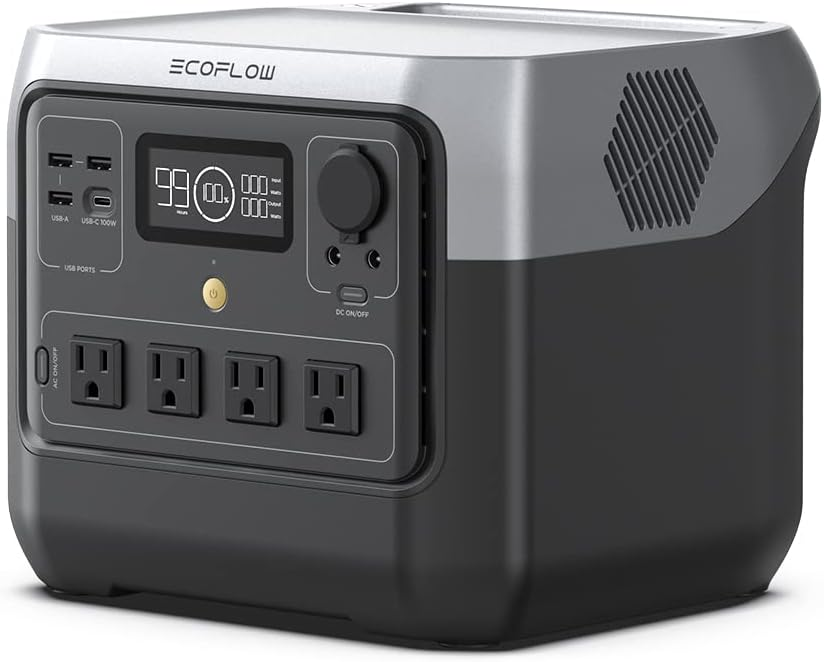
Why it works: It is light enough to carry and has the surge headroom to start a small compressor fridge.
Pros:
- Light and portable at about 17 pounds
- Fast charging
- Good for camping and RV trips
Cons:
- 800W output may be too low for some full-size fridges
- Shorter runtime than larger units
Best for: Mini fridges, camping fridges and short outages.
Check current price and reviews on Amazon
Tips to Keep Food Safe During an Outage
- Keep the fridge and freezer doors closed as much as possible. According to USDA food safety guidance, a closed fridge keeps food safely cold for about 4 hours, and a full freezer holds its temperature for about 48 hours.
- Pre-chill by turning the fridge to a colder setting before a storm, if you have advance notice.
- Use a fridge thermometer. Food should stay at or below 40 degrees F.
- Plug only the fridge into the power station at first, and add other devices only if you have capacity to spare.
- Run an extension cord only if it is rated for the load, and keep the power station ventilated and dry.
- Test the setup before you need it, and keep the battery charged.
Frequently Asked Questions
Can a portable power station run a refrigerator? Yes, if the inverter can handle the fridge’s start-up surge and the battery is large enough for the runtime you want. Check your fridge’s label for wattage and amps.
How long will a power station run a fridge? It depends on the fridge and battery. As a rough guide, divide the battery’s watt-hours (multiplied by about 0.85) by the fridge’s average draw. A 1000Wh unit might run a small fridge for about 14 hours and a larger one for closer to 9 hours.
What size power station do I need for a full-size refrigerator? Look for an inverter of at least 1500W to 1800W and 1000Wh or more of capacity. For longer outages, choose an expandable system or add solar.
Can I run a freezer too? Yes, but it will use more power, so you will need a larger battery or you will get less runtime. Add up the average draw of both before choosing.
Is a power station better than a gas generator for a fridge? Power stations are quiet, produce no fumes and can be used indoors in a ventilated space or in a garage, but they have limited capacity. Generators run for longer but are noisy and must be used outdoors.
Can I charge a power station with solar panels? Many models accept solar panels, which is useful for multi-day outages. Check the supported input wattage for each model.
Final Thoughts
The right portable power station for a refrigerator depends on your fridge and how long you need it to run. For most homes, the EcoFlow DELTA 2 offers a strong mix of power, capacity and expandability. If you need to ride out longer outages, the extra battery bundle doubles runtime, and for a mini fridge or camping, the RIVER 2 Pro is a lighter option.
Stay prepared! If this guide helped, bookmark it and share it with a friend who wants backup power for their kitchen.
Disclosure: As an Amazon Associate I earn from qualifying purchases. If you buy through links on this page, I may earn a small commission at no extra cost to you.