A power outage, a camping trip or a night in an RV should not cost you a night of sleep. If you use a CPAP machine, a portable power station can keep it running when the grid is down or you are off the grid. Here are four of the best portable power stations for CPAP use on Amazon, plus a simple guide to working out how much battery you really need.
Quick Picks
| Best For | Power Station | Link |
|---|---|---|
| Best Overall | EcoFlow RIVER 2 Pro (768Wh) | Check price on Amazon |
| Best Compact | Jackery Explorer 300 Plus (288Wh) | Check price on Amazon |
| Best Dedicated CPAP Battery | BLUETTI X30 CPAP Battery Backup (297Wh) | Check price on Amazon |
| Best for Multiple Nights | BLUETTI AC180 (1152Wh) | Check price on Amazon |
How Much Battery Do You Need for a CPAP?
The answer depends on your machine, your pressure settings and, above all, whether you use a heated humidifier. A CPAP without a heated humidifier often draws a modest amount of power, while a heated humidifier and heated tubing can use much more. Check the power rating in your machine’s manual or on its power adapter before you shop.
Here is a simple way to estimate runtime:
Runtime in hours = battery capacity (Wh) x 0.85 / CPAP power draw (W)
The 0.85 allows for energy lost when the power station converts battery power to AC. Using the example numbers below, here is roughly what to expect for an 8-hour night:
| Power Station | About 40W draw (no heated humidifier) | About 80W draw (with heated humidifier) |
|---|---|---|
| Jackery Explorer 300 Plus (288Wh) | About 6 hours | About 3 hours |
| BLUETTI X30 (297Wh, DC output) | About 6 to 7 hours | About 3 hours |
| EcoFlow RIVER 2 Pro (768Wh) | About 16 hours | About 8 hours |
| BLUETTI AC180 (1152Wh) | About 24 hours | About 12 hours |
These are rough estimates, not guarantees. Real runtime changes with your settings, room temperature and the age of the battery, so use your own machine’s wattage in the formula.
How to Choose a Power Station for CPAP
1. Match capacity to your needs. For a single night without a heated humidifier, a unit around 300Wh can be enough. For heated humidifiers or several nights in a row, look at 700Wh and up.
2. Check the output type. Most power stations have AC outlets, so you can plug in your CPAP’s normal power adapter. Dedicated CPAP batteries use DC output instead, which avoids conversion losses and can stretch runtime, but they power only compatible devices.
3. Look for LiFePO4 batteries. LiFePO4 (lithium iron phosphate) batteries are known for long cycle life and good safety, which matters for a device you may rely on every night.
4. Think about weight and size. If the unit will live in a bedroom closet, size matters less. For camping and travel, a lighter unit is easier to carry.
5. Choose quiet operation. Look for a unit with a quiet fan so it does not disturb your sleep.
6. Plan how you will recharge. Wall charging is fastest, while a car charger or solar panel can keep a unit topped up when you are off the grid.
7. Talk to the right people. Ask your CPAP supplier or sleep provider whether a power station is suitable for your device. A CPAP is not a life-support machine, but a power station is not a replacement for the guidance of your care team.
1. Best Overall: EcoFlow RIVER 2 Pro (768Wh)
The RIVER 2 Pro balances capacity, weight and features better than most. It has a 768Wh LiFePO4 battery and an 800W AC inverter, with a 1600W surge. It weighs about 17.2 pounds, has four AC outlets, plus USB-A, USB-C and a car outlet, and fast-charges in about 70 minutes.
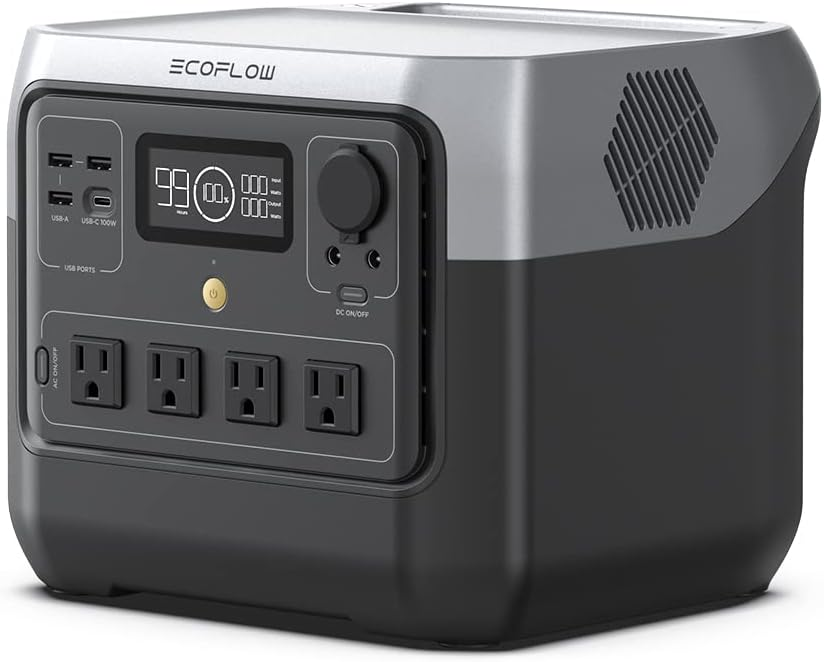
Why it works: It has enough capacity to run a CPAP for a night with a heated humidifier, or for more than a night without one, while still being light enough to carry.
Pros:
- Large enough for a heated humidifier or multiple nights without one
- Fast charging and app control
- Several AC outlets for a phone, light or fan
Cons:
- Heavier than a 300Wh unit
- AC output means some energy is lost converting power
Best for: Home outage backup and camping, with room to spare.
Check current price and reviews on Amazon
2. Best Compact: Jackery Explorer 300 Plus (288Wh)
The Explorer 300 Plus is a small, light option that is easy to pack. It has a 288Wh LiFePO4 battery and a 300W AC outlet, and weighs about 3.75 kg (roughly 8.3 pounds).
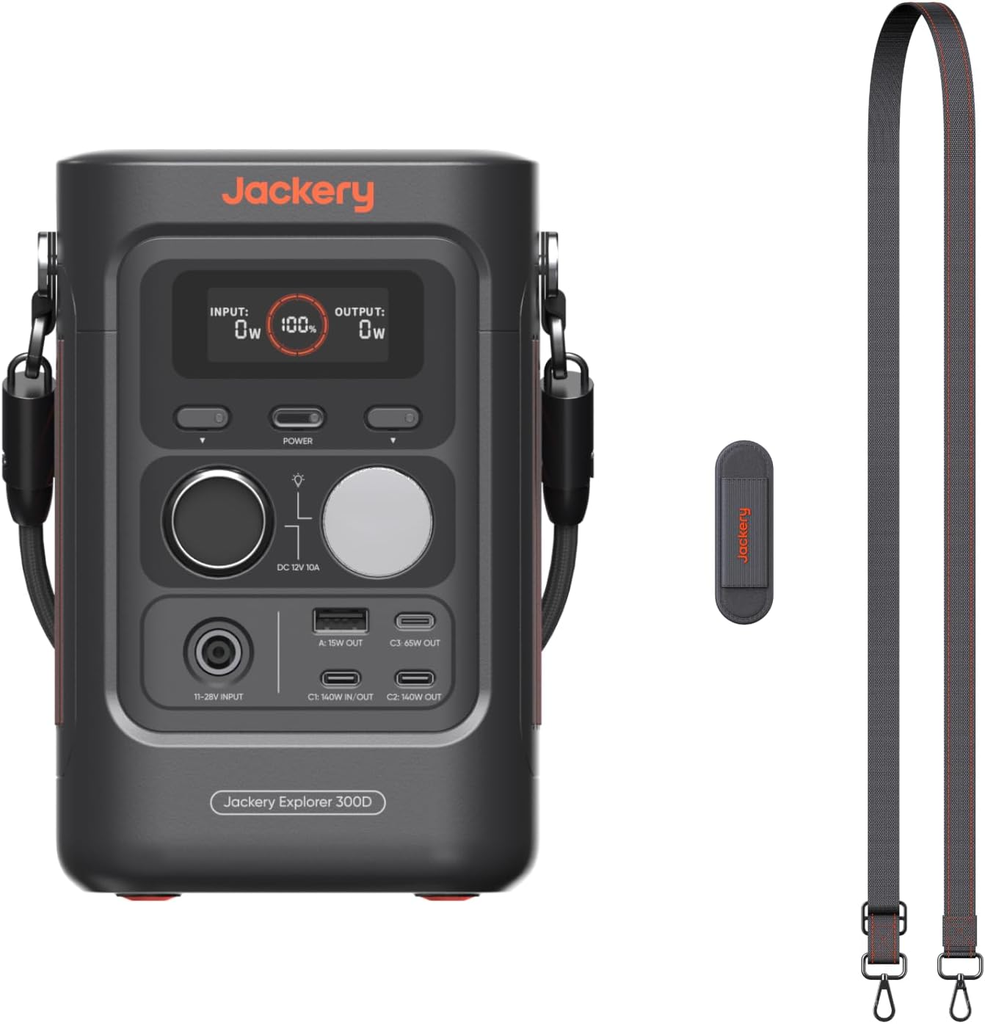
Why it works: It is portable enough to throw in a car or backpack and still delivers a standard AC outlet for your CPAP’s normal power adapter.
Pros:
- Light and compact
- LiFePO4 battery
- AC outlet works with a standard CPAP adapter
Cons:
- Limited capacity for a heated humidifier
- Not enough for multiple nights
Best for: Camping trips and short outages when you do not need a heated humidifier.
Check current price and reviews on Amazon
3. Best Dedicated CPAP Battery: BLUETTI X30 (297Wh)
The X30 is sold specifically as a CPAP battery backup. It provides 297Wh of power through DC outputs, and the listing says it includes five DC cables and two DC connectors for popular machines such as the ResMed AirSense 10 and 11, AirMini and AirCurve 10, as well as Philips DreamStation models. It weighs about 4 pounds.
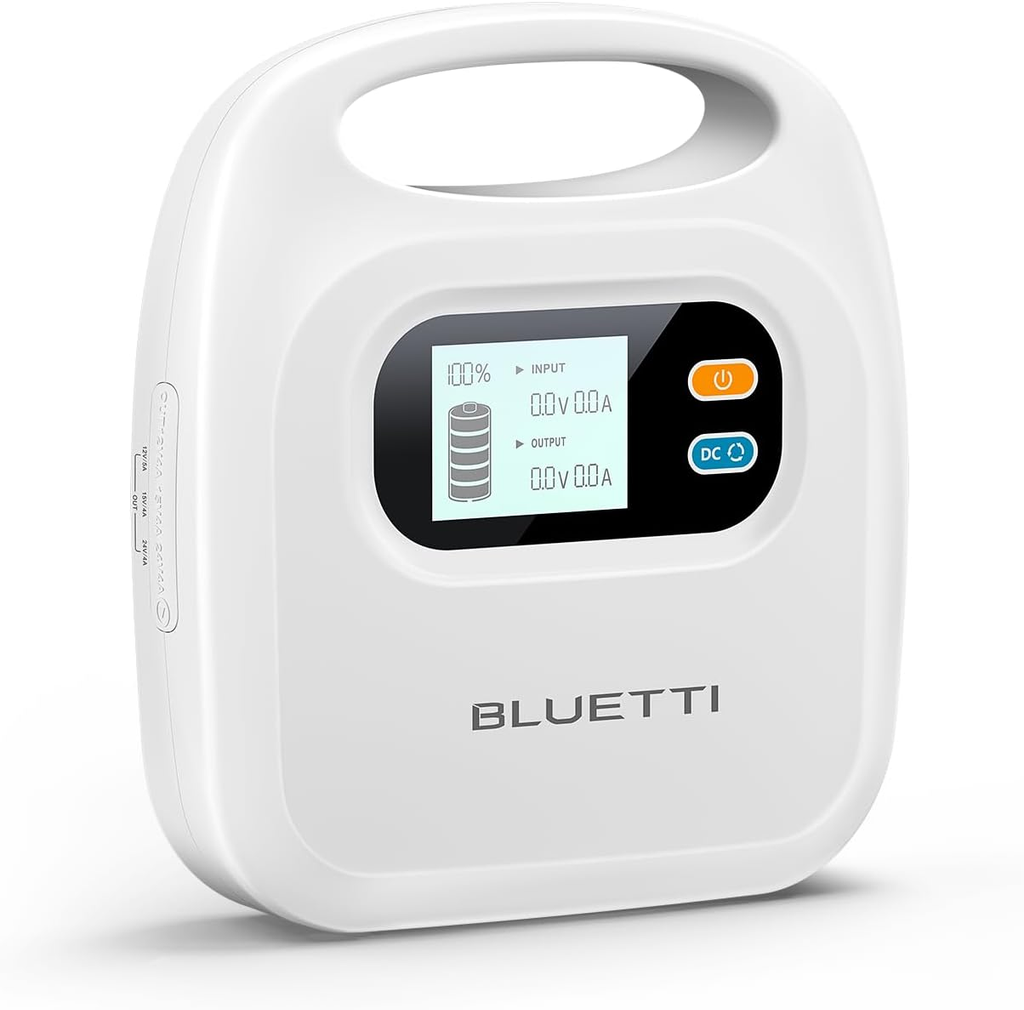
Why it works: Powering a CPAP directly from DC avoids the loss of an AC inverter, which can stretch runtime per watt-hour. It is also compact and light.
Pros:
- Built for CPAP and BiPAP use
- Light and compact at about 4 pounds
- Cables included for many popular machines
Cons:
- DC only, so it will not power AC devices
- Check that your exact machine and humidifier are supported
Best for: People who want a simple, purpose-built CPAP backup.
Check current price and reviews on Amazon
4. Best for Multiple Nights: BLUETTI AC180 (1152Wh)
The AC180 is a big step up in capacity. It has a 1152Wh LiFePO4 battery, an 1800W AC inverter and four AC outlets. It charges from 0 to 80 percent in about 45 minutes and weighs about 35 pounds.
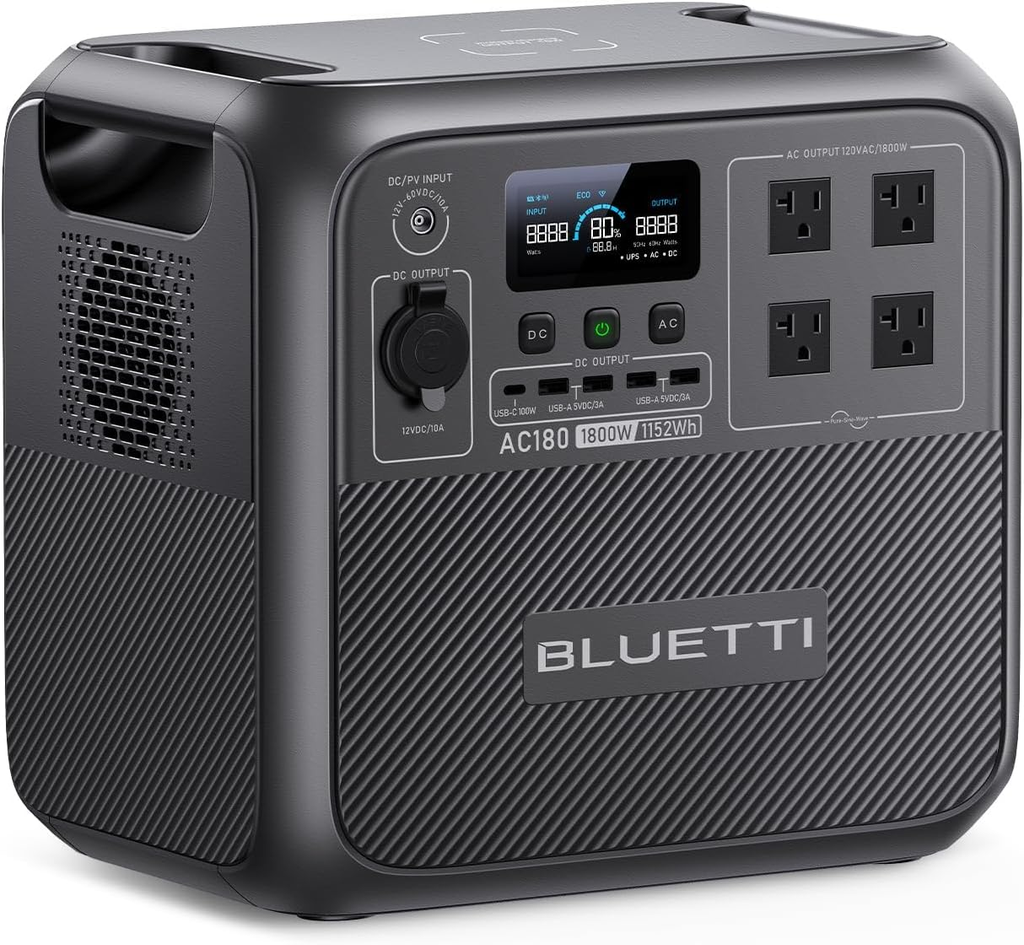
Why it works: The large battery can run a CPAP through a heated humidifier all night, with plenty left for a fan, phone or small light.
Pros:
- High capacity for long outages
- Several AC outlets
- Fast charging
Cons:
- Heavy to carry far
- Overkill if you only need a night or two of backup
Best for: Home outages, RVs and anyone who uses a heated humidifier.
Check current price and reviews on Amazon
Safety and Travel Tips
- Test your setup at home before you need it, and run your CPAP on the power station for a full night.
- Charge the power station fully, and top it up every few months so it is ready when an outage hits.
- Keep it in a cool, dry place and do not cover the vents while it is running.
- If you use a heated humidifier, remember it can increase power draw a lot. Turn it down or off if you need the battery to last longer.
- Check the wattage of every device you plug in so you do not overload the inverter.
- Most airlines limit lithium batteries, and power stations of this size are generally too large for carry-on. Check your airline’s rules and use a smaller, airline-approved battery if you are flying.
Frequently Asked Questions
How long will a portable power station run a CPAP? It depends on the battery size and your machine’s power draw. As a rough guide, divide the battery’s watt-hours (multiplied by about 0.85) by your CPAP’s wattage. A 300Wh unit may last about one night without a heated humidifier, while 700Wh and up gives you more room.
Can I use a power station with a heated humidifier? Yes, but a heated humidifier can use a lot of power, so you will need a larger battery or you will get far fewer hours of use.
What size power station do I need for a CPAP? For one night without a heated humidifier, about 300Wh can work. For heated humidifiers or several nights, look for 700Wh to 1000Wh or more.
Is a dedicated CPAP battery better than a power station? A dedicated CPAP battery like the BLUETTI X30 is smaller and often more efficient, but it only powers compatible CPAP machines. A power station is more versatile and can also run a fan, phone and lights.
Can I use a power station on a plane? Most power stations are too large for carry-on. Check your airline’s rules before you fly.
Can I charge a power station with solar panels? Many models support solar charging with an optional panel, which is useful for camping and long outages. Check the specifications of each unit.
Final Thoughts
The best portable power station for CPAP depends on how you sleep and where you need power. For most people, the EcoFlow RIVER 2 Pro is a well-balanced all-rounder. If you only need a light, compact backup, the Jackery Explorer 300 Plus or the dedicated BLUETTI X30 are good choices, and for a heated humidifier or multi-night outages, the BLUETTI AC180 has room to spare.
Sleep well! If this guide helped, bookmark it and share it with a friend who relies on a CPAP.
Disclosure: As an Amazon Associate I earn from qualifying purchases. If you buy through links on this page, I may earn a small commission at no extra cost to you.