A portable power station lets you run lights, a fridge, laptops and even a microwave without hooking up to shore power. For weekend campers, van lifers and full-time RVers who like to boondock, it is a quiet, fume-free alternative to a gas generator. Here are four of the best portable power stations for an RV, plus a guide to working out how much power you actually need.
Quick Picks
| Best For | Power Station | Link |
|---|---|---|
| Best Overall | EcoFlow DELTA 2 (1024Wh, 1800W) | Check price on Amazon |
| Best Compact | EcoFlow RIVER 2 Pro (768Wh, 800W) | Check price on Amazon |
| Best Mid-Size | BLUETTI AC180 (1152Wh, 1800W) | Check price on Amazon |
| Best for Long Stays | EcoFlow DELTA Pro 3 (4096Wh, 4000W) | Check price on Amazon |
How Much Power Does an RV Need?
The right size depends on what you run and for how long. Start by listing your devices and finding two numbers for each: its running watts and how many hours a day you use it. Add them up to get your daily energy use in watt-hours (Wh), then choose a power station with enough capacity and a big enough inverter.
Here are typical examples. Check your own appliances’ labels, as real numbers vary:
| Appliance | Typical running power |
|---|---|
| LED lights | 10 to 20W |
| Laptop | 50 to 90W |
| TV | 50 to 100W |
| Compressor fridge (average draw) | 40 to 100W |
| Fan | 20 to 60W |
| Microwave | 700 to 1200W |
| Coffee maker | 600 to 1200W |
| Rooftop air conditioner | 1500W or more, with a large start-up surge |
Rough runtime for light boondocking
Many people who run lights, a fridge, phones, a laptop and a fan use roughly 1.5 to 3 kWh per day. Using the formula days = capacity (Wh) x 0.85 / daily use (Wh), here is what to expect before you need to recharge:
| Power Station | At 1.5 kWh per day | At 3 kWh per day |
|---|---|---|
| EcoFlow RIVER 2 Pro (768Wh) | About half a day | About a quarter of a day |
| EcoFlow DELTA 2 (1024Wh) | About 0.6 days | About 0.3 days |
| BLUETTI AC180 (1152Wh) | About 0.65 days | About 0.3 days |
| EcoFlow DELTA Pro 3 (4096Wh) | About 2.3 days | About 1.2 days |
These are estimates. Solar panels, a 12V charging cable while driving or a campground hookup can top up the battery and make a smaller unit last longer.
What about the air conditioner?
A rooftop RV air conditioner is the hardest load for a portable power station. It typically needs 1500W or more while running and a much larger surge when the compressor starts. Only the biggest systems can run one, and only for a limited time, so do not buy a small unit expecting it to cool the whole rig.
How to Choose a Power Station for an RV
1. Match capacity to your daily use. Add up your daily watt-hours and choose a unit that covers at least a day with some margin.
2. Check the inverter output. Make sure the continuous output and surge rating cover your biggest load, such as a microwave or hair dryer.
3. Look for LiFePO4 batteries. They are known for long cycle life and good safety, which is a plus for a unit that will be charged and discharged often.
4. Plan how you will recharge. Look for solar input, wall charging for campgrounds and 12V charging for driving. Check the maximum input wattage for each model.
5. Think about weight and where it will live. A 1000Wh unit weighs about 25 to 35 pounds, while the largest systems are far heavier and are best kept in one spot.
6. Check the plug types. Many RVs use a 30-amp inlet. If you plan to connect your power station to the RV’s electrical system, check that the unit has the right outlet or adapter, and use appropriately rated cords. If you are unsure about wiring, ask a qualified RV electrician.
7. Consider expansion. Some units accept extra batteries, so you can start small and add capacity later.
1. Best Overall: EcoFlow DELTA 2 (1024Wh, 1800W)
The DELTA 2 is a popular choice for RV and van trips. It has a 1024Wh LiFePO4 battery, an 1800W AC output, 13 outlets in total and a rated cycle life of more than 3,000 cycles. It weighs about 27 pounds and can be expanded with extra batteries up to 3kWh.
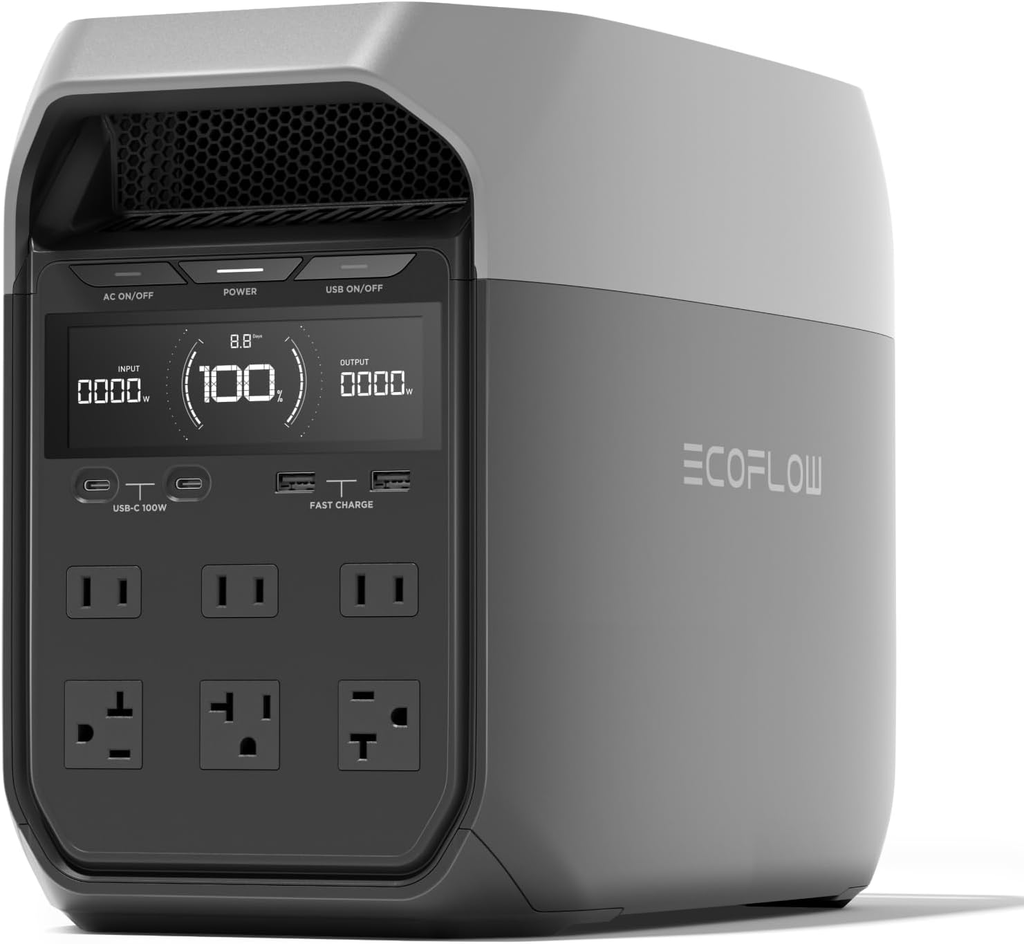
Why it works: It runs a compressor fridge, lights, devices and a small appliance like a coffee maker or microwave in short bursts, and it can grow with you.
Pros:
- 1800W output handles most small appliances
- Expandable capacity
- Fast charging and many outlets
Cons:
- Not enough for a rooftop air conditioner
- Heavy to carry far
Best for: Weekend camping, vans and small trailers.
Check current price and reviews on Amazon
2. Best Compact: EcoFlow RIVER 2 Pro (768Wh, 800W)
For van life and lighter loads, the RIVER 2 Pro is smaller and easier to move. It has a 768Wh LiFePO4 battery and an 800W AC inverter with a 1600W surge. It weighs about 17 pounds, has four AC outlets and fast charges in about 70 minutes.
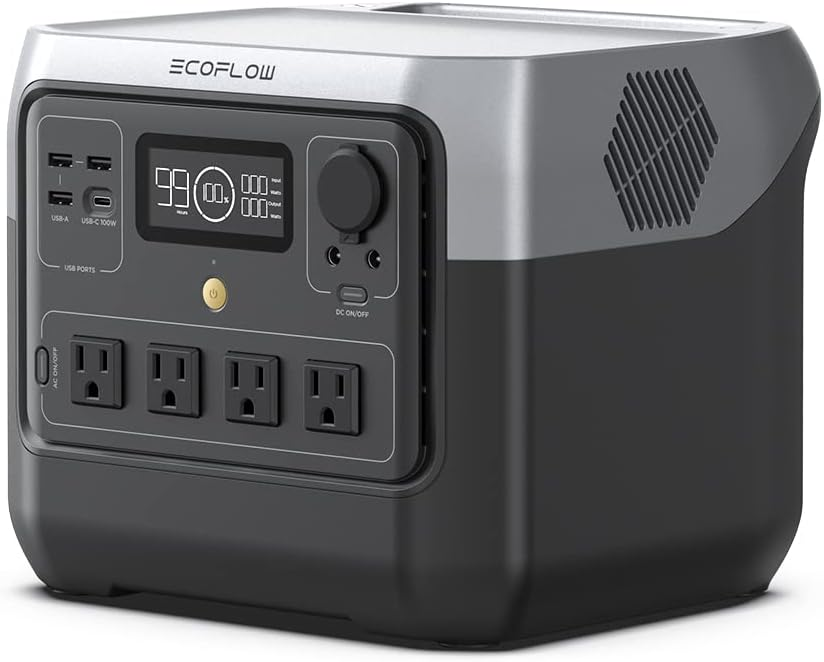
Why it works: It covers lights, phones, a laptop, a fan and a compressor fridge, and it is light enough to move between the van and a campsite.
Pros:
- Light and portable at about 17 pounds
- Fast charging
- Four AC outlets plus USB ports
Cons:
- 800W output rules out most microwaves and coffee makers
- Shorter runtime than larger units
Best for: Camper vans, tent camping and short trips.
Check current price and reviews on Amazon
3. Best Mid-Size: BLUETTI AC180 (1152Wh, 1800W)
The AC180 has a little more capacity than the DELTA 2 and strong output. It has a 1152Wh LiFePO4 battery, an 1800W inverter with a 2700W peak and four AC outlets. It charges from 0 to 80 percent in about 45 minutes and weighs about 35 pounds.
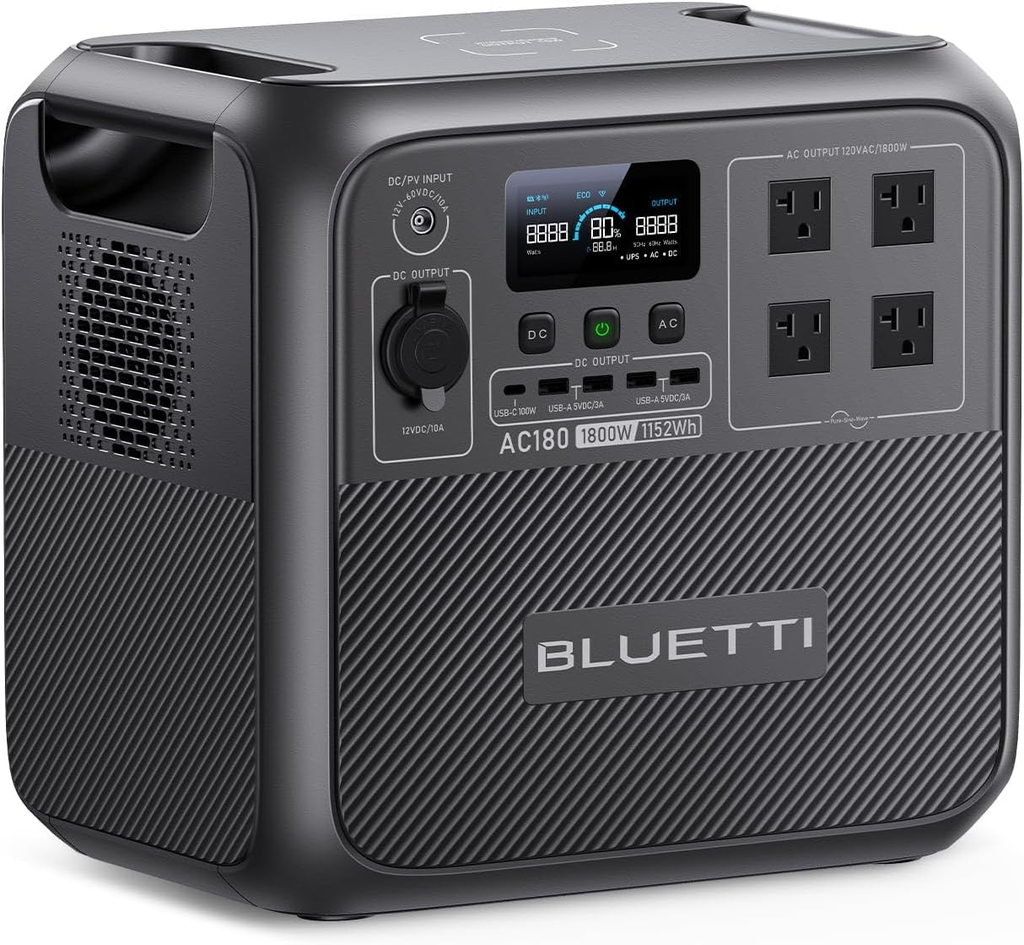
Why it works: The extra capacity and 2700W peak make it a flexible choice for RVs that run small appliances like a microwave or induction burner.
Pros:
- 1152Wh capacity and 2700W peak output
- Fast charging
- Good for powering a fridge, devices and small appliances
Cons:
- Heavy at about 35 pounds
- Not enough for a rooftop air conditioner
Best for: Travel trailers and Class B and C RVs.
Check current price and reviews on Amazon
4. Best for Long Stays: EcoFlow DELTA Pro 3 (4096Wh, 4000W)
If you boondock for several days at a time, the DELTA Pro 3 is a much bigger system. It has a 4096Wh LFP battery, 4000W AC output and 120/240V output, and it can be expanded to 48kWh with extra batteries.
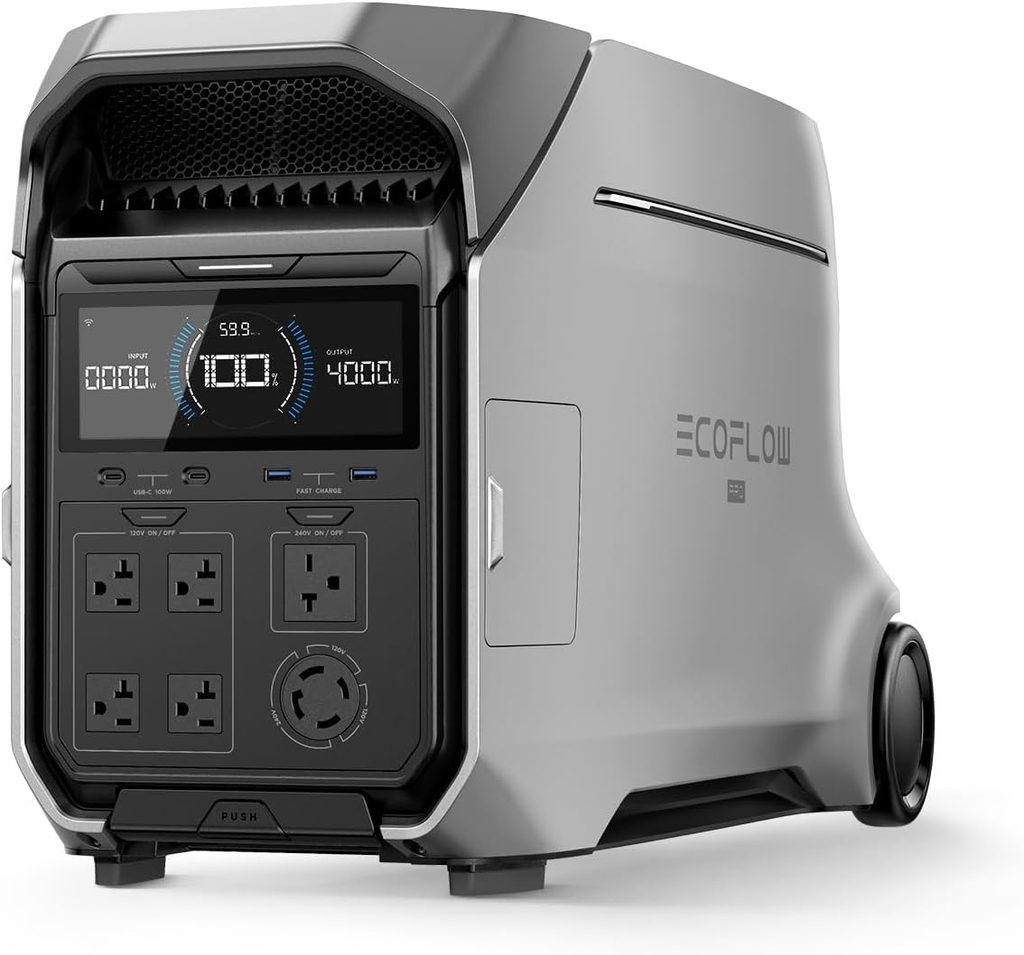
Why it works: A large battery and a 4000W inverter let you run more appliances for longer, and it can handle heavier loads than a small unit.
Pros:
- 4096Wh of capacity
- 4000W output with 120/240V
- Expandable to a very large system
Cons:
- Large, heavy and expensive
- Better suited to a permanent spot than frequent carrying
Best for: Full-time RVers, long boondocking trips and homes on wheels.
Check current price and reviews on Amazon
Tips for Using a Power Station in an RV
- Add solar panels so you can recharge during the day. Check the maximum solar input of the unit you buy.
- Use 12V and USB-C outputs where you can. They are more efficient than running everything through the AC inverter.
- Choose a compressor fridge or an efficient 12V fridge. It uses far less energy than an absorption fridge.
- Run high-power appliances such as a microwave or kettle only when you need them, and turn them off straight away.
- Keep the unit ventilated, dry and out of direct sun, and do not run it in a closed compartment without airflow.
- Charge the battery fully before a trip, and top it up while driving if your unit supports 12V or alternator charging.
- Confirm the recommended temperature range for your unit before camping in very hot or very cold weather.
Frequently Asked Questions
What size portable power station do I need for an RV? For weekends with a fridge, lights and devices, about 1000Wh is a good starting point. For several days of boondocking or heavier loads, look at 3000Wh or more, or an expandable system.
Can a portable power station run an RV air conditioner? Only the largest systems can, and usually only for a limited time. Rooftop air conditioners need a lot of power and a large start-up surge, so check the specifications of both the air conditioner and the power station.
Can I charge a power station while driving? Many models can charge from a 12V outlet or an alternator charger. Check each model’s specifications for the charging speed and compatible accessories.
Can I use solar panels with a portable power station? Yes. Most models accept solar panels up to a maximum input wattage. Check the limit and the connector type for the unit you buy.
Is a portable power station better than a generator? Power stations are quiet and produce no fumes, so you can use them in campgrounds with generator restrictions. Generators can run longer on a tank of fuel but are noisy and must be used outdoors.
Can I plug a power station into my RV? Some people connect a power station to the RV’s electrical system, but it must be done safely with the right outlets, cords and adapters. If you are unsure, ask a qualified RV electrician.
Final Thoughts
The best portable power station for an RV depends on how you camp. For most weekend travelers, the EcoFlow DELTA 2 is a well-rounded pick. If you live in a van or want something lighter, the RIVER 2 Pro is easier to carry, and the BLUETTI AC180 offers a bit more capacity and peak power. For long off-grid stays, the DELTA Pro 3 gives you the capacity to power more of your RV.
Safe travels! If this guide helped, bookmark it and share it with a friend who is planning an RV trip.
Disclosure: As an Amazon Associate I earn from qualifying purchases. If you buy through links on this page, I may earn a small commission at no extra cost to you.