
A portable power station turns a campsite into a comfortable one. It keeps your phones, lights, camera batteries and laptop charged, runs a fan or a portable fridge, and does it all quietly with no fumes. Here are five of the best portable power stations for camping on Amazon, from an ultralight pick for weekend trips to a high-capacity unit for longer stays, plus a guide to choosing the right size.
Quick Picks
| Best For | Power Station | Link |
|---|---|---|
| Best Overall | EcoFlow RIVER 2 Pro (768Wh, 800W) | Check price on Amazon |
| Best Ultralight | EcoFlow RIVER 3 (245Wh, 300W) | Check price on Amazon |
| Best Lightweight | Jackery Explorer 300 Plus (288Wh, 300W) | Check price on Amazon |
| Best for Groups | EcoFlow DELTA 2 (1024Wh, 1800W) | Check price on Amazon |
| Best High-Capacity | BLUETTI AC180 (1152Wh, 1800W) | Check price on Amazon |
How Much Power Do You Need for Camping?
Start by listing what you will plug in and how long you will use it. Most campers fall into one of two groups: light users who charge phones and run lights, and heavier users who also run a laptop, fan, electric cooler or small appliances.
Here are typical running watts. Check your own devices’ labels, as real numbers vary:
| Device | Typical running power |
|---|---|
| Phone charging | 5 to 20W |
| LED lantern or string lights | 5 to 20W |
| Laptop | 50 to 90W |
| Fan | 20 to 60W |
| Electric cooler or 12V fridge (average draw) | 40 to 100W |
| Electric blanket | 50 to 100W |
| Electric kettle or induction burner | 1000W or more |
Rough runtime for a day of camping
Use this formula: days = battery capacity (Wh) x 0.85 / daily use (Wh). The 0.85 allows for energy lost in the inverter. Here is what to expect for two example camping styles:
| Power Station | Light use, about 400Wh per day | Heavier use with an electric cooler, about 1000Wh per day |
|---|---|---|
| EcoFlow RIVER 3 (245Wh) | About half a day | A few hours |
| Jackery Explorer 300 Plus (288Wh) | About 0.6 days | A few hours |
| EcoFlow RIVER 2 Pro (768Wh) | About 1.6 days | About 0.65 days |
| EcoFlow DELTA 2 (1024Wh) | About 2.2 days | About 0.9 days |
| BLUETTI AC180 (1152Wh) | About 2.4 days | About 1 day |
These are estimates, not guarantees. Cold weather, the age of the battery and how efficiently you run devices all change the result. A solar panel can top the battery up during the day and stretch your trip.
How to Choose a Camping Power Station
1. Match capacity to your trip. Under 300Wh is fine for a weekend of phones, lights and a camera. Around 700 to 1000Wh suits longer trips or a laptop and fan. Go higher if you want an electric cooler or small appliances.
2. Watch the weight. If you walk any distance from your car, every pound matters. For car camping, weight matters less than capacity.
3. Check the output. Make sure the AC output is high enough for your biggest device. A kettle or induction burner needs far more power than a 300W unit can supply.
4. Look for LiFePO4 batteries. They are known for long cycle life and good safety, which suits a unit that will be charged and discharged often.
5. Plan your recharging. Look for solar input, a 12V car charger and fast wall charging so you can top up before and after trips.
6. Think about the cold. Many lithium batteries limit or stop charging below freezing, and capacity drops in the cold. Check the operating and charging temperatures for any unit you plan to use in winter.
7. Pick quiet operation. Quiet fans matter when your tent is next to the power station.
1. Best Overall: EcoFlow RIVER 2 Pro (768Wh, 800W)
The RIVER 2 Pro is the best all-rounder for most campers. It has a 768Wh LiFePO4 battery and an 800W AC inverter with a 1600W surge. It weighs about 17 pounds, has four AC outlets and fast charges in about 70 minutes.
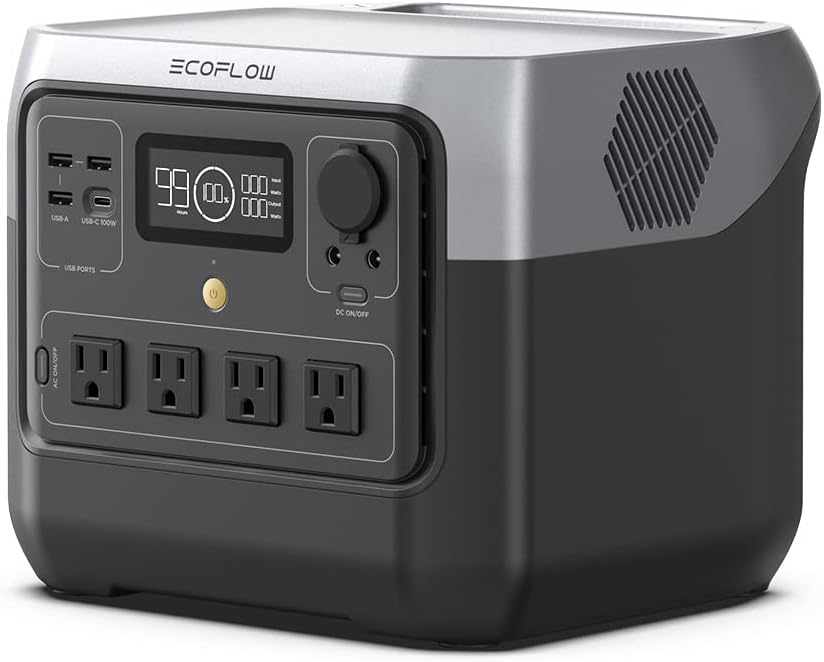
Why it works: It has enough capacity for a weekend of lights, phones, a laptop and a fan, but it is still light enough to carry from the car to the campsite.
Pros:
- Good balance of capacity and weight
- Fast charging
- Four AC outlets plus USB ports
Cons:
- 800W output rules out kettles and many cooking appliances
- Heavier than a small unit
Best for: Weekend car camping and RV trips.
Check current price and reviews on Amazon
2. Best Ultralight: EcoFlow RIVER 3 (245Wh, 300W)
The RIVER 3 is a small, light and affordable starting point. It has a 245Wh LiFePO4 battery, a 300W AC output with X-Boost up to 600W and weighs about 7.8 pounds. It charges in about an hour, runs quietly at under 30 dB and is rated for about 3,000 cycles to 80 percent capacity.
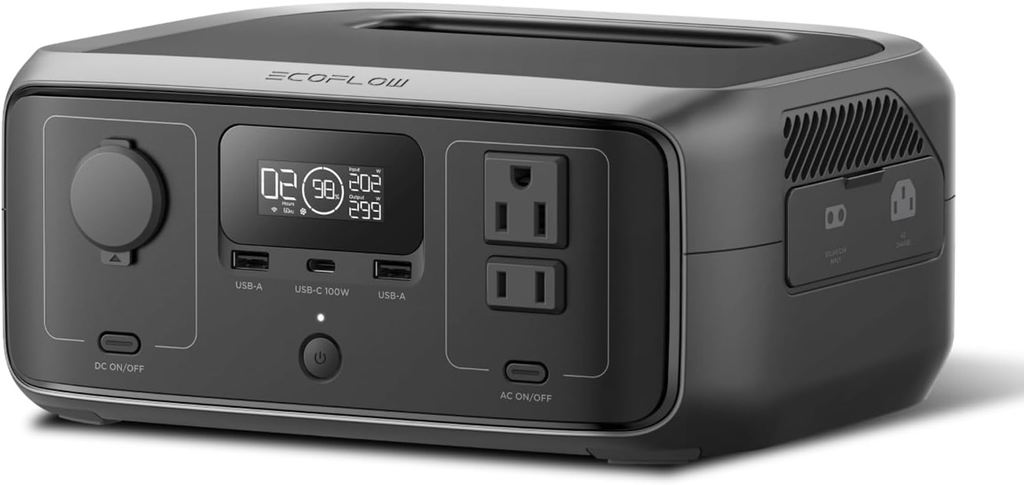
Why it works: It is easy to carry and covers phones, lights, cameras and a laptop for a short trip.
Pros:
- Very light and compact at about 7.8 pounds
- Quiet and fast charging
- Long-lasting LiFePO4 battery
Cons:
- Small capacity for longer trips
- Cannot run high-power appliances
Best for: Backpack-adjacent trips, short stays and camping with a few devices.
Check current price and reviews on Amazon
3. Best Lightweight: Jackery Explorer 300 Plus (288Wh, 300W)
The Explorer 300 Plus is a compact, light option from a well-known camping brand. It has a 288Wh LiFePO4 battery and a 300W AC outlet, and weighs about 3.75 kg, or roughly 8.3 pounds.
Why it works: The slightly larger battery and lightweight build make it a good fit for tent campers who want a bit more runtime than the smallest units.
Pros:
- Light at about 8.3 pounds
- LiFePO4 battery
- Simple to use
Cons:
- Limited capacity for a fridge or longer trips
- 300W output limits what you can plug in
Best for: Tent camping and weekend trips.
Check current price and reviews on Amazon
4. Best for Groups: EcoFlow DELTA 2 (1024Wh, 1800W)
For family or group camping, the DELTA 2 has plenty of capacity and 13 outlets. It has a 1024Wh LiFePO4 battery and an 1800W AC output, and is rated for more than 3,000 cycles. It weighs about 27 pounds and can be expanded with extra batteries up to 3kWh.
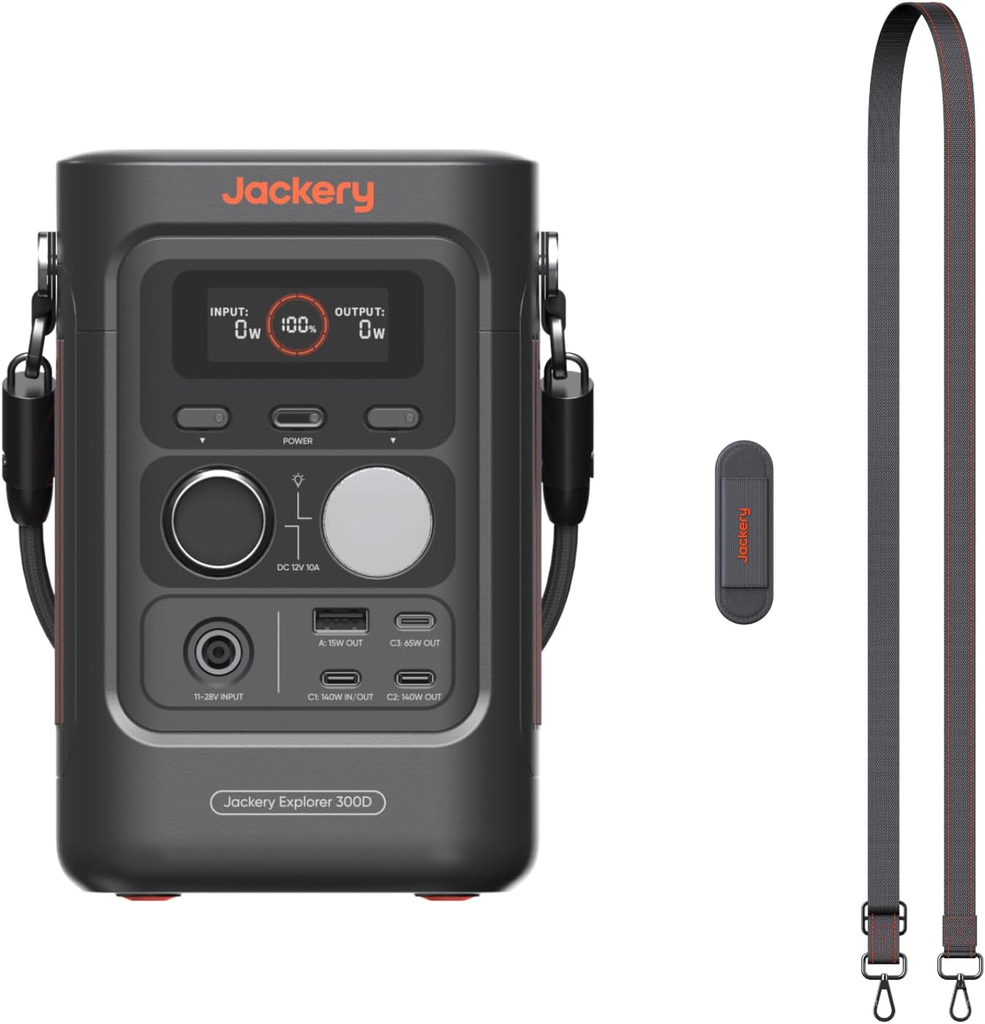
Why it works: It can charge many devices at once, run a fan and an electric cooler, and power small appliances.
Pros:
- 1800W output handles small appliances
- Many outlets for a group
- Expandable capacity
Cons:
- Heavy to carry far
- Overkill for a solo overnight trip
Best for: Family camping, car camping and basecamp setups.
Check current price and reviews on Amazon
5. Best High-Capacity: BLUETTI AC180 (1152Wh, 1800W)
The AC180 has the largest battery in this guide. It has a 1152Wh LiFePO4 battery, an 1800W inverter with a 2700W peak and four AC outlets. It charges from 0 to 80 percent in about 45 minutes and weighs about 35 pounds.
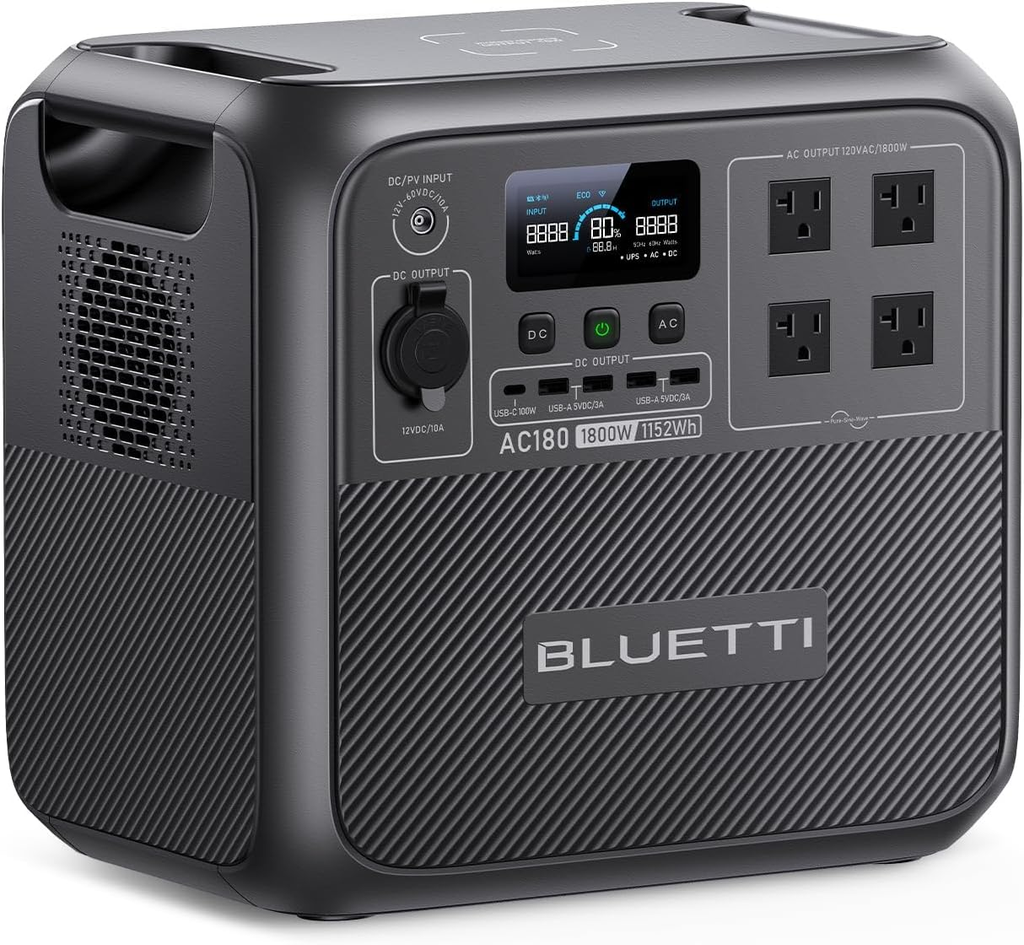
Why it works: The extra capacity and peak output make it comfortable for longer stays, glamping and trips with an electric cooler.
Pros:
- 1152Wh of capacity
- 2700W peak output
- Fast charging
Cons:
- Heaviest unit in this guide
- Too large for hiking-in trips
Best for: Long car camping trips and glamping.
Check current price and reviews on Amazon
Camping Power Tips
- Charge your power station fully before you leave, and bring a car charger as a backup.
- Bring a solar panel for trips longer than a weekend, and check the maximum solar input of your unit.
- Use the USB and 12V outputs when you can, since they waste less energy than the AC inverter.
- Keep the unit dry, out of direct sun and well ventilated. Do not run it in a sealed bag or under bedding.
- Store it inside your tent or vehicle when it is cold, but away from sleeping bags and heaters.
- Avoid running heating appliances like kettles or hair dryers unless your unit is rated for them.
- Do not leave the power station in a hot car. High temperatures shorten battery life.
Frequently Asked Questions
What size portable power station do I need for camping? For a weekend with phones, lights and a camera, 250 to 300Wh is enough. For laptops, fans or an electric cooler, look at 700Wh or more.
Is a power station better than a camping generator? Power stations are quiet and produce no fumes, so they are safe to use near your tent and in campgrounds with generator restrictions. Generators can run longer on fuel but are noisy and must be used well away from sleeping areas.
Can I charge a power station with solar panels while camping? Yes. Most models accept solar panels up to a maximum input wattage. Check the limit and connector type before you buy a panel.
Can a power station run a CPAP at a campsite? Many can, depending on the machine and whether it uses a heated humidifier. Check your CPAP’s wattage and ask your equipment provider for guidance.
How long does a power station last? LiFePO4 units are typically rated for thousands of charge cycles, which can mean many years of use if you take care of the battery.
Can I use a power station in cold weather? Yes, but capacity drops in the cold and many units limit charging below freezing. Check the operating temperature range of the unit you choose.
Final Thoughts
The best portable power station for camping depends on how you camp. For most people, the EcoFlow RIVER 2 Pro hits a sweet spot of capacity and weight. If you want to travel light, the RIVER 3 or the Jackery Explorer 300 Plus will keep your devices running, while the DELTA 2 and BLUETTI AC180 suit groups, longer trips and electric coolers.
Happy camping! If this guide helped, bookmark it and share it with a friend who is planning a trip.
Disclosure: As an Amazon Associate I earn from qualifying purchases. If you buy through links on this page, I may earn a small commission at no extra cost to you.