

A portable power station turns your car into a mobile office, a camp kitchen or a roadside lifeline. You can charge laptops and tablets on a long drive, keep a 12V cooler running, power camp lights and a fan when you stop for the night, and recharge your phone in an emergency. The best units for a car are compact, secure in a trunk or footwell and able to recharge from the car’s 12V outlet. Here are five of the best portable power stations for a car, plus a guide to charging them from your vehicle and using them safely.
Quick Picks
| Best For | Power Station | Link |
|---|---|---|
| Best Overall | EcoFlow RIVER 2 Pro (768Wh, 800W) | Check price on Amazon |
| Best Ultralight | EcoFlow RIVER 3 (245Wh, 300W) | Check price on Amazon |
| Best Compact | Jackery Explorer 300 Plus (288Wh, 300W) | Check price on Amazon |
| Best for Long Road Trips | Jackery Explorer 1000 v2 (1070Wh, 1500W) | Check price on Amazon |
| Best with Car Charging Cable | Anker SOLIX C1000 Gen 2 with car charging cable (1024Wh, 2000W) | Check price on Amazon |
What Can You Run from a Car Power Station?
List what you want to power, then check each device’s running watts. Typical examples:
| Device | Typical running power |
|---|---|
| Phone or tablet charging | 5 to 20W |
| Laptop | 50 to 90W |
| LED camp lights | 5 to 20W |
| Fan | 20 to 60W |
| Portable 12V fridge or electric cooler (average draw) | 40 to 100W |
| 12V tire inflator | About 100 to 150W |
| E-bike battery charger | 100 to 500W |
| Camping stove or kettle | 1000W or more (not recommended) |
A power station can also keep a CPAP, camera batteries or a drone charging on the road. Heating appliances use a lot of power, so they are best left to a stove or the car’s own systems.
Rough runtime on a road trip
Use this formula: hours = capacity (Wh) x 0.85 / device watts. The 0.85 allows for energy lost in the inverter. Here are estimates for two example setups: about 60W (a laptop and phones) and about 100W (a laptop, phones and a cooler):
| Power Station | About 60W | About 100W |
|---|---|---|
| EcoFlow RIVER 3 (245Wh) | About 3.5 hours | About 2 hours |
| Jackery Explorer 300 Plus (288Wh) | About 4 hours | About 2.4 hours |
| EcoFlow RIVER 2 Pro (768Wh) | About 11 hours | About 6.5 hours |
| Anker SOLIX C1000 Gen 2 (1024Wh) | About 14.5 hours | About 8.7 hours |
| Jackery Explorer 1000 v2 (1070Wh) | About 15 hours | About 9 hours |
These are estimates, not guarantees. Real runtime depends on the temperature, the age of the battery and how efficiently your devices run.
Charging a Power Station from Your Car
Most power stations can recharge from a car’s 12V outlet (the cigarette lighter socket) with a car charging cable. It is handy on road trips, but it is slow.
A typical 12V outlet delivers about 100 to 120W at most, limited by the car’s fuse. Estimate charging time with this formula: hours = capacity (Wh) / (charging watts x 0.85). At about 100W:
| Power Station | Rough charge time at about 100W |
|---|---|
| EcoFlow RIVER 3 (245Wh) | About 3 hours |
| Jackery Explorer 300 Plus (288Wh) | About 3.5 hours |
| EcoFlow RIVER 2 Pro (768Wh) | About 9 hours |
| Anker SOLIX C1000 Gen 2 (1024Wh) | About 12 hours |
| Jackery Explorer 1000 v2 (1070Wh) | About 12.5 hours |
These are rough estimates. Some units support faster car charging with a higher-power cable or an alternator charger, so check each model’s maximum car input and the accessories it supports.
Car charging tips:
- Charge only while the engine is running. Charging with the engine off can drain the car’s starter battery.
- Use the cable that comes with your power station, and plug it straight into the car’s 12V outlet.
- Check the fuse rating of your car’s outlet. Do not exceed it.
- Charge from a wall outlet before you leave, so the car only needs to top up.
- Fast wall charging at the hotel or campsite is much quicker than car charging.
How to Choose a Power Station for a Car
1. Choose a size you can carry. Units range from about 8 pounds to about 27 pounds. If you will move it often, lighter is better.
2. Match capacity to your trip. For phones and a laptop, 250 to 300Wh is enough. For a fridge, fan or overnight car camping, look at 700 to 1000Wh.
3. Check the car charging input. Make sure the unit accepts 12V input, and check how fast it can charge from the car.
4. Look for LiFePO4 batteries. They are known for long cycle life and good safety, which suits a unit that will travel with you.
5. Check the outputs. USB-C, USB-A, 12V and AC outlets let you run phones, laptops and small appliances without extra adapters.
6. Think about heat. Cars get very hot. Choose a unit with a stated operating temperature range, and plan to keep it out of the sun.
7. Consider noise and vibration. Quiet fans matter in a small cabin, and a good case or strap helps keep the unit from moving.
1. Best Overall: EcoFlow RIVER 2 Pro (768Wh, 800W)
The RIVER 2 Pro is a strong all-rounder for car trips. It has a 768Wh LiFePO4 battery and an 800W AC inverter with a 1600W surge. It weighs about 17 pounds, has four AC outlets plus USB-A, USB-C and a car outlet, and fast charges in about 70 minutes from the wall.
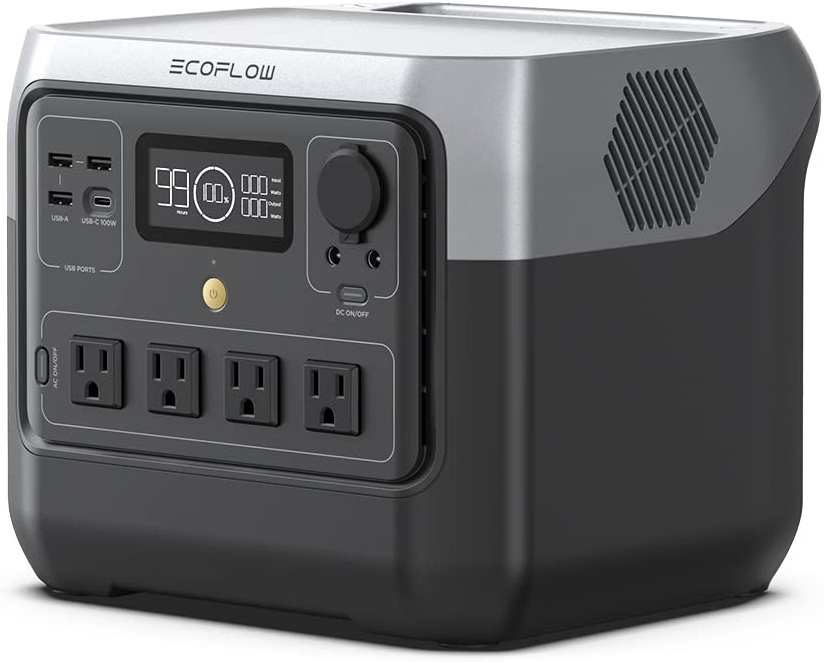
Why it works: It has enough capacity for a laptop, phones, a fan and a 12V fridge, and it is light enough to move between the trunk and a campsite.
Pros:
- Light enough to carry easily
- Four AC outlets plus USB ports and a car outlet
- Fast wall charging
Cons:
- Car charging is slow because of the 12V limit
- 800W output rules out heavier appliances
Best for: Road trips, car camping and mobile work.
Check current price and reviews on Amazon
2. Best Ultralight: EcoFlow RIVER 3 (245Wh, 300W)
The RIVER 3 is small, light and quiet. It has a 245Wh LiFePO4 battery and a 300W AC output with X-Boost up to 600W. It weighs about 7.8 pounds, charges in about an hour and runs at under 30 dB.
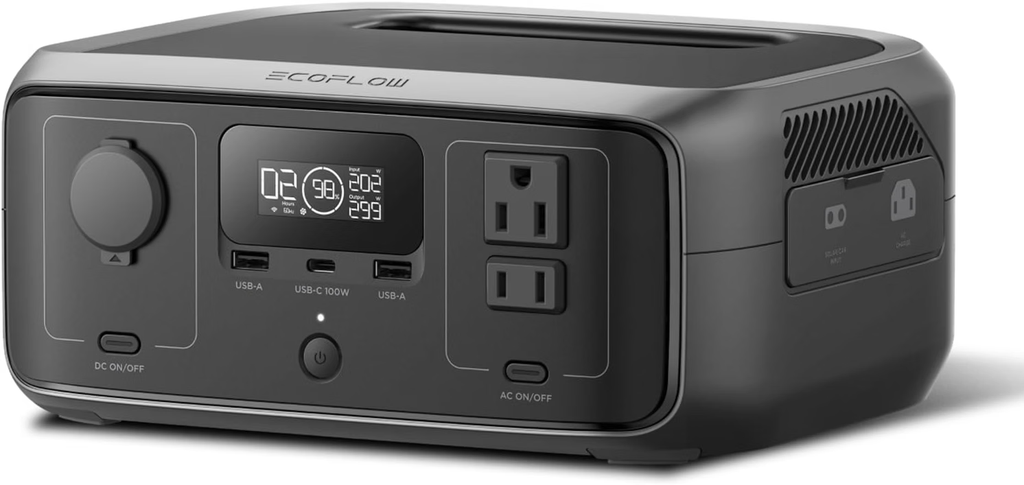
Why it works: It fits in a footwell or a bag, and it covers phones, a laptop and lights for a day of driving.
Pros:
- Very light at about 7.8 pounds
- Quiet and fast charging
- Easy to store in a small car
Cons:
- Small battery, so limited runtime
- Cannot run larger appliances
Best for: Commuters, short trips and people who want a light backup.
Check current price and reviews on Amazon
3. Best Compact: Jackery Explorer 300 Plus (288Wh, 300W)
The Explorer 300 Plus is a compact, light option from a well-known camping brand. It has a 288Wh LiFePO4 battery and a 300W AC outlet, and weighs about 3.75 kg, or roughly 8.3 pounds.
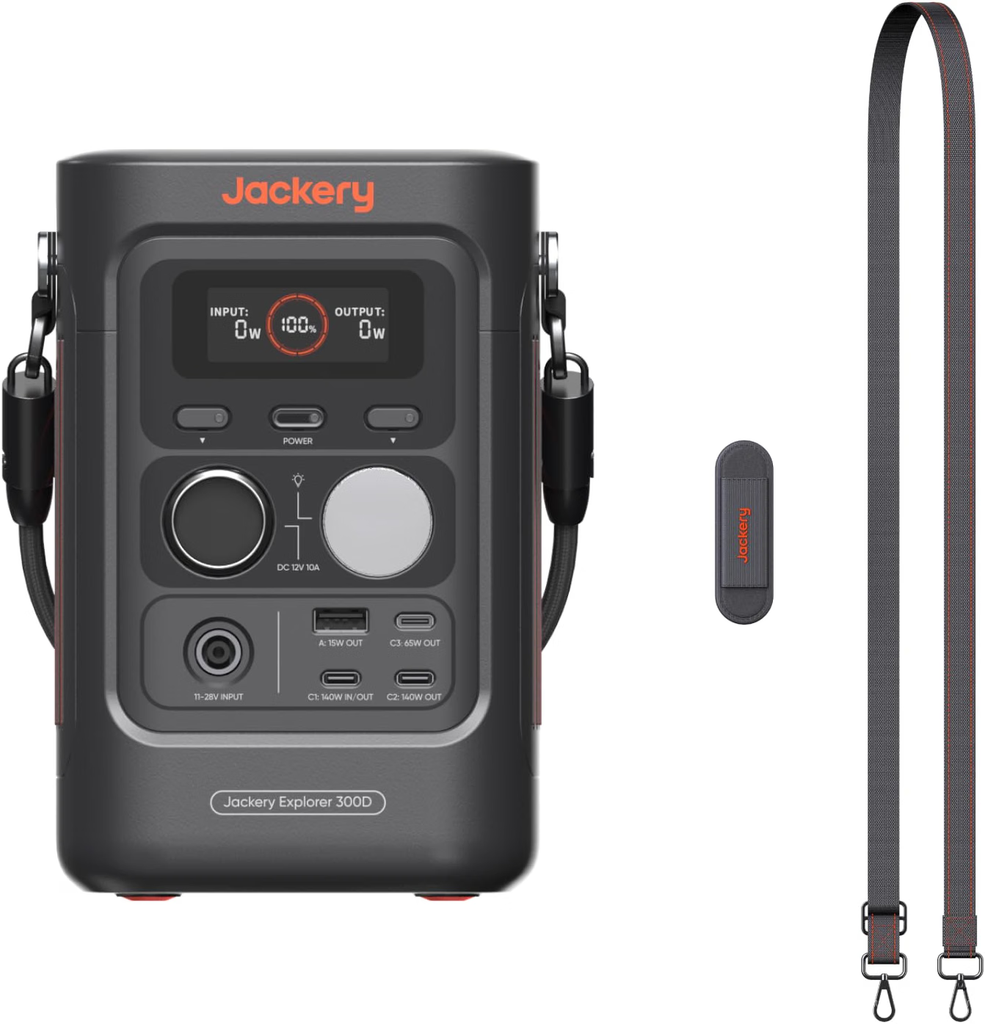
Why it works: The slightly larger battery and simple design suit drivers who want a bit more runtime than the smallest units.
Pros:
- More capacity than most small units
- LiFePO4 battery
- Simple to use and easy to store
Cons:
- Limited capacity for a fridge or overnight use
- 300W output limits what you can plug in
Best for: Road trips and weekend car camping.
Check current price and reviews on Amazon
4. Best for Long Road Trips: Jackery Explorer 1000 v2 (1070Wh, 1500W)
The Explorer 1000 v2 packs a large battery into a relatively light body. It has a 1070Wh LiFePO4 battery and a 1500W AC output with a 100W USB-C port. It weighs about 23.8 pounds and charges in about an hour with emergency charging.
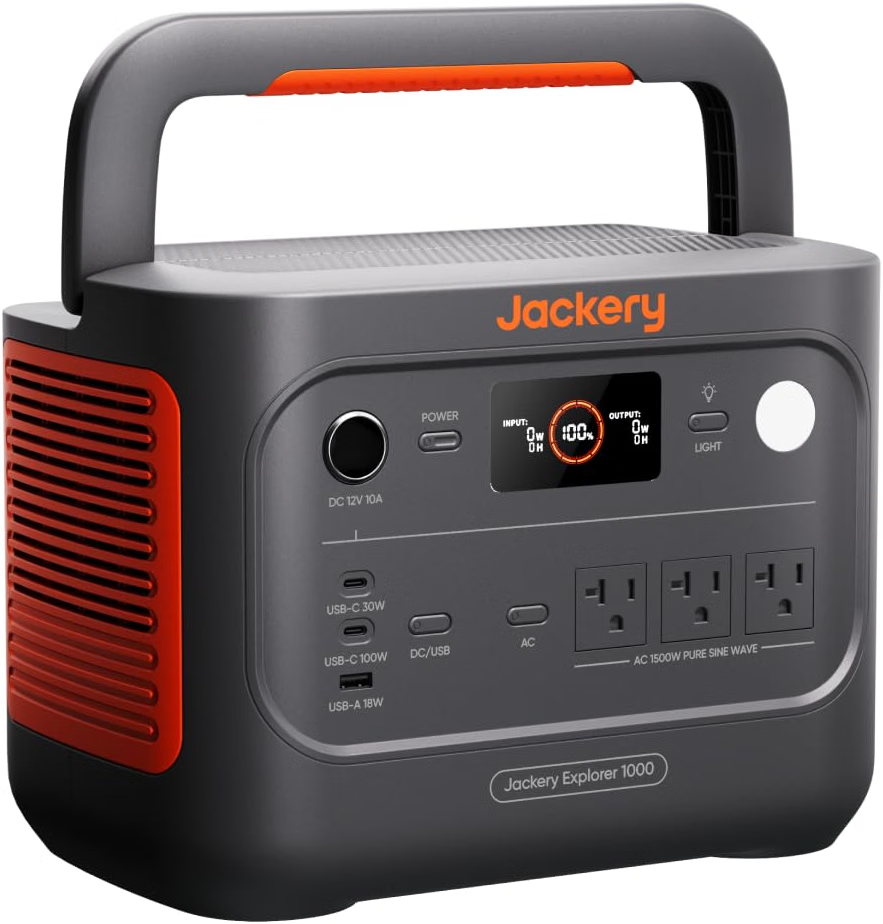
Why it works: The big battery can run a laptop, a 12V fridge and a fan overnight, and it is one of the lighter 1000Wh units.
Pros:
- 1070Wh of capacity
- Lighter than most 1000Wh units
- 1500W output handles small appliances
Cons:
- Takes up more room in the trunk
- Car charging at 12V is very slow for a battery this size
Best for: Long road trips, car camping and mobile work.
Check current price and reviews on Amazon
5. Best with Car Charging Cable: Anker SOLIX C1000 Gen 2 (1024Wh, 2000W)
This listing bundles the Anker SOLIX C1000 Gen 2 with a car charging cable. The power station has a 1024Wh LiFePO4 battery, a 2000W continuous output with a 3000W peak and a listed full recharge in about 49 minutes from the wall. It has 10 ports, including five AC outlets, and weighs about 25 pounds.
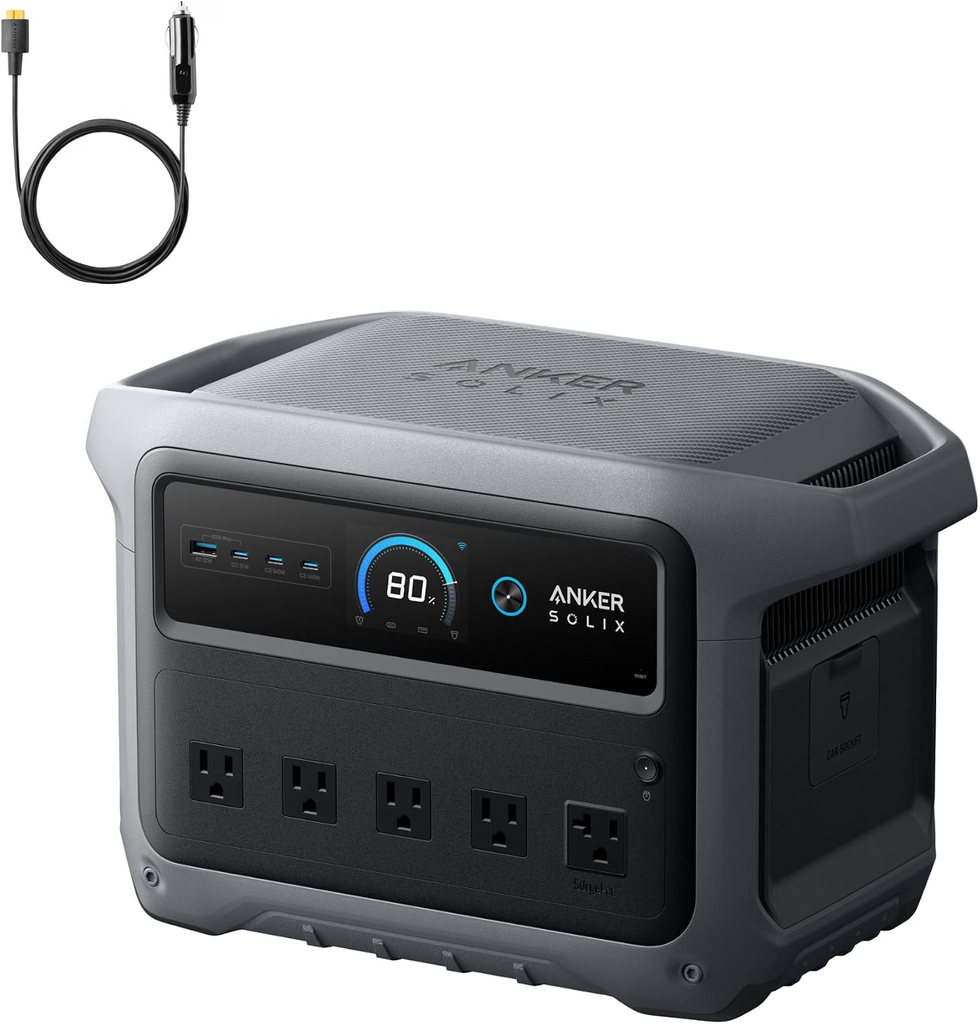
Why it works: The included car cable means you can top up on the road, and the big battery and many ports suit longer trips.
Pros:
- Car charging cable included in this bundle
- 2000W output and five AC outlets
- Very fast wall recharging
Cons:
- Around 25 pounds
- Car charging is much slower than wall charging
Best for: Drivers who want to top up on the road and run several devices.
Check current price and reviews on Amazon
Safety Tips for Using a Power Station in a Car
- Secure it. Strap the unit down or wedge it in a footwell or trunk so it cannot fly around in a sudden stop. Do not leave it loose on a seat.
- Beware of heat. Do not leave a power station in a hot, parked car. High temperatures shorten battery life, and every unit has a stated operating and storage range. Check yours.
- Keep it ventilated. Do not cover the vents while it is running or charging.
- Keep it dry. Keep it away from spills, rain and wet gear.
- Do not use it as a jump starter unless the product is specifically designed and listed for jump-starting. Most power stations are not.
- Mind the cables. Keep cords away from pedals, seatbelts and the driver’s feet.
- Do not drain the starter battery. Charge from the car’s 12V outlet only while the engine is running.
- Follow the manual. Check the manufacturer’s guidance on car charging, temperature range and storage.
Frequently Asked Questions
What size power station do I need for a car? For phones, a laptop and lights, about 250 to 300Wh is enough. For a 12V fridge, a fan or car camping overnight, look at 700 to 1000Wh.
Can I charge a power station from my car? Yes. Most can charge from the 12V outlet with a car charging cable, although it is slow, typically around 100W. Charge only while the engine is running.
Can I run a power station while driving? Yes. You can power devices from the power station while the car is moving, as long as it is secured and ventilated.
Can a power station jump-start my car? Most cannot. Only units designed and listed as jump starters should be used that way. Check the product description.
Is it safe to leave a power station in a hot car? It is best not to. Heat shortens battery life, and units have stated operating and storage temperature ranges. Take it with you or keep it in a shaded, cool spot.
Can I use a power station for car camping? Yes. A 700 to 1000Wh unit can run lights, a fan, a laptop and a small fridge overnight, and you can top it up with solar or from the wall.
Final Thoughts
The best portable power station for a car is one that is compact, secure and sized for your trip. For most drivers, the EcoFlow RIVER 2 Pro balances capacity and weight well. If you want something light, the RIVER 3 and the Jackery Explorer 300 Plus are easy to store, while the Jackery Explorer 1000 v2 and the Anker SOLIX C1000 Gen 2 give you more battery for long trips and car camping.
Safe travels! If this guide helped, bookmark it and share it with a friend who loves a road trip.
Disclosure: As an Amazon Associate I earn from qualifying purchases. If you buy through links on this page, I may earn a small commission at no extra cost to you.