
Storms often cause two problems at once: heavy rain and power outages. If your sump pump loses power while the water is rising, your basement can flood. A portable power station can keep a sump pump running when the grid is down, quietly and without fumes. The key is choosing a unit with enough surge power to start the pump’s motor and enough battery to keep it running. Here are five of the best portable power stations for a sump pump on Amazon, plus a guide to sizing one and setting it up safely.
Important: A power station is one layer of protection, not a guarantee against flooding. For critical protection, consider a dedicated battery-backup sump pump system and a water alarm, and talk to a licensed plumber or electrician about your setup.
Quick Picks
| Best For | Power Station | Link |
|---|---|---|
| Best Overall | BLUETTI Elite 200 V2 (2073.6Wh, 2600W) | Check price on Amazon |
| Best High Surge | Anker SOLIX C2000 Gen 2 (2048Wh, 2400W, 4000W peak) | Check price on Amazon |
| Best Value | Anker SOLIX C1000 Gen 2 (1024Wh, 2000W, 3000W peak) | Check price on Amazon |
| Best Compact | BLUETTI AC180 (1152Wh, 1800W, 2700W peak) | Check price on Amazon |
| Best for Long Outages | EcoFlow DELTA Pro 3 (4096Wh, 4000W) | Check price on Amazon |
How Much Power Does a Sump Pump Need?
A sump pump has a motor, and motors need a burst of extra power to start. That start-up surge is often two to three times the running wattage, so the power station’s surge or peak rating matters as much as its battery size.
Find the numbers on your pump’s label or in its manual. If the label lists amps, you can estimate running watts with this formula:
Watts = volts x amps (for a standard US outlet, use 120 volts)
Typical examples, which vary a lot by model, so always check your own pump:
| Pump size | Typical running power | Typical start-up surge |
|---|---|---|
| 1/3 HP | Roughly 500 to 800W | Often 1500 to 2000W or more |
| 1/2 HP | Roughly 800 to 1100W | Often 2000 to 2500W or more |
If your pump’s surge is higher than a power station’s peak rating, the unit can shut off or fail to start the pump. Choose a unit with a comfortable margin.
Which units suit which pumps?
As a rough guide, a 1/3 HP pump is often within reach of units with a 2700 to 3000W peak, such as the BLUETTI AC180 and Anker SOLIX C1000 Gen 2. For a 1/2 HP pump or larger, choose a higher-output unit such as the BLUETTI Elite 200 V2, the Anker SOLIX C2000 Gen 2 or the EcoFlow DELTA Pro 3. Always confirm your pump’s start-up requirement and each unit’s specifications before you buy.
How long will it run?
A sump pump does not run all the time. It cycles on when the water rises and off when it drops. During light rain it may run for a short time every few minutes, and during a heavy storm it may run much more. Use this formula: hours = capacity (Wh) x 0.85 / average watts. The 0.85 allows for energy lost in the inverter.
Here are estimates for an example pump that draws about 800W while running. At a 25 percent duty cycle (light inflow) the average draw is about 200W, and at a 50 percent duty cycle (heavy rain) it is about 400W:
| Power Station | Light inflow (about 200W average) | Heavy rain (about 400W average) |
|---|---|---|
| BLUETTI AC180 (1152Wh) | About 5 hours | About 2.4 hours |
| Anker SOLIX C1000 Gen 2 (1024Wh) | About 4.4 hours | About 2.2 hours |
| BLUETTI Elite 200 V2 (2073.6Wh) | About 8.8 hours | About 4.4 hours |
| Anker SOLIX C2000 Gen 2 (2048Wh) | About 8.7 hours | About 4.4 hours |
| EcoFlow DELTA Pro 3 (4096Wh) | About 17 hours | About 8.7 hours |
These are examples, not guarantees. Your pump, the water inflow and the length of the outage all change the result.
How to Choose a Power Station for a Sump Pump
1. Check the pump’s start-up watts first. Choose a power station whose surge or peak rating exceeds your pump’s start-up requirement with a margin.
2. Choose enough battery capacity. Estimate the average draw using the pump’s duty cycle, then pick a battery that covers the length of outage you expect. Plan for heavy rain, not light rain.
3. Look for LiFePO4 batteries. They are known for long cycle life, which suits a unit that sits ready for months and is called on in a storm.
4. Consider UPS mode. Some units can switch to battery power automatically when the grid drops, so a plugged-in pump keeps running without you being home. Check each model’s manual to confirm it supports motor loads like pumps in UPS mode.
5. Think about recharging. Fast wall charging helps between storms, and solar charging helps if an outage lasts for days.
6. Plan where it will live. Basements can flood, so the power station and its connections should be kept dry and above the possible water level.
1. Best Overall: BLUETTI Elite 200 V2 (2073.6Wh, 2600W)
The Elite 200 V2 has the output and capacity to handle many sump pumps. It has a 2073.6Wh LiFePO4 battery, 2600W of continuous AC output with 3900W of power lifting and four AC outlets. The listing describes a 6,000-plus-cycle life, and it weighs about 53 pounds.
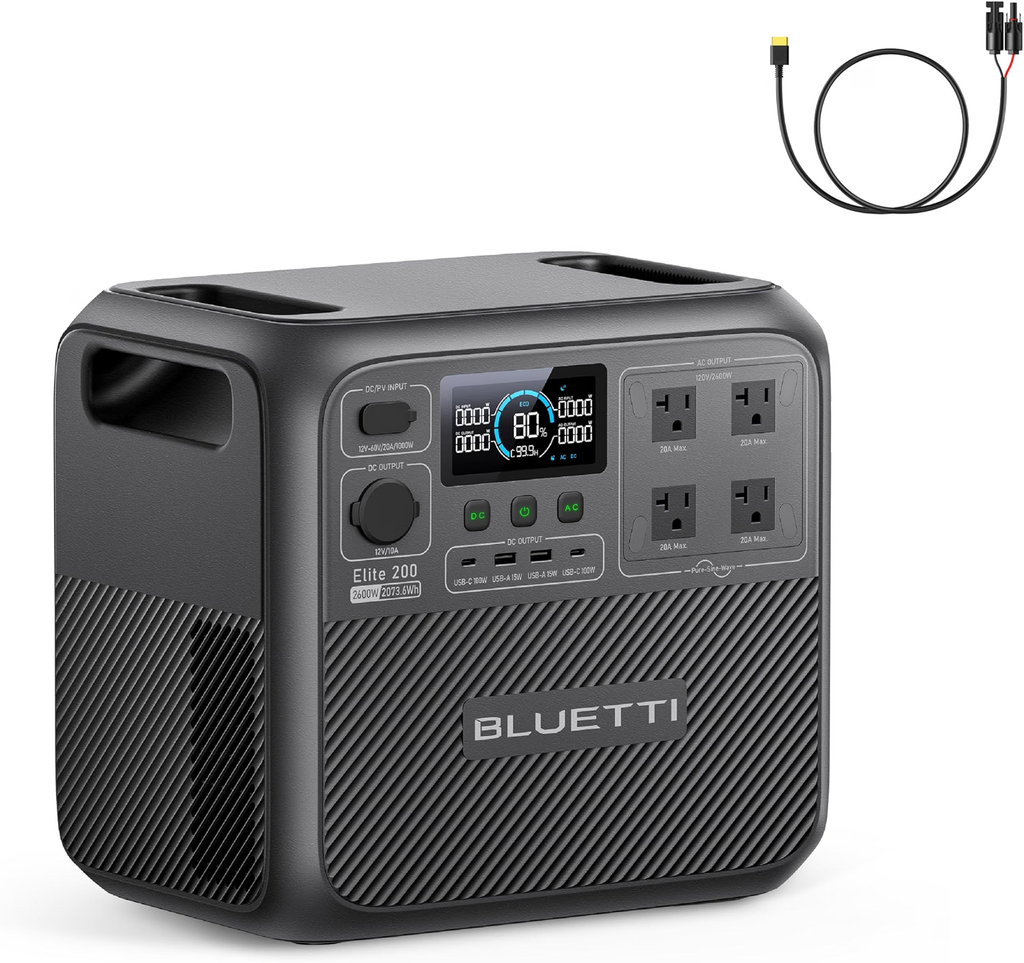
Why it works: The 2600W output and 3900W power lifting give a good margin for start-up surges, and the large battery can keep a pump running for hours.
Pros:
- 2600W output with 3900W power lifting
- 2073.6Wh battery
- Long rated battery life
Cons:
- Heavy at about 53 pounds
- Check the listing for UPS support
Best for: Pumps up to 1/2 HP and homes that need hours of backup.
Check current price and reviews on Amazon
2. Best High Surge: Anker SOLIX C2000 Gen 2 (2048Wh, 2400W, 4000W Peak)
The C2000 Gen 2 has one of the highest listed peaks in this class. It has a 2048Wh LiFePO4 battery, a 2400W continuous output with a 4000W peak, a listed full charge in about 58 minutes and a weight of about 41.7 pounds. The listing also says it can be expanded to 4kWh with an expansion battery.
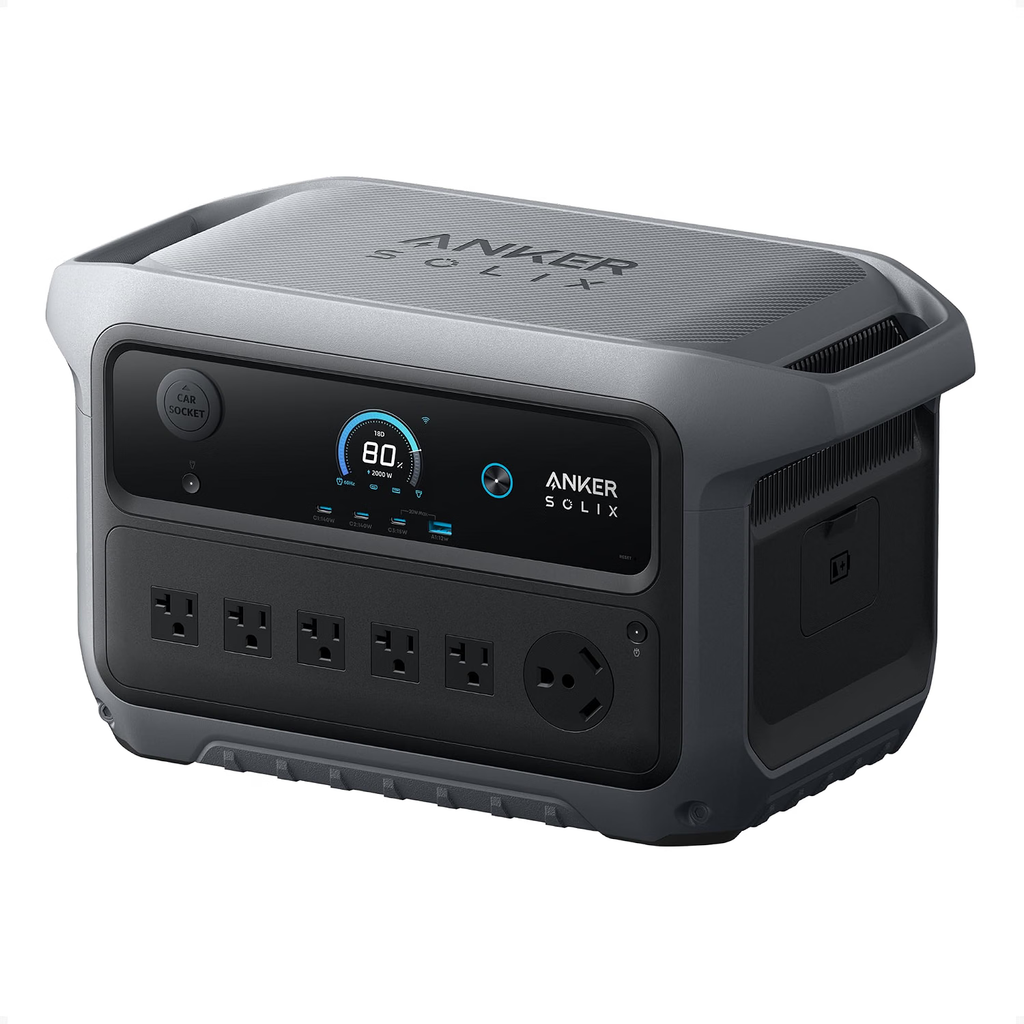
Why it works: The 4000W peak gives extra headroom for a pump’s start-up surge, and the lighter weight makes it easier to move than some rivals.
Pros:
- 4000W peak output
- Lighter at about 41.7 pounds
- Expandable to 4kWh
Cons:
- 2400W continuous is lower than the Bluetti
- Check the listing for UPS support
Best for: Larger pumps and homes that want room to add capacity.
Check current price and reviews on Amazon
3. Best Value: Anker SOLIX C1000 Gen 2 (1024Wh, 2000W, 3000W Peak)
The C1000 Gen 2 offers strong output in a smaller package. It has a 1024Wh LiFePO4 battery, a 2000W output with a 3000W peak, a listed full recharge in about 49 minutes, 10 ports including five AC outlets, a 10 ms UPS mode and a 5-year warranty. It weighs about 25 pounds.
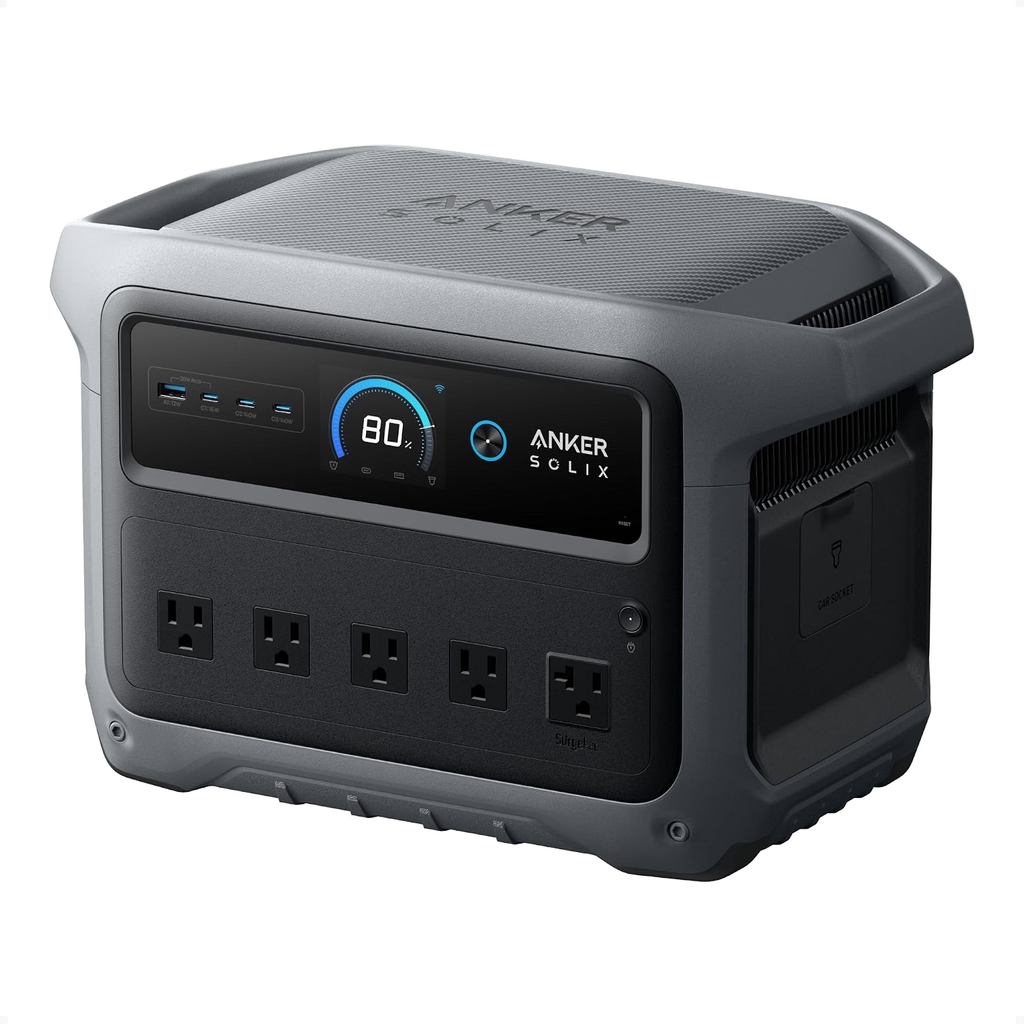
Why it works: The 3000W peak can start many smaller pumps, and the UPS mode can keep a plugged-in pump on automatically during an outage, once you confirm the manual supports motor loads.
Pros:
- 3000W peak output
- 10 ms UPS mode and fast recharging
- Lighter than the larger units
Cons:
- 1024Wh runs a pump for only a few hours
- May not start larger pumps
Best for: 1/3 HP pumps and shorter outages.
Check current price and reviews on Amazon
4. Best Compact: BLUETTI AC180 (1152Wh, 1800W, 2700W Peak)
The AC180 is a popular mid-size unit. It has a 1152Wh LiFePO4 battery, an 1800W inverter with a 2700W peak, four AC outlets and a 0 to 80 percent charge in about 45 minutes. It weighs about 35 pounds.
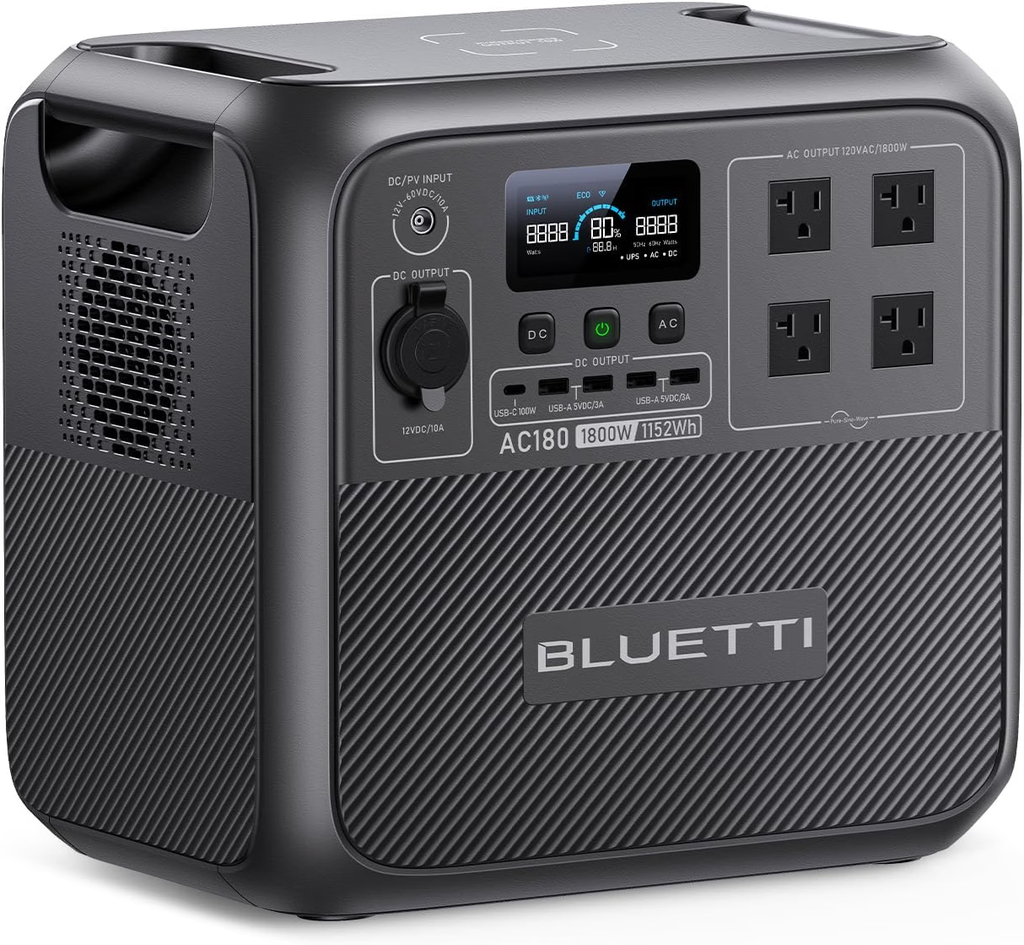
Why it works: The 2700W peak can start many smaller pumps, and the 1152Wh battery gives a few hours of runtime.
Pros:
- 2700W peak output
- 1152Wh battery
- Fast charging
Cons:
- Peak may be too low for larger pumps
- Shorter runtime than the bigger units
Best for: Smaller pumps and homes with short outages.
Check current price and reviews on Amazon
5. Best for Long Outages: EcoFlow DELTA Pro 3 (4096Wh, 4000W)
If you face long outages or run larger pumps, the DELTA Pro 3 is a big system. It has a 4096Wh LFP battery, a 4000W AC output with 120/240V support, and it can be expanded to 48kWh with extra batteries.
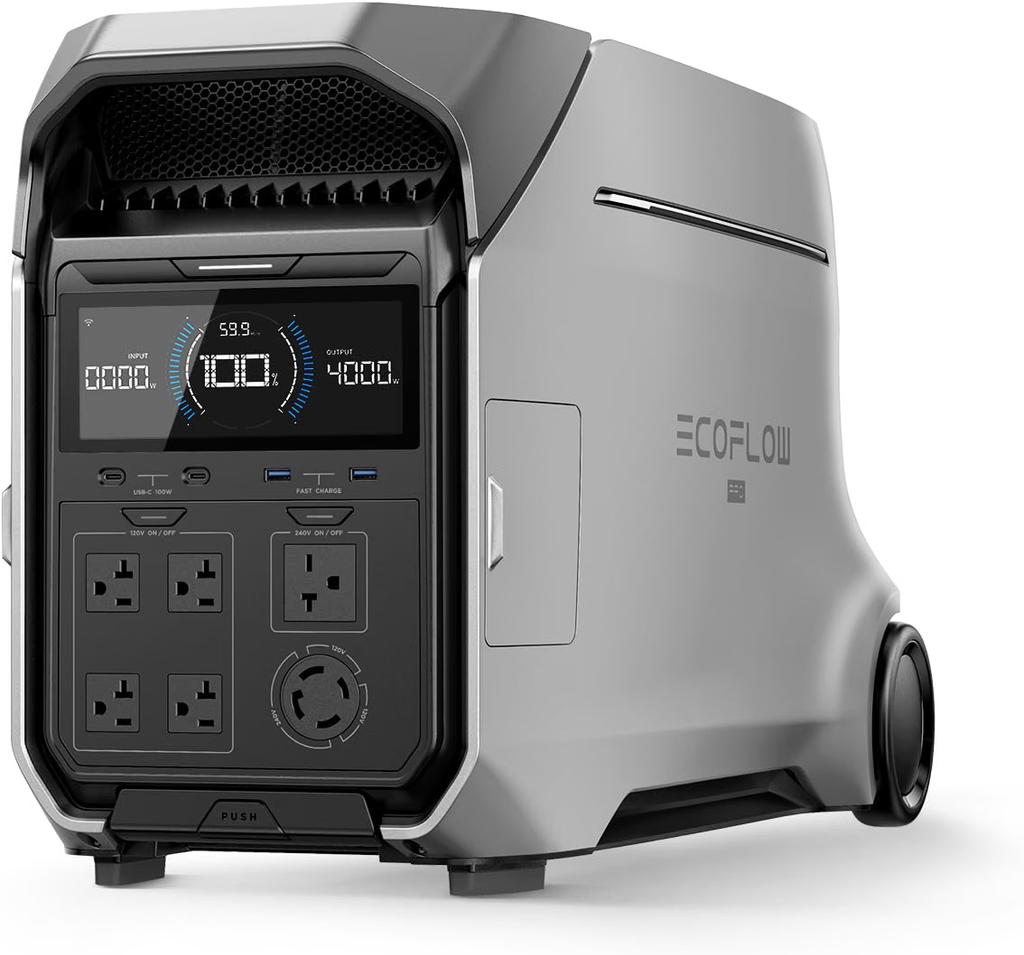
Why it works: The large battery and 4000W output give plenty of margin for start-up surges and many hours of runtime, even in heavy rain.
Pros:
- 4096Wh with 4000W output
- Expandable to a very large system
- Handles larger motors
Cons:
- Large, heavy and expensive
- Best placed in one spot, not carried often
Best for: Frequent or long outages, larger pumps and homes that want serious backup.
Check current price and reviews on Amazon
Safety and Setup Tips
- Keep the power station dry. Place it on a raised, dry surface above any possible flood level. Never run a power station or cords through standing water.
- Use proper cords. Use a heavy-duty, properly rated extension cord if you need one, and keep connections out of water and damp areas. Use GFCI protection where required.
- Do not backfeed. Never plug a power station into a wall outlet to power your house. Plug the pump directly into the power station, or ask a licensed electrician about a proper transfer switch.
- Hardwired pumps need an electrician. If your pump is wired directly into your electrical panel, do not tamper with it. Ask a licensed electrician about a safe connection.
- Test before the storm. Run the pump from the power station with some water to check that it starts and runs.
- Keep it charged. Charge the unit fully before storm season, and top it up every few months.
- Add a water alarm. A battery-powered water alarm can warn you if the water starts to rise.
- Consider a dedicated backup pump. A battery-backup sump pump system is designed for this job and can be a good second layer of protection.
Frequently Asked Questions
What size power station do I need for a sump pump? It depends on the pump. A 1/3 HP pump often needs a power station with about 2000W or more of surge capacity, while a 1/2 HP pump may need more. Check the pump’s label for amps and start-up requirements.
How long will a power station run a sump pump? It depends on how often the pump runs. As a rough guide, a 1000Wh unit may run a typical pump for a few hours in a storm, while a 2000Wh unit can run it for twice as long. Heavy rain shortens runtime.
Can a power station run a sump pump automatically? Some units have a UPS mode that switches to battery when the grid drops. Check your unit’s manual to confirm it supports motor loads such as pumps. Otherwise, you will need to plug the pump into the power station yourself.
Can I use a power station with a hardwired sump pump? Not without a safe connection. Ask a licensed electrician about a transfer switch or other proper setup. Do not backfeed power into your home’s wiring.
Is a power station better than a generator for a sump pump? Power stations are quiet and produce no fumes, so they can be used in a basement or garage with ventilation. Gas generators run longer on fuel but must be used outdoors, away from windows, because of carbon monoxide.
Do I still need a battery-backup sump pump? A dedicated battery-backup pump is designed for flooding emergencies and can protect you if your main pump fails, so many homeowners use both.
Final Thoughts
The best portable power station for a sump pump is one with enough surge power to start the motor and enough battery to last through the storm. For most homes, the BLUETTI Elite 200 V2 is a strong all-rounder. If you want a higher peak rating, the Anker SOLIX C2000 Gen 2 has more headroom, while the Anker SOLIX C1000 Gen 2 and BLUETTI AC180 suit smaller pumps. For long outages or larger pumps, the EcoFlow DELTA Pro 3 has the capacity to keep running for many hours.
Stay dry! If this guide helped, bookmark it and share it with a friend who has a basement.
Disclosure: As an Amazon Associate I earn from qualifying purchases. If you buy through links on this page, I may earn a small commission at no extra cost to you.