
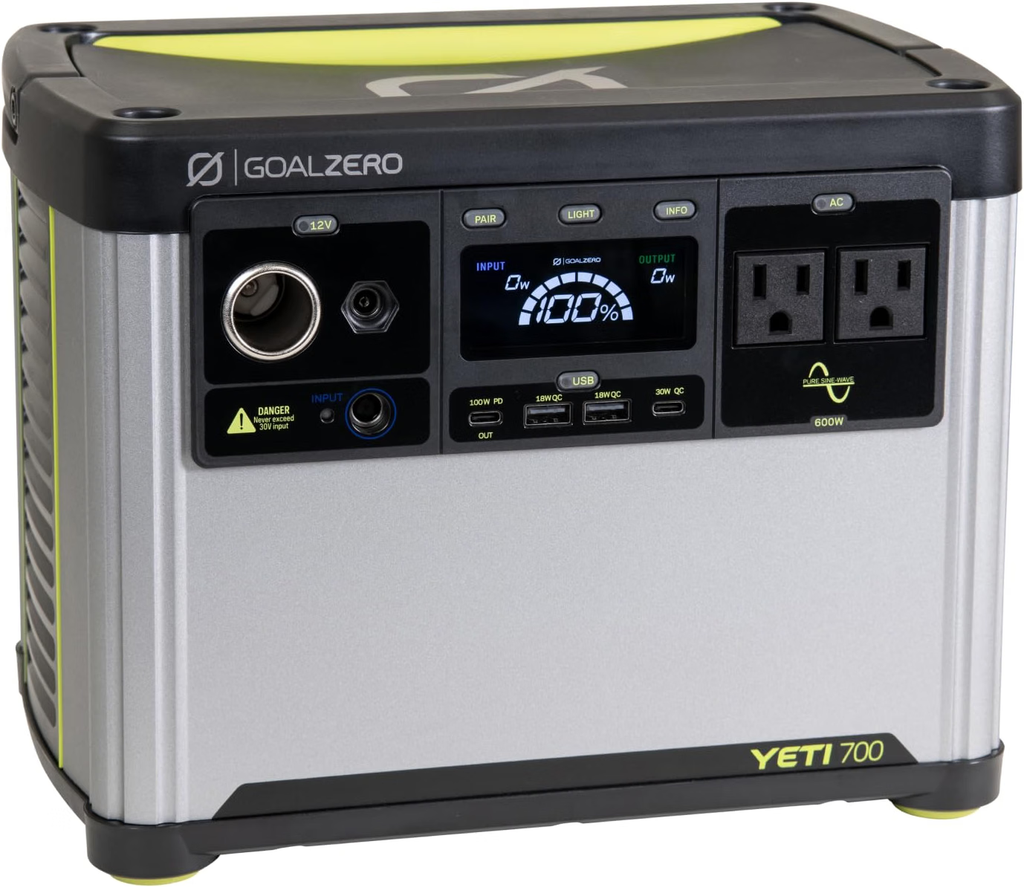
The Goal Zero Yeti 500X is a compact portable power station that has earned a reputation for reliability, durability, and outdoor-focused design. Built by one of the most recognizable brands in portable power, the Yeti 500X targets campers, overlanders, photographers, van lifers, and anyone seeking dependable off-grid power.
However, with newer LiFePO4-powered competitors from EcoFlow, Bluetti, and Anker entering the market, does the Yeti 500X still deserve a place on your shortlist in 2025?
In this comprehensive review, we’ll examine its features, performance, battery life, pros and cons, and whether it’s still a smart buy today.
Goal Zero Yeti 500X Overview
Quick Verdict
✅ Premium build quality
✅ Trusted outdoor brand
✅ Compact and portable
✅ Versatile port selection
✅ Excellent for camping and road trips
✅ Regulated 12V output
❌ Older lithium-ion battery technology
❌ Fewer battery cycles than competitors
❌ Higher price per watt-hour
❌ Slower charging than newer models
Best For: Campers, photographers, RV travelers, overlanders, and users who value durability and brand reputation.
👉 Check Current Price on Amazon
Goal Zero Yeti 500X Specifications
| Specification | Goal Zero Yeti 500X |
|---|---|
| Battery Capacity | 505Wh |
| Battery Chemistry | Lithium-Ion (NMC) |
| AC Output | 300W |
| Surge Capacity | 1,200W |
| Battery Lifecycle | 500 Cycles |
| Solar Input | Up to 120W |
| Weight | 12.9 lbs (5.85 kg) |
| AC Charging Time | Approximately 8.5 Hours |
| Wireless Charging | Yes |
| App Connectivity | Yes |
Design and Build Quality
One area where Goal Zero consistently excels is build quality.
The Yeti 500X features a rugged exterior designed for outdoor use and travel. While it doesn’t have official waterproof certification, it feels more durable than many budget competitors.
Notable design features include:
- Integrated carrying handle
- Clean front-facing port layout
- Easy-to-read display
- Wireless charging pad on top
At just under 13 pounds, it’s portable enough for:
- Camping trips
- Tailgating
- Van life
- Outdoor photography setups
Build Quality Score: 9/10
Battery Capacity and Runtime
The Yeti 500X offers:
505Wh of battery capacity
This places it in the mid-sized portable power station category.
Runtime Estimates
| Device | Estimated Runtime |
|---|---|
| Smartphone | 40+ Charges |
| Laptop | 8-10 Charges |
| Camera Battery | 50+ Charges |
| CPAP Machine | 8-10 Hours |
| Wi-Fi Router | 12-18 Hours |
| LED Lighting | 40+ Hours |
| Mini Fridge | 5-8 Hours |
The capacity is sufficient for:
✅ Weekend camping
✅ Emergency charging
✅ Outdoor events
✅ Mobile workstations
For extended outages, however, larger units are better suited.
Power Output Performance
The Yeti 500X provides:
300W continuous AC output
with
1,200W surge capability
This means it can comfortably power:
- Laptops
- Smartphones
- Tablets
- Cameras
- Drones
- CPAP machines
- LED lights
- Small televisions
However, it struggles with:
❌ Microwaves
❌ Hair dryers
❌ Space heaters
❌ Coffee makers
❌ Larger refrigerators
Power Performance Score: 7.5/10
Port Selection
The Yeti 500X shines when it comes to connectivity.
Available Outputs
AC Power
- 2 AC outlets
USB Outputs
- USB-A Ports
- USB-C Ports
- USB-C Power Delivery (60W)
12V Outputs
- 12V regulated car port
- High Power Port (HPP)
Wireless Charging
- 5W wireless charging pad
This makes it one of the most device-friendly power stations in its class.
Port Selection Score: 9/10
Solar Charging Performance
Solar charging remains one of Goal Zero’s strengths.
Compatible Solar Panels
- Nomad 50
- Nomad 100
- Boulder Series Panels
Maximum Solar Input
120W
Under ideal sunlight conditions:
- Full recharge in approximately 6-12 hours
depending on panel size and weather conditions.
Compared to newer EcoFlow and Bluetti models supporting 200W-500W solar input, the Yeti 500X is slower but still practical for weekend adventures.
Solar Score: 8/10
Charging Speed
Perhaps the biggest weakness of the Yeti 500X is charging speed.
Using the included wall charger:
Approximately 8.5 hours
for a complete recharge.
Compare that to:
| Model | Charge Time |
|---|---|
| Goal Zero Yeti 500X | 8.5 Hours |
| EcoFlow River 2 Pro | 70 Minutes |
| EcoFlow Delta 2 | 80 Minutes |
| Bluetti AC70 | About 1.5 Hours |
This is a significant disadvantage in today’s market.
Charging Score: 6.5/10
App and Smart Features
The Goal Zero Yeti app provides:
- Battery monitoring
- Power flow tracking
- Input and output management
- Charging status updates
The functionality is useful but not as advanced as EcoFlow’s software ecosystem.
Smart App Score: 8/10
Goal Zero Yeti 500X vs Competitors
Yeti 500X vs EcoFlow River 2 Pro
| Feature | Yeti 500X | River 2 Pro |
|---|---|---|
| Capacity | 505Wh | 768Wh |
| Output | 300W | 800W |
| Battery Type | Lithium-Ion | LiFePO4 |
| Lifespan | 500 Cycles | 3,000+ Cycles |
| Charge Time | 8.5 Hours | 70 Minutes |
Winner: EcoFlow River 2 Pro
Yeti 500X vs Jackery Explorer 500
| Feature | Yeti 500X | Jackery 500 |
|---|---|---|
| Capacity | 505Wh | 518Wh |
| Weight | Lighter | Heavier |
| USB-C PD | Yes | Limited |
| Wireless Charging | Yes | No |
Winner: Yeti 500X
Yeti 500X vs Bluetti AC70
| Feature | Yeti 500X | Bluetti AC70 |
|---|---|---|
| Capacity | 505Wh | 768Wh |
| Output | 300W | 1,000W |
| Battery Type | Lithium-Ion | LiFePO4 |
| Charging Speed | Slower | Much Faster |
Winner: Bluetti AC70
Pros and Cons
Pros
✅ Lightweight design
✅ Excellent build quality
✅ Well-designed mobile app
✅ Wireless charging pad
✅ Reliable performance
✅ Trusted Goal Zero reputation
✅ Great for outdoor adventures
Cons
❌ Uses older NMC battery technology
❌ Only 500 charging cycles
❌ Slower charging speeds
❌ Higher price compared to competitors
❌ Limited 300W AC output
Who Should Buy the Goal Zero Yeti 500X?
Buy It If:
✅ You prioritize premium build quality
✅ You frequently camp or overland
✅ You own other Goal Zero products
✅ You need a compact and portable power station
✅ You value brand reputation and reliability
Skip It If:
❌ You want the best value per dollar
❌ You need fast charging
❌ You want LiFePO4 battery technology
❌ You need more than 300W output
❌ You require home backup power
Frequently Asked Questions
Is the Goal Zero Yeti 500X worth it in 2025?
Yes, but primarily for users who value Goal Zero’s trusted reputation and rugged build quality. For pure performance and value, newer LiFePO4 models from EcoFlow and Bluetti often offer better specifications.
Can the Yeti 500X run a refrigerator?
It can power some small refrigerators and portable coolers for several hours, but it is not designed for extended refrigerator backup during long power outages.
Does the Goal Zero Yeti 500X support solar panels?
Yes. It supports Goal Zero solar panels and other compatible solar charging setups up to 120W.
How long does the battery last?
The battery is rated for approximately 500 charge cycles before noticeable capacity reduction occurs.
Final Verdict
The Goal Zero Yeti 500X remains a well-built and dependable portable power station that’s particularly appealing to campers, photographers, and outdoor enthusiasts. Its compact design, versatile ports, and solid reputation make it a reliable companion for off-grid adventures.
However, the market has evolved. Many modern competitors now offer LiFePO4 batteries, faster charging, higher power output, and better long-term value at similar price points.
If you’re already invested in the Goal Zero ecosystem, the Yeti 500X is still a good choice. But if you’re shopping purely on specs and performance, alternatives like the EcoFlow River 2 Pro or Bluetti AC70 may provide better overall value.
Overall Rating: 4.2/5 ⭐⭐⭐⭐
👉 Check Current Price on Amazon
Affiliate Disclosure: This article contains affiliate links. If you purchase through these links, we may earn a commission at no additional cost to you.